.png?width=80&height=80&name=Clove%20Dental%20White%20Small%20(28).png "Clove Dental White Small (28)")
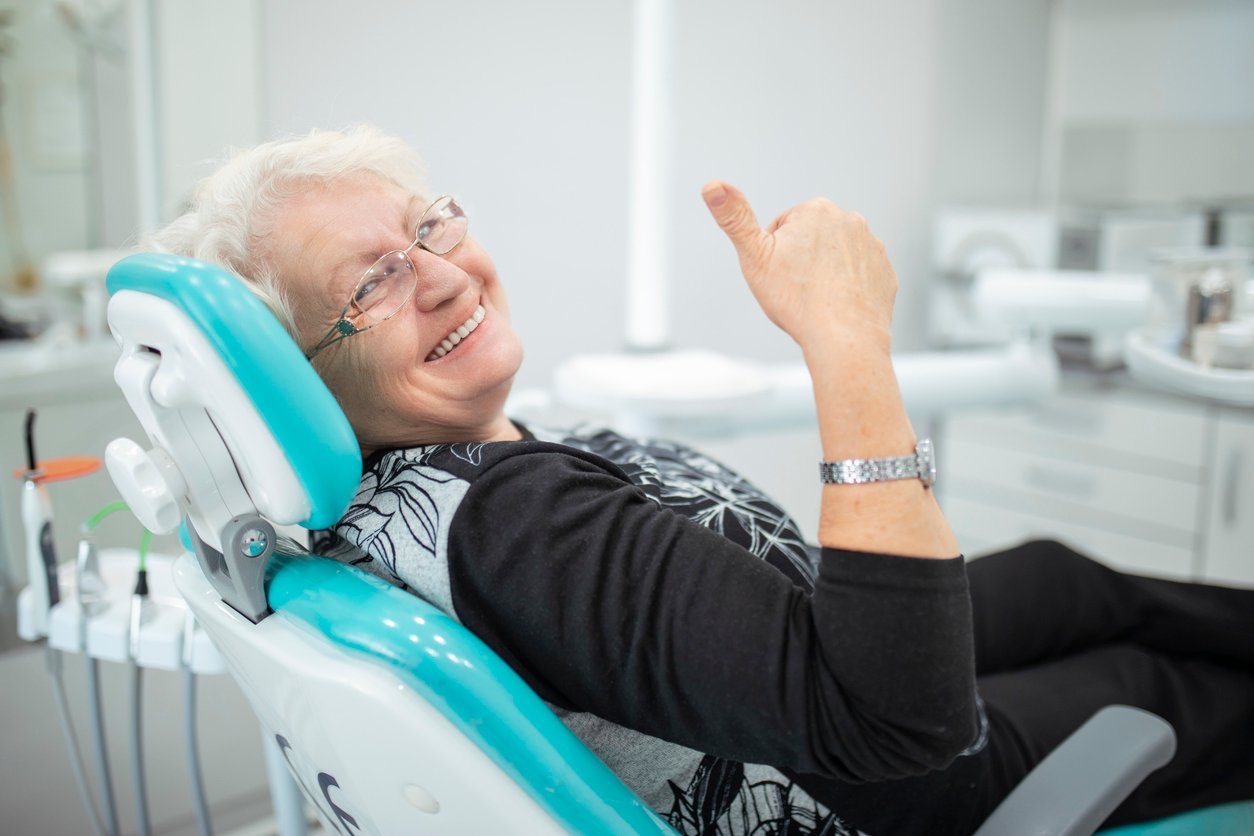
California senior dental care is a particular branch of dentistry that deals with the management of age-related changes in oral health. For example, medical literature supports that implants can be successfully placed in older-adults [1] (Compton et al., 2017). It combines personalized treatments such as implant-supported dentures, dry mouth remedies, and periodontal therapy to restore chewing ability, comfort, and confidence for older adults.

What Is Senior Specialty Dental Care?
Clinical evidence supports that older individuals are a diverse group with varying oral care needs [2] (Da Mata et al., 2023). Senior dental care is more than a routine checkup. As we get older, our mouths change in ways that traditional dentistry cannot always manage. For example, more than 60% of older adults are taking daily medications that cause dry mouth (xerostomia). With less saliva, teeth are more likely to decay quickly, and conventional dentures rub uncomfortably against the gums. Geriatric dental care is created to address these issues. Clove Dental has a treatment model that is designed to cater to the needs of older patients. We are dedicated to saving any remaining natural teeth, reversing the effects of medications, and providing long-lasting tooth replacement options that do not require strong suction or messy adhesives.
Senior Smile Restoration Procedure
Patience, precision and a focus on comfort are the three keys to restoring an older adult’s smile. When you bring your parent to Clove Dental, we have a streamlined, stress-free process:
The Comprehensive Assessment (Visit 1) We begin with 3D digital imaging, measuring jawbone density without the discomfort of traditional molds. We will also review your parent’s complete medical history to see how their current prescriptions might affect oral health.
We construct a custom Treatment Plan ; if implants are suggested, we assess the need for bone grafting. We offer choices to fit your lifestyle and budget.
Gentle Prep and Placement (Visits 2-3) When we are fitting custom dentures or placing dental implants, we use advanced local anesthesia and sedation options designed for older adults. Usually there is a short healing time of 3 to 6 months after the implant is placed for the titanium post to bond naturally to the jawbone.
Final Fitting & Support: Once healed, we fit the final prosthetic. We give them simple, easy to understand maintenance instructions and set up a routine maintenance schedule
Seniors’ Options for Replacing Teeth: A Comparison
When choosing how to replace missing teeth for an older adult, you must weigh cost, longevity, and daily maintenance.
|
Treatment Option |
Cost Range |
Durability |
Maintenance Level for Seniors |
Best Suited For |
|
Traditional Dentures |
Lowest upfront cost |
5–7 years (requires relining as gums shrink) |
High: Requires daily removal, soaking, and frequent use of adhesives. |
Patients lacking jawbone density who cannot undergo surgery. |
|
Implant-Supported Dentures (Snap-On) |
Moderate investment |
10–15+ years for the denture; lifetime for implants |
Medium: Snaps off for easy cleaning, but eliminates the need for messy adhesives. |
Seniors who want stability while chewing but prefer removable prosthetics. |
|
All-on-4® (Fixed Bridges) |
Premium investment |
15–20+ years |
Low: Brushes and functions just like natural teeth. Never removed by the patient. |
Seniors seeking the closest replacement to natural teeth with zero slipping. |
Cost & Financing in California
We know that managing healthcare expenses for a parent on a fixed income is a priority. The cost of dental for seniors in California varies according to the treatments needed, but there are always options. Traditional Medicare (Parts A and B) does not cover routine dental care or dentures, but many California seniors have Medicare Advantage plans (Part C) that include strong dental benefits. Also, older adults who are Medi-Cal members may qualify for Denti-Cal benefits to help with the cost of extractions and standard dentures. If you need advanced treatment like implants or All-on-4® restorations, Clove Dental has financing options that can be tailored to your needs. Our transparent, upfront pricing ensures families can make informed decisions without surprises. We serve communities throughout California. Our front office team will work directly with you to maximize your parent’s insurance benefits and find a monthly plan
FAQs
1. How can I find a dentist in California that cares for elderly patients with mobility issues?
When looking for a local dentist, ask about their accessibility and appointment rate specifically. All of our operatories at Clove Dental are wheelchair accessible, and we intentionally block longer appointment times for patients.
2. Dental implants for a 75 year old with osteoporosis?
Yes, age alone is not a disqualifier for getting implants. Although osteoporosis affects bone density, very successful placement of implants is still common. We use 3D CBCT scans to locate the densest areas of the jaw bone.
3. Will daily medications have an effect on my parent's current dentures?
Absolutely. Many medications for blood pressure, cholesterol and heart health reduce saliva production. Natural suction is needed to hold traditional dentures in place and this requires saliva.
References
[1] Compton, S. M., Clark, D., Chan, S., Kuc, I., Wubie, B. A., & Levin, L. (2017). Dental Implants in the Elderly Population: A Long-Term Follow-up. The International journal of oral & maxillofacial implants, 32(1), 164–170. https://doi.org/10.11607/jomi.5305[2] da Mata, C., & Allen, P. F. (2023). Providing Oral Healthcare to Older Patients-Do We Have What It Takes?. International journal of environmental research and public health, 20(13), 6234. https://doi.org/10.3390/ijerph20136234