.png?width=80&height=80&name=Clove%20Dental%20White%20Small%20(28).png "Clove Dental White Small (28)")
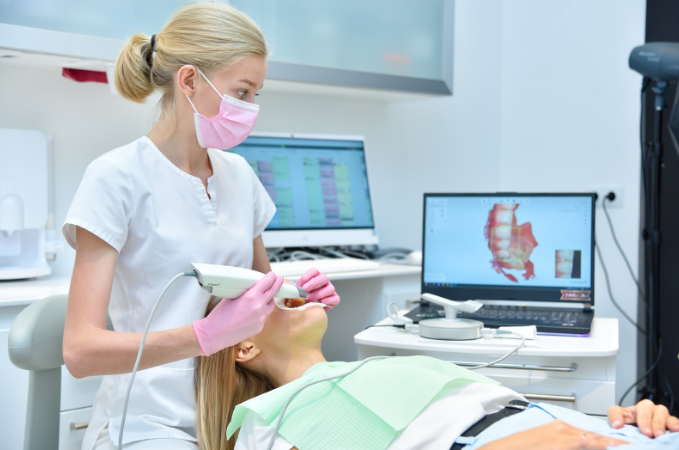
The stages of dental implant healing include the first 24-72 hours of swelling and clot formation, the first week of soft-tissue stabilization, weeks 2-6 of silent internal healing, the stage of osseointegration when the implant combines with the jawbone (3-6 months) and the final restoration stage when the crown is installed. The patients planning to have dental implants in Beverly Hills can anticipate the full recovery to take 3-9 months based on bone health, medical history and adherence to aftercare.
Key Takeaways
- The process of dental implants healing is a progressive one- each of the stages has a certain biological reason and time schedule.
- The greatest level of discomfort occurs during the initial 72 hours; the majority of patients are much more comfortable by day 5-7.
- The longest and most important phase is the bone-fusion (Osseointegration) phase, which lasts 3-6 months.
- Simple errors such as smoking, missing follow-ups or consuming hard foods may delay the healing process and expose the implants to failure.
- An excellent dental implants provider in Beverly Hills will establish attainable and individualized expectations at the very beginning.
Are you considering dental implants but nervous about what the recovery actually looks like? The most frequent cause of hesitation in patients is uncertainty, not the process itself, but that period between it.
The thing is that implant healing is not a single event. It is a series of five different actions, each of which performs a particular task within your jaw. The process is much less daunting once you know what goes at every stage.
Just beginning your research or booked to have a surgery? This guide will help you know what to expect week by week, phase by phase. And should you be in need of the dental implants in Beverly Hills, it would be prudent to know this timeline so that you can plan your life around it other than the other way round.
Stage 1: The First 24–72 Hours– Where Most Anxiety Happens
The most noticeable and misunderstood period after the implant surgery is the first three days following the surgery.
What is going on in your body: Your body is instantly starting to clot and become inflamed. At the implant site a blood clot is formed. There is nothing wrong with this clot, it is the basis of healing. The tissue around the area becomes swollen with the immune cells moving in to initiate repair.
How you will feel: swelling (usually at its highest at 48-72 hours), some degree of throbbing or pressure, fatigue. Jaw bruising or cheek bruising is normal. The first 24 hours may be involved in bleeding, which is intermittent.
What to do: rest, do what you were told to do after the surgery, apply ice packs after every 20 minutes, do not rinse or spit vigorously. The clot should remain in the position.
The greatest mistake here is to shake up the clot. Do not use straws, smoke, or rinse vigorously. The loss of the clot leads to a painful condition known as dry socket.
Stage 2: The First Week– When Healing Starts to Stabilize
Most patients will experience a significant change by day 4-7. The swelling starts to resolve, the sharp pains are replaced by a low-grade pain, the energy begins to restore. The stitches may still remain at this stage, those that dissolve on their own.
The main focus here is the soft tissue healing. The implant gum tissue is sealing and forming a protective layer. The implant itself is not yet attached to the bone that will follow.
What you can do: resume light exercise, consume soft food (consider yogurt, soup, scrambled eggs), and warm salt water rinse as advised. Nothing crunchy, chewies, or hard on the implant side.
Stage 3: Weeks 2–6– The Quiet Phase Most People Misread
This is the level that will cause the most inconvenience to patients. You feel fine. The edema has disappeared. Everyday life goes back to normal. And so patients tend to think a healing is done and that is where an error occurs.
Your body is still on the move underneath the surface. The gum tissue is completely sealing. The process of adhering to the implant surface by the bone cells is just starting. This is a sensitive phase as it is stable when it is not quite stable.
The early integration process can be interrupted by premature stress of the implant, such as biting something hard or grinding teeth in the night or missing a follow-up.
What to continue: soft food on the side of the implant, gentle oral health care and maintaining regular appointments with your dentist. Consistent patients at this stage have much improved long term outcomes.
Stage 4: Bone Integration– The Real Foundation Phase
Osseointegration is the process which renders the dental implants unique among all other available forms of tooth replacement. It is where the titanium post that is inserted into your jawbone combines with living bone tissue.
This phase is normally 3-6 months, but it can vary. In this period, the surface texture of the implant is developed to a microscopic level by growth of special bone cells known as osteoblasts, which essentially cement it in place. The implant is as stable as a natural tooth root when complete.
Nothing will be actively experienced during the process of osseointegration. Not aching, no outward sign. It is a biological process that occurs under the gums. All you have to do is to keep it safe: no smoking (which is a serious deterrent to bone repair), excellent oral health, and regular check-ups.
To patients who want dental implants in Beverly Hills: bone density and health of the jaw is evaluated before surgery and this is done specifically to estimate the success of this step. Individuals who have lost their bones might be in need of a graft procedure to first form the appropriate base.
Stage 5: Final Restoration– When It Feels Like a Real Tooth
After confirmation of the osseointegration by imaging and clinical tests, the final crown is bonded. It is at this point where the implant becomes a surgical site into a fully functioning and natural-like tooth.
The crown is tailor-made to fit in with the rest of your teeth in shape, size, and shade. Most patients will not be able to differentiate it, even most dentists, when placed correctly, can not differentiate it to a natural tooth.
Post-crown modification: Once the crown is placed, you are able to resume a normal diet (gradually), smile confidently, and maintain the implant as you would natural teeth: brush, floss, and have the implant professionally cleaned.
What Most Patients Don’t Expect About Healing
Even well-prepared patients are sometimes caught off-guard by a few realities:
- Healing isn't linear. Better days will occur with a few days that will feel a little worse. It is normal and does not signify failure.
- The place of implantation can be different during months, but not painful, it just feels different. This is your body adapting.
- Temporary crowns (worn in the integration stage) can be loose or awkward. They are not here to stay, your ultimate restoration will be much more natural.
- Fatigue is real. Significant dental operation strains the immunity. Allow yourself to have a rest during the first week.
The Mistakes That Can Slow Implant Healing
The majority of complications of implants are avoidable. These are the most frequent mistakes that patients commit-
- Smoking or vaping- greatly impairs blood flow to the healing tissue and greatly increases the risk of failure.
- Missing follow-ups- the earlier the problems are identified, the easier they are to deal with; the later the problem, the harder it is to deal with.
- Eating too vigorously at an early age- even when you are feeling great - bone is months to integrate.
- Lack of mouth care in the area of the implant- bacteria may lead to peri-implantitis, which is an infection that kills the bone on which the implant is held.
- Disregarding night grinding- uncontrolled bruxism exerts too much pressure on restoring implants and may lead to their failure.
How Healing Differs from Patient to Patient
There is no identicality in the recovery of two implants. Some of the things that affect your personal timeline are-
- Jaw health and bone density during surgery.
- The presence of a bone graft prior.
- General well-being, such issues as diabetes or autoimmune diseases may delay the recovery.
- Age - younger bones will integrate faster.
- Even if you quit smoking in the past.
- Total number of implants done at a time.
It is a comprehensive pre-surgical assessment that enables your provider to provide you a realistic, customized schedule not a generalized one.
What to Expect If You’re Considering Dental Implants in Beverly Hills
When considering dental implants in Beverly Hills, the quality of your provider defines each part of this process, starting with the first examination, and ending with the last crown.
At Clove Dental, we do the work of implant treatment as it needs to be done: with detailed imaging, honest discussion of your candidacy, and a life-friendly recovery plan. We do not simply implant, we take you through the process of healing in a way that you will never be left in the dark.
We also consider that an educated patient is a better healer. When you know what your body is about and why, you make better choices, in dieting, exercising, oral health and when to visit us.
Should you be willing to find out about dental implants in Beverly Hills, we would recommend you begin with a complete consultation. The correct base starts even prior to the surgery taking place.

Final Takeaway
Dental implant healing isn't something that happens to you, it's something you actively participate in. Every stage is important and what you do at each stage will be the determinant of what happens.
The procedure is time-consuming. However, when properly done, the outcome is a restoration that appears, feels and works like a natural tooth usually over decades.
To find out more about dental implants in Beverly Hills or make your appointment with Clove Dental, visit clovedds.com. We are here to answer all of your questions and guide you through all levels.
FAQs
How long does dental implant healing take in total?
It is a slow process of 3-9 months to heal up fully after surgery to the final crown. This broad spectrum is based on the necessity to have a bone graft, your general health, and adherence to the aftercare guidelines. We have a customized schedule at Clove Dental when you visit.
Is dental implant surgery painful?
The procedure itself is carried out with the help of local anesthesia, which means that you will not experience pain during the operation. Post-operative pain/symptoms/discomfort, swelling, tenderness and pressure are normal during the first 3-5 days and are treated with prescribed or over-the-counter pain medication. The recovery is reported to be less than anticipated by most patients.
Can dental implants fail during the healing process?
Yes, but the success rates are low (usually less than 5% with a qualified practitioner). Smoking, uncontrolled systemic health conditions, infection, and mechanical overloading are the most common causes. The majority of failures are during the osseointegration stage. Your provider will keep a close eye on the progress to identify problems at an early stage.
What foods can I eat after implant surgery?
The first 1-2 weeks are dedicated to soft foods: yogurt, mashed potatoes, soups, eggs and smoothies (no straws). On the implant side, nothing hard, crunchy or chewy should be consumed within a minimum duration of 68 weeks. Complete normal diet may resume once final crown in place and bone integration is established.
How do I know if my implant is healing correctly?
Indicators of a healthy healing process are reduction of swelling and pain within the first few days, gum tissue healing cleanly above the site, and absence of ongoing bleeding, pus or abnormal odor. Should you develop more pain after day 4, fever or any infection, notify your provider immediately. The best way to check the healing is on track is through regular check-ups.
Are dental implants in Beverly Hills worth the cost?
Yes to most patients. The only method of tooth replacement that maintains the jawbone, facial structure and functions of a natural tooth is dental implants. A properly-placed implant may last 20-30 years or more with proper care, unlike bridges or dentures, and is one of the most economical long-term investments in oral health.