.png?width=80&height=80&name=Clove%20Dental%20White%20Small%20(28).png "Clove Dental White Small (28)")
.jpg?width=626&height=416&name=image(1143).jpg)
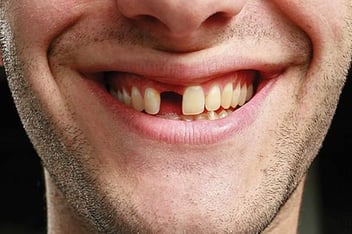
A dental bridge is a structure that is used to replace a missing tooth between healthy teeth or implants on both sides. In addition to a restored smile it also prevents adjacent teeth from moving, and maintains your bite as it was prior to tooth loss.
Key Takeaways
- Losing a tooth affects more than how your smile looks.
- A bridge works by anchoring a replacement tooth to the teeth beside it.
- Not every missing tooth calls for the same type of bridge.
- An empty space left too long can cause problems for the teeth around it.
- Getting used to a new bite takes a little time, and that's normal.
Lost a tooth and figured you'd deal with it later? A lot of people do. The gap doesn't hurt, life gets busy and it's easy to assume it's mostly a cosmetic issue you'll get around to fixing eventually.
Here's the part that surprises most patients: an empty space in your mouth doesn't just sit there quietly. Teeth shift, your bite adjusts to compensate and what started as one missing tooth can turn into a bigger problem. Dental bridges in Oxnard are built to stop that chain reaction before it starts, not just to fill a gap for appearance's sake.
What Changes When You Lose a Tooth Besides Your Smile?
The visible gap is only part of it. Underneath, your other teeth start reacting almost immediately. Neighboring teeth can tilt into the open space over time and the tooth opposite the gap, on the other jaw, can gradually shift too, since it no longer has anything to bite against in that spot.
Your bite changes as a result, sometimes in ways you don't notice day to day but that add up over months and years. Chewing on one side more than the other, extra pressure landing where it shouldn't, jaw discomfort that seems to come out of nowhere, all of it can trace back to one missing tooth nobody got around to replacing.

How Does a Dental Bridge Fill the Space Left by a Missing Tooth?
A bridge works exactly like the name suggests. It spans the gap, anchored on either side, either to the natural teeth next to the space or to dental implants placed specifically to support it. In between, a replacement tooth, called a pontic, fills the actual gap and takes over the job the missing tooth used to do.
Once placed, a bridge is fixed in your mouth, not removable like a partial denture. That means it functions much closer to a natural tooth day to day, letting you chew, speak and smile without thinking about it constantly.
Which Type of Dental Bridge Could Replace Your Missing Tooth?
Not every bridge is built the same way. A few common types include-
- Traditional bridges, anchored to crowns placed on the natural teeth on either side of the gap.
- Cantilever bridges, anchored to a tooth on only one side used when there's only a neighboring tooth on one end of the gap.
- Maryland bridges, held in place with a metal or porcelain framework bonded to the back of nearby teeth, rather than crowns.
- When there are a few missing teeth in a line, implant supported bridges are used which are supported by dental implants rather than the natural teeth.
Which type fits your situation depends on how many teeth are missing, where they're located, and the condition of the teeth nearby. This is one of the first things discussed when getting dental bridges in Oxnard.
Why Can't You Just Leave a Missing Tooth Alone?
It's tempting to think a single missing tooth, especially one in the back of your mouth, doesn't need urgent attention. But the shifting mentioned earlier doesn't stop on its own. Left long enough, it can lead to bite misalignment, extra wear on other teeth and even jaw discomfort from teeth compensating for the gap.
There's a bone consideration too. The jawbone under a missing tooth can gradually lose density over time without a tooth root there to stimulate it. That's less of a factor with a traditional bridge but it's part of why waiting years to replace a missing tooth tends to make treatment more complicated than it needed to be.
How Should Your Bite Feel After a Dental Bridge Is Placed?
Right after placement, it's normal for a bridge to feel slightly unfamiliar, a bit high, a bit different when you bite down. That resolves within a few days as you adjust and as any final fit adjustments are made.
What shouldn't happen is ongoing pain, a bridge that feels loose or a bite that consistently feels off weeks later. If any of that continues, it's worth going back in for an adjustment rather than assuming you'll just get used to it eventually.
What Should You Ask Before Getting Dental Bridges in Oxnard?
A few questions worth bringing to your consultation-
- Which type of bridge fits my specific gap and the condition of my remaining teeth?
- If the bridge is properly cared for, how long would you expect it to last?
- Is there any extra treatment that needs to be performed before the bridge is installed (such as a crown or implant)?
- How many times will the entire process have to be repeated?
- How will care and cleaning be performed everyday after the bridge is installed?
Getting clear answers upfront makes the whole process feel less like a mystery and more like a plan you understand.
Conclusion
A missing tooth rarely stays a simple, isolated issue. Left alone, it tends to affect the teeth around it, your bite and your comfort day to day. A well-fitted bridge stops that chain reaction and restores both function and appearance in one solution. If you're dealing with a gap you've been putting off addressing, our team at Clove Dental in Oxnard can walk you through which type of bridge fits your situation and what the process actually looks like.
FAQs
How long do dental bridges last?
With proper care, bridges commonly last ten years or longer, though this varies by type and individual habits.
Is multiple dental appointments necessary to get a dental bridge?
Usually yes, two visits, one for preparation and impressions and a second for placing the final bridge.
Is a dental bridge better than an implant for a missing tooth?
It is dependent on the circumstances. Each method of replacement, bridges and implants have pros and cons based on the number of missing teeth and the state of the remaining teeth in the area.
Will a dental bridge look natural?
Yes, bridges are color-matched and shaped to blend in with your surrounding teeth.
How do I clean a dental bridge?
Bridges do need a special flossing technique and should be brushed daily beneath the pontic, which your dentist can demonstrate to you.