.png?width=80&height=80&name=Clove%20Dental%20White%20Small%20(28).png "Clove Dental White Small (28)")
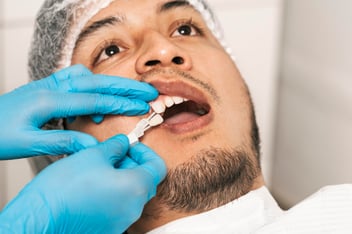
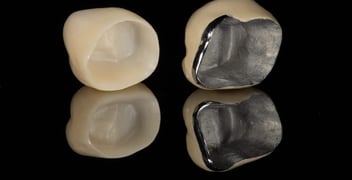
A dental crown is a custom-fitted cap placed over a damaged, weak or extensively restored tooth to restore its shape, strength and appearance. A crown may be required for a tooth if it is cracked, if it has a large cavity that the filling cannot withstand, it has just had its root canal, or if it is likely to break.
Key Takeaways
- A crown is a protective covering that covers the entire visible tooth structure and provides a much greater structural support than a filling.
- Crowns can help to save a tooth that may need to be extracted, keeping your smile and bite alignment intact.
- Tooth fractures usually occur slowly and without warning; a crown at an early stage can save you from a big hassle down the road.
- Modern porcelain and zirconia crowns are made in a color, shape and translucency that matches that of your natural tooth.
- At Clove Dental, the Beverly Hills dental crowns are designed to fit perfectly in one and provide the durability and accurate shade match that you require.
Have you been told you need a crown but aren't quite sure what that means or whether it is really necessary? It is one of the most common questions patients ask and it is a fair one.
A dental crown is simply a protective cap that is put on a tooth that is missing, broken, or decayed, and it restores its appearance and function. It is not just a cosmetic fix, it is the difference between saving a tooth and losing it. Whether your tooth is cracked, worn down or severely decayed, dental crowns in Beverly Hills offer a reliable path back to a strong, natural-looking smile.
How Do You Know When a Tooth Needs More Than a Filling?
Fillings are excellent for small to mid-sized cavities. But when decay or damage becomes too extensive, a filling simply doesn't provide enough coverage or support. A crown might be recommended if-
- A cavity which involves more than half of the surface of the tooth.
- A tooth that has been filled many times and is weakened.
- Important sensitivity or pain on biting one particular tooth.
- Visible crack or chip that is pointing to the gum line.
- A tooth that has recently undergone a root canal.
In these situations, a filling would be like patching a structural wall with tape. The tooth needs full coverage to hold together under the daily pressure of chewing.
What Does a Dental Crown Actually Protect?
A crown covers the entire visible portion of the tooth, everything above the gumline. This full coverage does several things at once-
Holds a cracked tooth together so the crack doesn't spread or cause the tooth to split
Seals out bacteria from a tooth with deep decay or a large cavity
Restores proper bite function when the tooth's shape has been significantly altered
Protects a root canal-treated tooth, which becomes more brittle after the procedure
Think of it as a permanent helmet for a tooth that can no longer adequately protect itself.
Why Teeth Often Crack Slowly Before Patients Realize It
Cracked teeth are surprisingly common and surprisingly easy to miss. A crack doesn't always cause immediate pain. In many cases, it causes intermittent sensitivity or a sharp sensation only when biting at a specific angle.
By the time a patient notices consistent discomfort, the crack may have already progressed. If it reaches the pulp (the inner nerve tissue), a root canal becomes necessary before a crown can be placed. If it extends below the gumline, extraction may be the only option.
This is why routine exams matter. Identifying a crack early before it deepens, is exactly when a dental crown in Beverly Hills can do its most important work.
Can a Crown Save a Tooth That Might Otherwise Need Extraction?
Often, yes. When a tooth is severely damaged but the root is still healthy, a crown can restore it to full function. This matters for several reasons.
Losing a tooth creates a gap that neighboring teeth gradually shift to fill. That shifting changes your bite, can cause jaw discomfort, and makes remaining teeth harder to clean properly. A crown that preserves the natural tooth avoids that entire chain of events.
Implants and bridges are excellent solutions when extraction is unavoidable but keeping your natural tooth is almost always the preferred outcome when it's possible.
What Happens if a Weakened Tooth Isn’t Protected in Time?
Delaying a crown on a tooth that needs one rarely ends well. A weakened tooth under daily chewing pressure is at constant risk of-
Fracturing- sometimes severely enough that the tooth can no longer be restored
Infection- bacteria entering through cracks or exposed decay can reach the nerve
Increased treatment complexity- what needed only a crown may now need a root canal and a crown, or extraction and a replacement
The longer a compromised tooth goes unprotected, the fewer and more expensive the options become. Treating it early is almost always simpler and less costly.
What’s the Difference Between a Crown and a Filling?
A filling replaces missing tooth structure inside the tooth. A crown replaces the entire outer shape of the tooth above the gum. Here's a simple way to think about it-
|
Filling |
Crown |
|
|---|---|---|
|
Coverage |
Partial (internal) |
Full (external) |
|
Best for |
Small to mid-sized cavities |
Large decay, cracks, post-root canal |
|
Structural support |
Moderate |
High |
|
Longevity |
5–15 years |
10–25+ years with care |
When decay or damage crosses a certain threshold, a filling can actually weaken the remaining tooth structure by removing more of it. A crown distributes bite force evenly across the whole tooth, which is why it's the stronger long-term solution.
How Clove Dental Creates Natural-Looking Dental Crowns in Beverly Hills
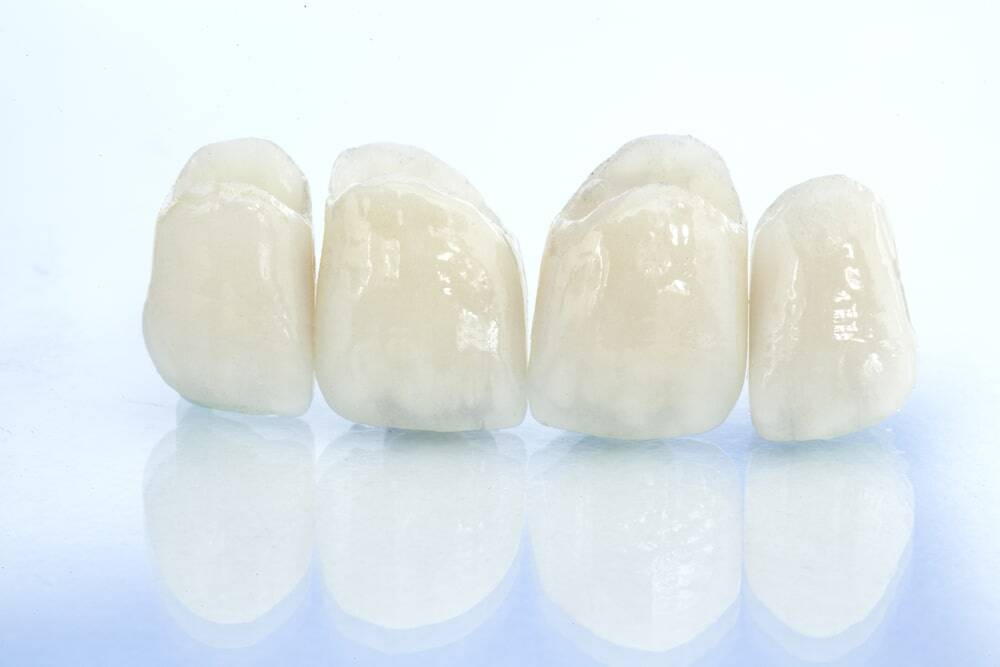
Porcelain and zirconia materials that reflect light, like natural enamel, are used. The outcome is a crown that's not only protective, but that integrates seamlessly.
All Beverly Hills dental crowns are meticulously matched in shades, contoured and fit checked. Impressions or digital scans are taken so that the crown fits correctly, feels comfortable when biting and doesn't interfere with adjacent teeth.
We also guide patients through the process of preparation to placement, step-by-step, to avoid surprises. Most patients complete the process in two appointments, with a temporary crown protecting the tooth in between.

Conclusion
A dental crown isn't something to put off. When a tooth is cracked, heavily decayed, or structurally compromised, a crown is often the most effective way to protect it and save it. The earlier it's placed, the simpler the process and the better the outcome.
If you've been told you may need a crown, or if you have a tooth that's been bothering you, we're here to help. Schedule a consultation for dental crowns in Beverly Hills with Clove Dental and let's take a closer look at what your tooth needs.
FAQs
Do dental crowns look natural?
Modern crowns are designed to match your natural tooth color, shape and translucency. We employ high quality ceramic and zirconia materials at Clove Dental, which are extremely similar to natural teeth in typical lighting.
Can I eat normally with a dental crown?
Yes, once the crown is fully cemented and any initial sensitivity fades, you can eat normally. We advise avoiding very hard foods like ice or hard candy which can damage natural teeth and crowns alike.
Are dental crowns covered by insurance in Beverly Hills?
Many dental insurance plans will cover some of the costs of a crown, especially if the crown is medically necessary. Your team can provide you with a review of your coverage and let you know any out-of-pocket expenses prior to treatment.