.png?width=80&height=80&name=Clove%20Dental%20White%20Small%20(28).png "Clove Dental White Small (28)")

A dental crown is a custom-fitted cap that covers the entire visible surface of a damaged, weakened, or treated tooth, restoring its shape, strength, and appearance. For patients seeking dental crowns in Ventura, prompt treatment after a recommendation is important, as a tooth that needs a crown does not improve on its own, and delaying treatment leads to more complex, more costly outcomes.
Key Takeaways
- A dental crown covers the entire visible portion of a tooth, restoring its strength, function, and appearance when a filling or other conservative treatment is no longer sufficient.
- Crowns are most commonly recommended after root canal treatment, for teeth with large or failing fillings, and for cracked or significantly decayed teeth.
- Acting on a crown recommendation promptly can prevent the need for more invasive treatment, including extraction later.
- Dental crowns in Ventura at Clove Dental are planned and placed with attention to both long-term function and natural appearance, with same-day crown options available for qualifying cases.
Has your dentist ever recommended a crown and you found yourself wondering if my tooth doesn't hurt, so how urgent can it really be? You are not alone. A dental crown recommendation is one of the most commonly delayed treatments in dentistry because the tooth in question feels perfectly fine at the moment the recommendation is made.
That disconnect between how a tooth feels and what it actually needs is one of the most important things to understand about crown treatment. At Clove Dental, we explain the reasoning behind every crown recommendation clearly because a patient who understands why a crown is needed is far more likely to get the outcome they want, and far less likely to end up in the chair for something more serious down the road.
Here is what dental crowns in Ventura actually do, when they are needed, and why timing matters more than most people realize.
If My Tooth Doesn't Hurt, Why Would I Need a Crown?
This is the most common question patients ask when a crown is recommended and it deserves a direct answer. Dental pain is a late-stage signal. By the time a damaged or weakened tooth hurts consistently, the problem has almost always progressed well beyond where it started.
A tooth can be significantly weakened by a large old filling, a crack running through its structure, or decay that has spread beneath an existing restoration, all without producing any sensation that tells you something is wrong. The nerve inside the tooth does not always register structural compromise until that compromise reaches it directly, which happens only when the situation has become serious.
What Does a Dental Crown Actually Do?
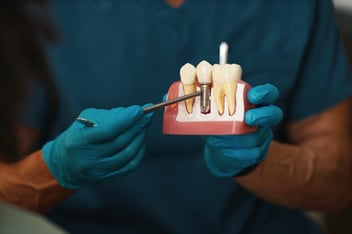
A crown, sometimes called a cap, is a custom-fabricated restoration that covers the entire visible portion of a tooth above the gumline. Unlike a filling which repairs a specific area of damage within the existing tooth structure, a crown encircles the whole tooth and becomes its new outer surface.
This full-coverage design accomplishes several things simultaneously-
- Restores shape and function- A tooth that has lost significant structure through decay, fracture or prior treatment can be returned to its original size and biting surface with a crown.
- Distributes chewing forces evenly- A weakened tooth without a crown concentrates biting pressure on the compromised structure.
- Seals the tooth against bacteria- A well-fitted crown closes off the internal tooth structure from oral bacteria, protecting against new decay or reinfection.
- Restores appearance- Tooth-colored crowns are fabricated to match the shade and shape of neighboring teeth, making the restoration visually seamless within the smile.
In short, a crown takes a tooth that is no longer structurally reliable on its own and gives it a new exterior that functions and looks like a natural tooth for a decade or more.
Why Some Teeth Become Too Weak for Another Filling
This is the clinical reality behind many crown recommendations. Teeth are not infinitely repairable with fillings. Each time a tooth is filled, a portion of its natural structure is removed to clear away decay and create a sound bonding surface. Over the years and multiple filling replacements, the remaining tooth structure becomes thinner and more prone to cracking.
There is a general principle in restorative dentistry. Once a filling occupies more than roughly half the width of a tooth, the remaining walls of natural tooth structure on either side become too thin to reliably withstand normal biting forces. At that point, another filling is not a repair; it is a risk. The thin walls are vulnerable to fracture, and a fractured tooth wall can extend below the gumline, sometimes making even a crown impossible and leading directly to extraction.
A crown placed before that fracture occurs protects the existing tooth walls by encasing them fully, distributing chewing forces across the whole restoration rather than against fragile cusps. It is the difference between preserving a tooth and eventually losing it.
Can a Crown Prevent a Root Canal or Extraction Later?
In many cases, yes and this is one of the most clinically important reasons to act on a crown recommendation promptly.
When a cracked tooth is left uncrowned, normal chewing forces flex the crack open and closed with every bite. This flex allows bacteria to migrate deeper into the tooth, and the mechanical stress drives the crack further toward the root over time. A crack that reaches the pulp, the nerve and blood vessel tissue inside the tooth triggers the kind of infection that requires a root canal. A crack that extends into the root below the gumline may make saving the tooth impossible entirely.
The window for that outcome is open now, at the moment the crack or structural weakness is identified. It does not stay open indefinitely.
Why Dental Crowns in Ventura Are Common After Root Canal Treatment
Root canal treatment saves a tooth by removing infected or inflamed pulp tissue from inside the canal, disinfecting the space, and sealing it. What it also does is leave the tooth more brittle than it was before. The pulp tissue that was removed provided moisture to the surrounding dentin. Without it, the tooth becomes drier and more susceptible to fracture under the stresses of daily chewing.
This is why the vast majority of root canal-treated back teeth molars and premolars that bear the primary load of chewing require a crown following the procedure. The root canal saves the tooth from infection. The crown saves it from fracture.
Do Modern Crowns Still Look Artificial?
The all-metal crowns that gave rise to the "silver tooth" image are largely a thing of the past for visible teeth. Modern dental crowns, particularly full porcelain and zirconia restorations, are fabricated to match the optical properties of natural tooth enamel in ways that earlier materials simply could not.
Natural tooth enamel is not purely white or opaque. It is slightly translucent, with variations in color from the gumline toward the biting edge. It has surface micro-texture that interacts with light in specific ways. A well-fabricated porcelain or zirconia crown replicates these characteristics: the translucency gradient, the surface character, and the way it catches light from different angles.
For patients concerned that a crown will be visually obvious, modern materials have largely eliminated that concern, provided the crown is designed and fabricated with appropriate care and attention.
What Happens if You Delay a Crown That Has Been Recommended?
The short answer: the situation the crown was meant to prevent tends to happen. What that looks like specifically depends on why the crown was recommended in the first place.
A tooth with a large failing filling that is left without a crown fractures, sometimes in a way that is still restorable with a crown, sometimes in a way that requires extraction. A cracked tooth left uncrowned continues to flex and propagate the crack until it reaches the nerve, resulting in infection and root canal treatment or until the crack extends to the root and extraction becomes the only option. A severely decayed tooth left untreated eventually becomes an abscess, with associated pain, swelling and systemic health implications.
This is not scare tactics. It is the consistent clinical pattern that dentists observe in patients who present with teeth that were crown candidates a year or two earlier and are now past that threshold.
How Clove Dental Restores Function and Appearance With Dental Crowns in Ventura
At Clove Dental, crown treatment begins with a thorough evaluation of the tooth, the surrounding bone, and the bite relationship because a crown that does not account for how the patient's teeth come together will not function well or last as long as it should.
We take the time to explain exactly why a crown is recommended for your specific tooth, what we see on the X-ray, what we find clinically, and what we expect to happen if the crown is placed now versus if it is delayed. We want our patients to be making an informed decision, not simply complying with a recommendation they do not understand.

Conclusion
A dental crown recommendation is rarely urgent in the way a toothache is urgent but it carries urgency of a different kind. The window between "this tooth needs a crown" and "this tooth needs a crown" closes gradually and without obvious signals. By the time symptoms arrive, the situation has changed.
The most straightforward, least costly, and least invasive outcome is almost always the one that happens promptly. At Clove Dental, we are here to make that as easy as possible with clear explanations, comfortable treatment and dental crowns in Ventura designed to last.
Do not wait for a simple recommendation to become a complicated problem. Book your appointment today at clovedds.com and let us take care of your tooth before the window closes.
FAQs
How long do dental crowns last?
With proper care, regular brushing, flossing, professional cleanings and avoiding habits like chewing ice or grinding teeth without a night guard, dental crowns last 10 to 15 years. Many patients keep crowns in good condition for 20 years or more. The quality of the fit and the material used at placement significantly influences longevity.
Do I always need a crown after a root canal?
For back teeth molars and premolars, a crown after root canal treatment is almost always recommended because these teeth bear the highest chewing forces and are most vulnerable to fracture after the pulp is removed. Front teeth, which experience less chewing pressure, may sometimes be restored with a post and core buildup instead of a full crown, depending on how much natural tooth structure remains.
Can dental crowns in Ventura be done in a single appointment?
In many cases, yes. Clove Dental offers same-day crown fabrication using in-office digital milling technology for qualifying cases, eliminating the temporary crown stage and the need for a second appointment.
Will my insurance cover a dental crown?
Most dental insurance plans cover a significant portion of crown treatment 50 percent of the procedure cost after the deductible, up to the annual maximum.
.jpg?width=352&name=image(769).jpg)