.png?width=80&height=80&name=Clove%20Dental%20White%20Small%20(28).png "Clove Dental White Small (28)")
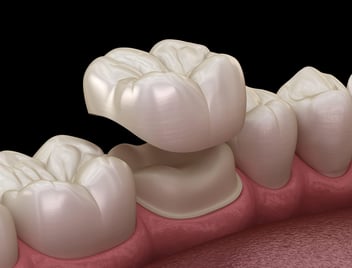
Dental crowns in Camarillo are tooth-shaped restorations that cover the entire visible portion of a damaged tooth, protecting what remains of the tooth structure and restoring full function and appearance. A crown is recommended when a tooth has too much damage for a filling to adequately support after significant decay, a fracture, a root canal or repeated restoration failure.
Key Takeaways
- Dental crowns in Camarillo are recommended when a tooth has too much damage for a filling not as a preference but as a clinical necessity for structural protection.
- The filling-to-crown tipping point is reached when remaining tooth structure can't adequately support a direct restoration under normal chewing forces.
- Crown material selection zirconia, porcelain-fused-to-metal or full porcelain is based on location, bite forces and aesthetic priority, not just preference.
- Crowns placed promptly after root canal therapy have significantly better long-term survival than those where crown placement is delayed.
A crown recommendation can feel unexpected particularly if the tooth in question doesn't seem that different from how it felt before. Understanding what a crown actually does, why it becomes necessary instead of a filling and what the process involves demystifies what's the most significant routine dental expense a patient faces.
At Clove Dental, dental crowns in Camarillo are recommended for specific clinical reasons not as a default for any tooth with a problem. Here's what those reasons are, how the decision is made and what patients can expect from the process.

"I Only Have One Broken Tooth" So Why Is My Dentist Talking About a Crown?
The appearance of a tooth from the outside doesn't convey how much structural integrity remains. A tooth that looks only slightly broken may have a fracture line that extends significantly below the surface.
A crown works differently from a filling. A filling replaces missing tooth structure within the tooth, it depends on the surrounding walls to support it. A crown encases the entire visible tooth from the outside, distributing chewing forces across the crown surface rather than concentrating them on the remaining tooth walls.
The Tipping Point: When a Filling Stops Being the Best Option
Several specific situations consistently reach the point where a crown becomes more appropriate than a filling-
After root canal therapy
A tooth that has undergone root canal treatment has had its internal living tissue removed, leaving the dentinal walls dehydrated and more brittle than a vital tooth. Posterior teeth molars and premolars that bear the brunt of chewing force are at significant fracture risk without crown protection.
When decay encompasses multiple surfaces
A cavity confined to one surface of a tooth can often be restored with a filling. When decay has spread to involve two or more surfaces or has extended near the gum line in a way that leaves minimal tooth structure, the case for a filling becomes progressively weaker.
After a large existing filling has failed
Large old fillings, particularly silver amalgam fillings don't fail cleanly. When they crack or allow secondary decay to develop underneath, the tooth they were protecting has lost enough structure in the process that the repair requires a crown rather than another filling.
When a cusp has fractured or is at risk
Cusps that have been undermined by decay or old restorations can fracture under biting force with no warning. When a dentist identifies a cusp at risk, placing a crown before fracture is a simpler, more successful outcome than attempting to restore a tooth after a cusp has split particularly if the fracture extends below the gum line.
Why Two Similar Teeth Can Receive Completely Different Recommendations
Two patients, both missing a similar-sized chunk of a back tooth, can legitimately receive different recommendations and this apparent inconsistency confuses patients who expect the same presentation to produce the same result.
The variables that change the recommendation include-
Where the damage extends
Damage above the gumline is restorable. Damage that extends significantly below the gum line involves the structural support of the tooth differently and may indicate extraction rather than crown placement if it can't be adequately accessed.
How much tooth remains
A crown needs adequate tooth structure to bond to and support it. A tooth that's been too severely broken down may not have enough structure for a crown to seat and hold predictably without first building up the tooth with core material.
The health of the root and surrounding bone
A tooth with healthy bone support is a reasonable candidate for a crown. A tooth with significant bone loss from gum disease or a compromised root structure may not be worth the investment of crown treatment if the prognosis is poor regardless.
What Your Dentist Is Looking For Before Saying, "This Tooth Needs a Crown"
A crown recommendation at Clove Dental follows a clinical evaluation that includes imaging, visual examination and bite assessment.
X-rays confirm that the root structure is intact, that there's no periapical pathology that would need to be addressed before placing a crown and that bone support around the tooth is adequate.
Evaluation of remaining tooth structure determines how much healthy dentin is available for the crown to bond to and whether an additional foundation of filling material placed before the crown is needed to provide adequate support.
Assessment of the margins how far the damage extends toward or below the gum line affects whether the crown can be prepared and finished in a way that will be accessible for cleaning and stable over time.
Conclusion
Dental crowns in Camarillo at Clove Dental are recommended when the clinical situation requires the structural protection only a crown can provide. Understanding the tipping point between filling and crown and what the dentist is evaluating before making that recommendation gives patients a clearer basis for deciding how to proceed.
Schedule your crown consultation at Clove Dental in Camarillo and get a clear explanation of exactly why the treatment is recommended for your specific tooth.
FAQs
How long do dental crowns in Camarillo last?
With proper care, modern ceramic crowns last ten to fifteen years or longer. Metal-ceramic and full-metal crowns may last longer due to material durability. The factors that most affect longevity are bite forces, oral hygiene and the quality of the original preparation and cementation.
What materials are used for dental crowns and how is the choice made?
The most common materials are zirconia, porcelain-fused-to-zirconia or metal and lithium disilicate. The choice is based on the tooth's location, the patient's bite forces and aesthetic priorities.
Can I wait on a crown recommendation?
It depends on the urgency of the clinical situation. A tooth that's been recommended for a crown because it's at risk of fracture has a time-sensitive element. Continued use under chewing forces can cause the fracture to occur and possibly extend to a point where the tooth is no longer restorable.
Will my crown match my other teeth?
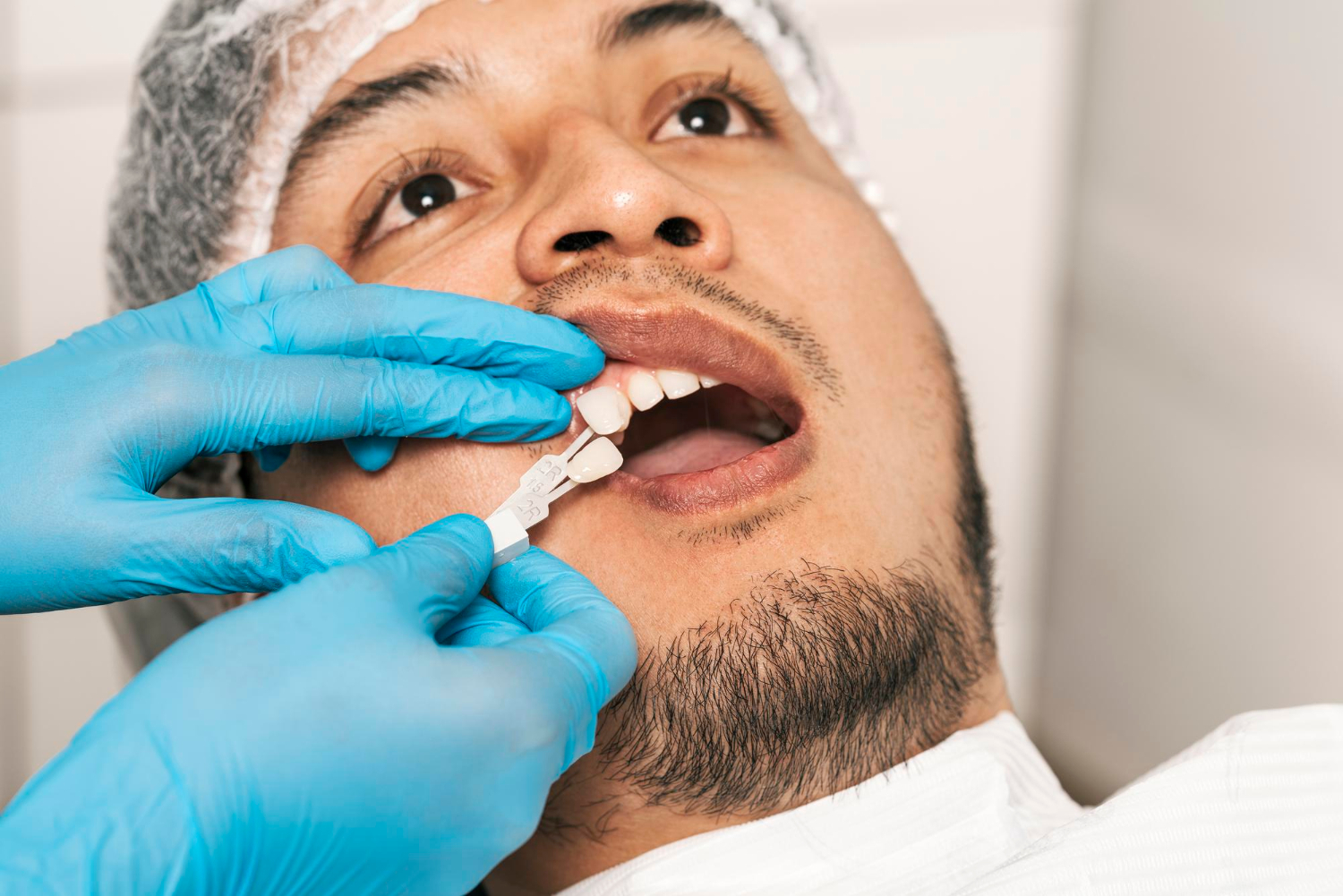
Yes, crown shade is matched to the adjacent natural teeth before fabrication. The process involves selecting a shade under different lighting conditions and, in some cases, shade photographs to guide the laboratory.
.jpg?width=352&name=ezgif.com-webp-to-jpg-converter%20(1).jpg)
.jpg?width=352&name=photo-smiling-dentist-standing-with-arms-crossed-with-her-colleague-showing-okay-sign%20(1).jpg)