.png?width=80&height=80&name=Clove%20Dental%20White%20Small%20(28).png "Clove Dental White Small (28)")
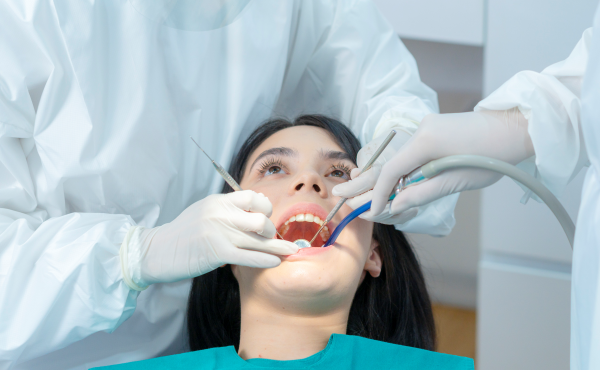
If you experience severe tooth pain, swelling in your face or gums, knocked-out tooth, broken tooth with sharp edges or exposed nerve, bleeding that won't stop or fever, swelling or a bad taste in your mouth, you should call an emergency dentist in Ventura. In these cases, timely intervention is a must, and problems may be exacerbated if treatment is delayed for several hours.
Key Takeaways
- If you have a severe toothache, swelling in your face, a knocked-out tooth and infection symptoms, you need an emergency dentist in Ventura ASAP.
- Since swelling around a tooth or jaw can turn into a serious medical emergency due to the spread of infection, time can make a difference.
- While not every fractured tooth is an emergency, any that expose the inner structure of the tooth or cause any pain should be attended to immediately.
- Pain that fades on its own doesn't always mean the problem has resolved; it can sometimes signal that the nerve has died, which still requires treatment.
- Knowing what to do in the minutes before you reach an emergency dentist in Ventura can significantly affect the outcome, especially for knocked-out or broken teeth.
Have you ever woken up at 2 a.m. with a throbbing tooth and wondered, "Is this bad enough to call someone, or can it wait until morning?” It's a question most people struggle with, and the wrong answer in either direction can cause real problems.
Dental emergencies aren't always obvious. Some situations that feel minor can escalate quickly, while others that feel alarming turn out to be manageable with guidance over the phone. Knowing the difference and knowing when to call an emergency dentist in Ventura can protect your health, save a tooth, and give you peace of mind when pain strikes at the worst possible time.
At Clove Dental, we provide emergency dental care in Ventura because we understand that dental problems don't always happen between 9 and 5. Here's what you need to know.
How Do You Know If a Dental Problem Is an Emergency?
The simplest way to think about it: a dental emergency is any situation where waiting significantly increases the risk of permanent damage, serious infection or unbearable pain.
Some clear emergencies include-
- A tooth that has been completely knocked out.
- Severe, unrelenting tooth pain that doesn't respond to over-the-counter pain relievers.
- Swelling in the face, jaw or neck, especially with fever.
- Uncontrolled bleeding from the mouth after injury.
- A broken tooth with a sharp edge or visible inner tooth structure.
- Signs of an abscess- pus, a bad taste, or a pimple-like bump on the gum.
When in doubt, call your emergency dentist in Ventura. A brief phone conversation can help you assess the situation and decide on the right next step.
Which Dental Symptoms Should Never Be Ignored?
Some symptoms are indications that there is a problem, and avoiding them, even for a short period of time, can lead to a treatable issue becoming a complicated one.
Never wait on these-
- Tooth pain or swelling combined with fever- This is indicative of an infection, and may be more extensive than the tooth problem. Dental infections can move into surrounding tissues, the jaw and, in rare but serious cases, the airway or bloodstream.
- Difficulty swallowing or breathing- If swelling has progressed to the point where it's affecting your ability to swallow or breathe, this is a medical emergency. Go to the emergency room immediately.
- A tooth knocked completely out of its socket- Every minute counts. With the right steps and fast action, a knocked-out tooth can sometimes be successfully reimplanted.
- Numbness in the tooth or jaw following pain- This can indicate that a nerve has been severely damaged or that an infection has progressed. The absence of pain is not reassurance.
- Significant facial trauma- Any injury to the face that involves the teeth, jaw, or soft tissue should be evaluated promptly, even if swelling is the only visible sign.
If you're experiencing any of these symptoms, reaching an emergency dentist in Ventura as quickly as possible is the right call.
Why Swelling Around a Tooth Can Become Serious Faster Than People Realize
Swelling is one of the symptoms people most commonly try to wait out. It's often the first visible sign that something is wrong, and many patients hope it will go down on its own. Sometimes it does. But when swelling is related to a dental infection, waiting can be genuinely dangerous.
Most dental infections don't reach that point. But the risk is real enough that swelling around a tooth, especially when accompanied by pain, fever, or a bad taste, should always be treated as urgent. An emergency dentist in Ventura can drain the infection, prescribe appropriate antibiotics, and begin treating the underlying cause before the situation escalates.
The key message: swelling that's getting worse, not better, is a reason to act the same day.
Is a Broken Tooth Always a Dental Emergency?
Not always but the answer depends on how the tooth broke and what you're experiencing.
More likely to be an emergency-
- A break that exposes the soft inner pulp of the tooth (visible pinkish tissue, or severe immediate pain)
- A fracture that goes below the gum line
- A tooth broken by trauma that is also loose or partially displaced
- A sharp edge that is cutting your tongue or cheek and won't stop bleeding
Less likely to require emergency care-
- A small chip on a non-sensitive area with no pain.
- A cracked crown or old filling that broke off without pain.
- A break that is cosmetically noticeable but not causing discomfort.
Even in the less urgent cases, you should still call your emergency dentist in Ventura to describe the situation. Some breaks that seem minor can expose the tooth to bacteria and increase infection risk over the next day or two. So getting a professional opinion quickly is always the right move.
If a sharp edge is irritating soft tissue, dental wax (available at most pharmacies) can temporarily protect the area until you're seen.
Why Waiting Overnight Sometimes Turns a Minor Problem Into an Emergency
Dental problems follow a predictable pattern: the longer an underlying issue goes untreated, the more complex and costly the solution becomes. What begins as a small crack or a contained infection can shift significantly within 12 to 24 hours, especially if bacteria have a pathway into the inner tooth structure.
A few specific scenarios where overnight waiting commonly makes things worse-
- A cracked tooth- Chewing on a cracked tooth, even gently, can cause the crack to propagate further, sometimes splitting the tooth in a way that makes saving it impossible.
- A partially displaced tooth- A tooth that has been knocked loose but not out can sometimes be repositioned if treated quickly. Hours of delay reduce the viability of that option.
- A developing abscess- Pain from an abscess may fluctuate, creating a false sense that things are improving. Meanwhile, the infection continues to expand.
We understand that calling an emergency dentist in Ventura outside of regular hours feels like a significant step. But in these cases, that call is genuinely worth making.
What Happens During an Emergency Dental Visit?
It can be less intimidating to call and better help you prepare for your appointment when you know what to expect.
Upon arrival at Clove Dental for emergency dental care, we are focused on relieving your pain quickly. Here are the typical steps of an emergency visit-
- Assessment- We look at the affected tooth and area, take any necessary x-rays and determine the severity of the issue.
- Pain management- If you're in a lot of pain, it's a priority to make you feel comfortable. We will numb you and stabilize you before discussing treatment options.
- Treatment or stabilization- Depending upon the situation, the problem may be treated fully at the time of the emergency visit (drainage, extraction, bonding or a temporary crown) or a temporary crown placed and an appointment scheduled for a follow up treatment.
- Clear next steps- Before you go we will ensure that you understand what has happened, what we have done, what to expect in terms of healing and what to look out for.
Our goal is for you to leave more comfortable and informed than you arrived, with a clear plan in place.
Can Tooth Pain Go Away Even if the Problem Is Getting Worse?
Yes and this is one of the more counterintuitive aspects of dental health that often leads people to delay treatment.
When a tooth with deep decay or infection reaches the point where the nerve dies, the pain can decrease significantly or disappear entirely. Many patients interpret this as the problem resolving on its own. In reality, the tooth is no longer sending pain signals because the nerve has been destroyed, not because the infection has cleared.
If your tooth pain suddenly fades without any treatment, that's not reassuring; it's a reason to call an emergency dentist in Ventura and get evaluated. Catching a dead or infected tooth early, even without pain, allows for more conservative treatment options.
What You Should Do Before You Reach an Emergency Dentist
The minutes between a dental injury and your appointment can matter. Here's how to handle the most common situations before you arrive-
For a knocked-out tooth-
- Handle the tooth by the crown (the top), never the root.
- If it's dirty, rinse it gently with milk or saline; do not scrub it.
- Try to reinsert it gently into the socket if possible; if not, store it in milk or between your cheek and gum to keep it moist.
- Get to an emergency dentist in Ventura within 30 to 60 minutes for the best chance of reimplantation.
For a broken tooth-
- Rinse your mouth with warm water.
- Apply a cold compress to the outside of your cheek to reduce swelling.
- Cover sharp edges with dental wax if needed.
- Do not take aspirin directly on the tooth; it can damage tissue.
For swelling or infection-
- A cold compress can help with swelling temporarily.
- Take over-the-counter pain relievers as directed.
- Do not place heat on a dental abscess, it can encourage the infection to spread.
- Do not delay calling; infections do not resolve on their own.
For uncontrolled bleeding-
- Apply firm, steady pressure with clean gauze.
- If bleeding doesn't slow after 15 to 20 minutes of continuous pressure, go to an emergency room.
How Clove Dental Handles Emergency Dental Care in Ventura
At Clove Dental, we know that dental emergencies are stressful, painful, sometimes frightening, and almost always unexpected.
Our team will ask a few brief questions to understand the severity of your situation and give you appropriate guidance before you arrive. Whether you are dealing with a knocked-out tooth, an abscess, a broken crown or pain that won't let up, we're prepared to help.
As your emergency dentist in Ventura, we don't just treat the immediate problem; we help you understand what led to it and how to prevent the next one. Emergency care is the starting point of a longer conversation about your dental health, not the end of it.

Conclusion
Dental emergencies are rarely convenient, but they're almost always time-sensitive. Knowing when to call and what to do while you wait can be the difference between saving and losing a tooth, between a contained infection and a spreading one, and between a single visit and weeks of complex treatment.
If you're in pain, experiencing swelling, or unsure whether what you're going through qualifies as an emergency, trust your instincts and make the call. It's always better to check and find out it wasn't urgent than to wait and wish you hadn't.
FAQs
Can I go to the emergency room for a dental emergency?
Emergency rooms can help with dental infections that have spread, facial trauma or uncontrolled bleeding. However, they don't have dentists on staff and can't treat the tooth itself. For most dental emergencies, an emergency dentist in Ventura is the more appropriate first call.
What if I can't reach a dentist after hours?
Call the dental office anyway; many practices, including Clove Dental, have after-hours contact options for urgent situations. In the meantime, manage pain with over-the-counter medication, apply a cold compress and follow the pre-visit steps outlined in this article.
How much does emergency dental care typically cost?
Cost varies depending on what treatment is needed. Emergency exams and X-rays are billed separately from the procedure itself. We always discuss costs before beginning treatment and can help you understand what your insurance may cover.
Is a dental abscess life-threatening?
In rare but documented cases, yes. If a dental abscess spreads to the neck or airway, it can become a serious medical emergency. Most abscesses are treated successfully with dental care and antibiotics well before reaching that point but prompt treatment is essential.