.png?width=80&height=80&name=Clove%20Dental%20White%20Small%20(28).png "Clove Dental White Small (28)")
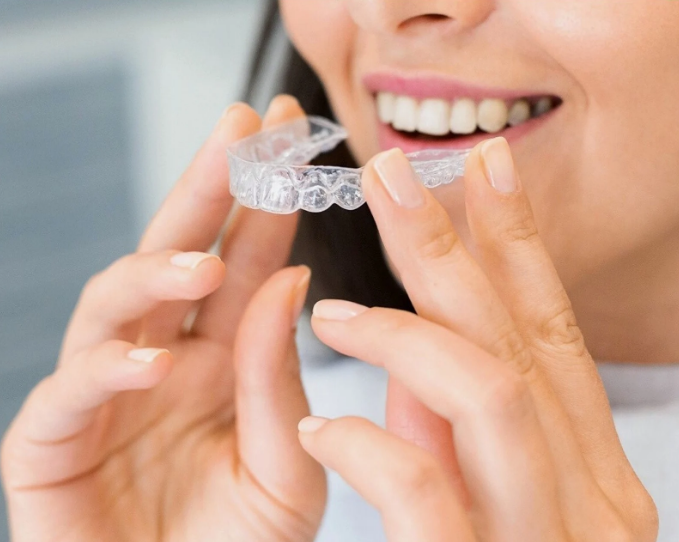
Mild to moderate overbites, underbites and crossbites can be treated with a series of custom clear aligners that gradually move teeth into place over time with Invisalign. The severity of the bite problem and the nature of the bite whether it is a problem in the teeth (tooth position) or the skeletal structures (jaw structure) will determine the right kind of candidacy. For more complicated skeletons, other tools may be required to go with Invisalign or a different orthodontic treatment method may be used.
Key Takeaways
- When problems are mostly with tooth position and not the jaw, Invisalign can help correct overbites, underbites and crossbites.
- Two people with similar-looking smiles can have very different underlying bite problems that require different treatment approaches.
- Mild to moderate bite issues respond well to aligners alone; severe skeletal cases may need additional appliances or surgical orthodontics.
- A thorough bite evaluation, not just a look at tooth alignment, determines whether Invisalign is the right fit for your specific case.
Are you assuming Invisalign is only for crowded or gaped teeth? It treats a lot more than that. Overbites, underbites, and crossbites the way your upper and lower teeth meet when you bite down are often the more significant issue Invisalign addresses, even when crooked teeth are what brought someone in for a consultation.
At Clove Dental, we evaluate the bite first, not just the smile. Here's what Invisalign in Ventura can realistically fix when it comes to overbites, underbites, and crossbites, and where the limits actually are.
Most People Think Invisalign Straightens Teeth But Bite Problems Are Often the Bigger Issue
Crooked teeth are the visible concern that gets people into a consultation. The bite relationship with how your upper and lower teeth fit together is frequently the bigger functional issue, even if it's less obvious in photos.
A bite problem affects how you chew, how evenly your teeth wear down over the years, and sometimes how your jaw feels at the end of a long day. Invisalign's aligner system is built to move teeth in three dimensions, which means it can address both the cosmetic crowding and the underlying bite issue at the same time, when the case is right for it.
Why Two People With Similar Smiles Can Have Completely Different Bite Problems
Two patients can have teeth that look comparably crooked and still have completely different bite classifications underneath. One might have a dental overbite caused purely by how the teeth erupted. Another might have a skeletal overbite caused by how the jaw itself developed.
This distinction matters enormously for treatment. A dental bite issue often responds well to aligners alone, since it's really about tooth position. A skeletal bite issue involves the jawbone itself, and aligners can only do so much to compensate for a structural mismatch between the upper and lower jaw.
Can Invisalign Fix an Overbite, Underbite or Crossbite?
Yes. Overbites are treated with Invisalign through gentle pushes and pulls of the upper and lower teeth to achieve a more balanced position by attaching small pieces to some teeth. Underbites, where the lower jaw protrudes past the upper teeth, can sometimes be corrected if the cause is dental rather than skeletal. Crossbites, where some upper teeth sit inside the lower teeth instead of outside, often respond particularly well to aligner treatment since the correction mainly involves tooth position.
The key word throughout is "often" every case depends on severity, and that's determined through a proper evaluation rather than a quick look in the mirror.
The Bite Problems Invisalign Handles Well and the Ones That May Need More Than Aligners
Mild to moderate overbites and crossbites tend to be Invisalign's strongest territory, especially in adults with good bone health and no significant jaw growth still occurring. Aligners excel at making small, controlled tooth movements over time.
Severe overbites, significant underbites caused by jaw size discrepancy, and complex crossbites involving multiple teeth in unusual positions sometimes need more than aligners alone. For some this may involve augmenting Invisalign with additional appliances or, in more severe skeletal situations, considering other orthodontic possibilities that involve the jaw and not just the position of the teeth.
How Do You Know If Your Bite Problem Is Affecting Your Oral Health?
Some signs are easy to miss because they develop slowly. Uneven wear patterns on certain teeth, a clicking or popping jaw, soreness in the jaw muscles after a long day of talking or chewing, and chipping on specific teeth that doesn't happen elsewhere in the mouth are all signals worth mentioning at a consultation.
A bite issue doesn't always hurt and it doesn't always look dramatic in a mirror. That's exactly why a clinical evaluation, including how your teeth come together when you bite, matters more than how straight your smile appears at rest.

Conclusion
Invisalign's reputation is built around straight teeth, but bite correction is often the more meaningful work happening underneath. Overbites, underbites, and crossbites can frequently be treated with aligners alone, provided the issue is primarily dental rather than skeletal.
At Clove Dental, every Invisalign in Ventura consultation starts with a full bite evaluation, not just a glance at alignment. Book your consultation at clovedds.com and find out what your specific bite actually needs.
FAQs
How do I know if my bite problem is dental or skeletal?
A dentist or orthodontist determines this through a clinical exam, bite analysis, and sometimes imaging. Dental issues involve tooth position; skeletal issues involve the size or alignment of the jawbones themselves
Can Invisalign fix a crossbite in adults?
Yes, if the crossbite is limited in teeth and it is a dental crossbite. The evaluation of the bite is used to determine eligibility.
How long does Invisalign take to correct an overbite or underbite?
Treatment timelines vary based on severity, ranging from 12 to 24 months for bite-related cases which involve more complex tooth movement than simple crowding.
Will I need attachments on my teeth for bite correction with Invisalign?
Many bite correction cases use small tooth-colored attachments that give the aligner extra leverage on specific teeth. Your provider will tell you if your case requires them.
What happens if Invisalign alone isn't enough for my bite?
Your provider may recommend combining Invisalign with auxiliary appliances, or refer you for an evaluation of surgical orthodontic options if the issue is significantly skeletal.
.jpg?width=352&name=image(542).jpg)
.jpg?width=352&name=image(1143).jpg)