.png?width=80&height=80&name=Clove%20Dental%20White%20Small%20(28).png "Clove Dental White Small (28)")
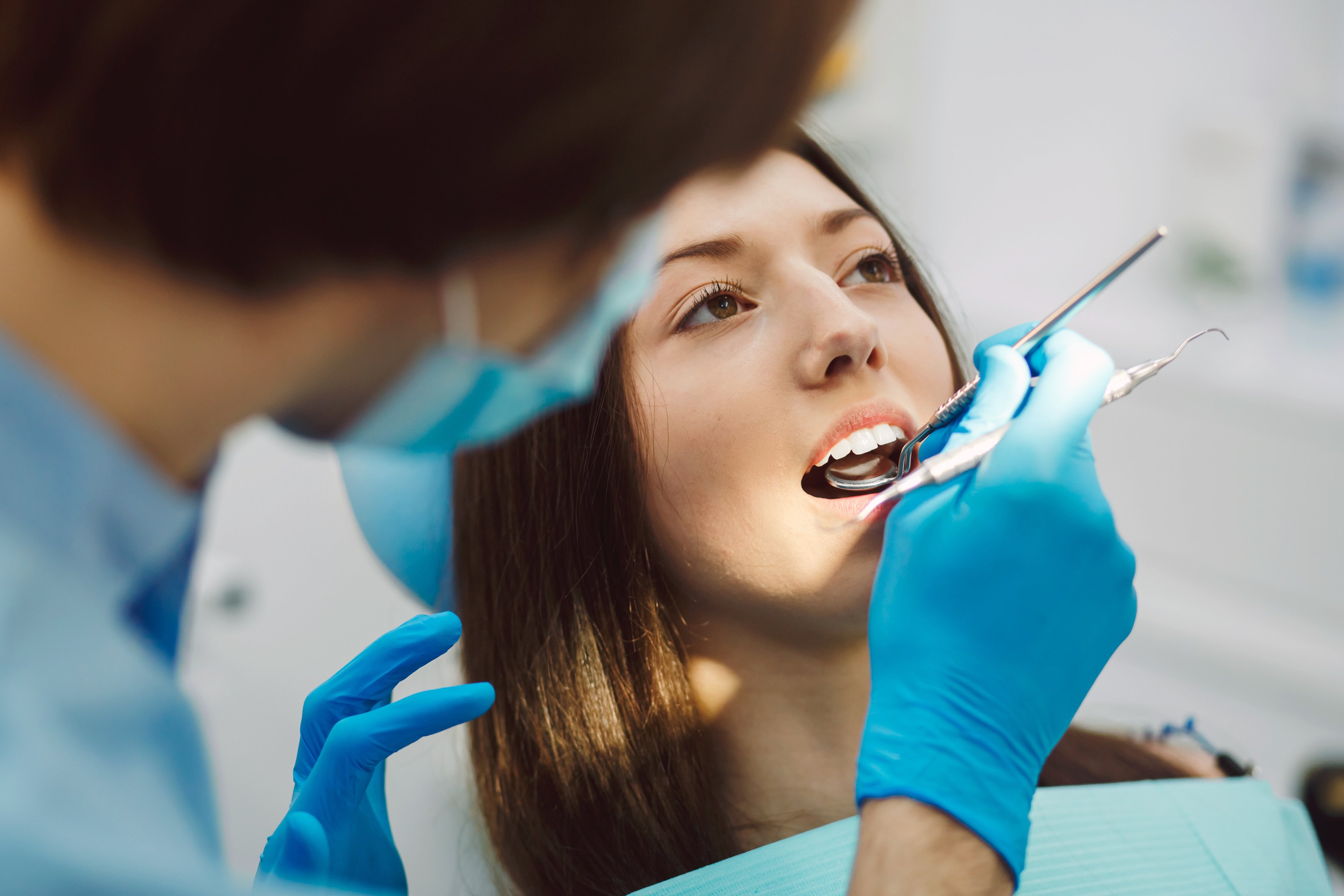
Compared to dentures and other tooth replacement options, dental implants in Beverly Hills provide the most comprehensive answer, consisting of a titanium post that is secured in the jaw bone and a custom crown that looks, feels and functions like a real tooth. Implants also stimulate the jaw bone unlike dentures or bridges, which causes bone loss after a tooth loss. The combination of implants and crowns are among the most powerful solutions available in restorative dentistry today.
Key Takeaways
- Dental implants in Beverly Hills are the only tooth replacement option that preserves jaw bone by mimicking the stimulation a natural tooth root provides.
- A crown becomes necessary when a tooth has too much damage or decay for a filling to restore it adequately, protecting the remaining structure and restoring function.
- Missing teeth affect far more than appearance, neighboring teeth shift, bite forces redistribute and jaw bone gradually deteriorates when a root is no longer present.
- Modern dental crowns are fabricated from materials that closely replicate the color, translucency, and texture of natural enamel, making them virtually indistinguishable in most cases.
- Delaying replacement of a missing tooth doesn't pause the problem; bone loss, shifting, and bite changes continue actively, often making future treatment more complex and more costly.
Have you been putting off replacing a missing tooth, or wondering whether a damaged tooth really needs a crown? These are questions we hear regularly and the answers matter more than most people realize.
Restoring your smile isn't just about how it looks. It's about how your teeth function together, how your jawbone responds to the forces of chewing, and how the rest of your mouth adapts when something is missing or compromised. Both the visible and invisible effects of damaged or missing teeth are corrected with dental implants in Beverly Hills and custom crowns.
Restorative treatment is not a quick fix with Clove Dental, it is an investment in your oral health. Here's what you need to know about how implants and crowns work, why timing matters, and what the process looks like when done well.
How Can One Missing or Damaged Tooth Affect the Rest of Your Mouth?
It's tempting to think of a missing tooth as a localized problem, one gap in one spot that doesn't interfere with anything else. In practice, the effects spread quickly and systematically.
- Neighboring teeth shift- Teeth maintain their positions partly through contact with each other. When a tooth is lost, the teeth on either side lose that lateral support and gradually tip toward the empty space. The tooth directly above or below the gap the opposing tooth may begin to erupt further as it no longer has a surface to bite against.
- Bite forces redistribute unevenly- When you chew, force is distributed across all the teeth in contact. A gap in the arch means neighboring teeth absorb more than their share of those forces.
- The jaw bone begins to shrink- This is the consequence most patients don't anticipate and it's the most clinically significant. Tooth roots stimulate the jaw bone through the pressure of biting and chewing.
Dental implants in Beverly Hills are the only replacement option that addresses this last consequence by design which is why they represent the current standard of care for replacing missing teeth.
When Does a Tooth Need a Crown Instead of a Filling?
Fillings and crowns both restore damaged teeth, but they serve different purposes and are appropriate for different levels of damage. The key distinction is how much of the tooth's original structure remains intact and how much load the restoration will need to bear.
A filling whether composite resin or amalgam replaces missing tooth structure within a relatively small, contained area. It relies on the surrounding tooth walls for support and works well when the majority of the tooth remains healthy.
A crown becomes the appropriate choice when-
- Decay has extended so far that a filling would leave insufficient healthy tooth structure to support it.
- A tooth has cracked or fractured in a way that puts the remaining structure at risk of further breaking under chewing forces.
- A tooth has undergone root canal treatment which removes the living pulp tissue and leaves the tooth more brittle and vulnerable to fracture.
- An existing large filling has failed, cracked or allowed new decay underneath.
- The tooth has worn down significantly from grinding or acid erosion.
The crown is the part of the tooth that is covered over the entire surface area of the tooth but above the gum line and distributes biting forces evenly over the surface of the tooth and protects the tooth from the effects of further damage. When the clinical situation calls for a crown, a filling is not a conservative alternative; it's an undersized solution that fails sooner and requires more extensive intervention later.
What Makes Dental Implants Different From Other Tooth Replacement Options?
Three primary options exist for replacing a missing tooth: a dental implant, a fixed bridge or a removable partial denture. Each addresses the visible gap but they differ fundamentally in how they interact with the surrounding structures.
Dental bridge- The traditional bridge is a bridge that spans by attaching to the teeth on either side of the gap, referred to as "abutment teeth". These adjacent teeth will need to be reduced significantly to fit crowns which can support the bridge.
Removable partial denture- A removable denture that attaches to the existing teeth. It's the least expensive option but also the least stable. It doesn't stimulate the bone, can affect the teeth it attaches to over time and requires daily removal for cleaning.
Dental implant- An implant is a titanium post that is surgically positioned in the jawbone where it integrates with the bone tissue over a period of months known as osseointegration. Once fully integrated, the post will then serve as an artificial root stable, permanent, and will stimulate bone just like a natural tooth root does.
Dental implants in Beverly Hills are the only option that replaces both the root and the crown, treating the full structure of the missing tooth rather than just the visible portion. For those patients who have good bone and general health, implants are the most complete and lasting long-term treatment option.
Why Missing Teeth Can Lead to Bone Loss Over Time
Jawbone is living tissue that responds to mechanical stimuli. The pressure transmitted through tooth roots during biting and chewing signals the bone to maintain its density and volume. When a root is removed or lost, that signal disappears and the bone responds by gradually resorbing.
The rate and extent of bone loss vary by patient, but the pattern is predictable-
- Within the first year after tooth loss, significant bone height and width reduction can occur at the extraction site
- Over several years, the ridge of bone that supported the tooth flattens and narrows
- As bone volume decreases, the face can take on a sunken or aged appearance in the affected area, even if adjacent teeth are still present
Placing dental implants in Beverly Hills promptly after tooth loss or ideally at the time of extraction with a socket preservation graft significantly reduces the rate of bone loss and keeps future treatment options open.
Why Modern Dental Crowns Look More Natural Than Most People Expect
Patients who haven't had a crown placed in recent years are often surprised by how different modern restorations look from what they remember or from what they imagine. The materials and fabrication techniques have advanced considerably.
Contemporary crowns are most commonly made from-
- Zirconia- An extremely strong ceramic material that can be milled to closely match the natural shade, translucency, and surface texture of surrounding teeth. Zirconia is the current standard for most posterior (back) crowns due to its strength, and is increasingly used for front teeth as well.
- Porcelain-fused-to-zirconia or metal- Combines the strength of a substructure with a porcelain outer layer that provides a more natural appearance in the smile zone.
- Full porcelain (lithium disilicate)- Excellent aesthetic properties with high translucency, used for front teeth where appearance is the primary priority.
The same attention to aesthetics applies to the crowns placed on dental implants in Beverly Hills at Clove Dental. We don't consider a restoration finished until it looks like it belongs.
Why Some Patients Delay Replacing Missing Teeth And What Happens Over Time
Tooth replacement decisions are often delayed, sometimes for months, sometimes for years. The reasons vary: cost concerns, time constraints, anxiety about surgery, or simply not feeling urgency about a gap that isn't visible or painful.
What most patients don't fully appreciate is that delay doesn't preserve options, it quietly reduces them.
Bone loss progresses continuously- Every month a gap remains unfilled, the bone that could support an implant is resorbing. A patient who could have received an implant immediately after extraction may require a bone graft, an additional procedure, additional healing time, and additional cost if they wait too long.
Adjacent teeth continue to shift- The longer neighboring teeth have to drift toward a gap, the more orthodontic correction may be needed before an implant or bridge can be placed correctly.
Opposing teeth continue to erupt- The tooth biting against the empty space has no stopping point it will continue to erupt until it contacts something. Once a significant over-eruption has occurred, restoring the bite to its original dimension may require reducing the over-erupted tooth or more involved bite rehabilitation.
The psychological cost compounds- Patients with visible gaps often become increasingly self-conscious about smiling, speaking, or eating in social settings.
The conversation we have with patients considering dental implants in Beverly Hills often includes this reality check, not to pressure, but because understanding the cost of inaction is part of making a fully informed decision.
How Clove Dental Restores Smiles With Implants and Crowns in Beverly Hills
At Clove Dental, restorative treatment begins with a thorough evaluation, not a treatment recommendation. We take digital X-rays and, for implant planning, a cone beam CT scan that gives us a three-dimensional view of your bone volume, density, and the position of adjacent anatomical structures. This level of detail helps to plan the implant placement precisely without any guesswork.
Prior to suggesting dental implants in Beverly Hills, we evaluate-
- Current bone volume and need to graft before or at time of placement
- Prior to implant surgery the dentist needs to ensure that the mouth and teeth are healthy, with no tooth decay or gum disease.
- Medical history that influences healing, some medications, systemic diseases etc.
- Bite and alignment issues that will impact the ultimate function of the final restoration
We will share our reasoning and our actions from consultation to final placement. Our patients in Beverly Hills expect a high standard of care, and we hold ourselves to it.

Conclusion
A missing or damaged tooth is rarely just an aesthetic concern. The structural, functional, and biological consequences of leaving it unaddressed add up steadily over time making future treatment more complex than it needed to be. Dental implants in Beverly Hills and custom crowns represent two of the most effective tools available to stop that progression, restore full function, and create a result that looks completely natural.
The most important step is getting an accurate picture of your situation before the window for simpler treatment closes.
FAQs
How long do dental implants in Beverly Hills last?
With proper care, dental implants are designed to last a lifetime. The implant post itself once fully integrated with the bone is highly durable and rarely needs replacement. The crown placed on top may need to be replaced after ten to fifteen years due to normal wear, but the implant foundation remains intact.
How long does the full implant process take?
The timeline varies based on whether bone grafting is needed and how quickly osseointegration occurs. In straightforward cases, the process from placement to final crown typically takes three to six months.
Can a crown be placed the same day as implant surgery?
In select cases called immediate loading a temporary crown can be placed on the same day as the implant. This depends on the quality and volume of bone present and the specific location of the implant.
Does dental insurance cover implants and crowns?
Crowns are often covered under major restorative benefits, typically at 50% after your deductible and up to your annual maximum. Implants are covered by some plans and excluded by others coverage is more variable.
.jpg?width=352&name=image(1412).jpg)
.jpg?width=352&name=image(4).jpg)
.jpg?width=352&name=image(1405).jpg)