.png?width=80&height=80&name=Clove%20Dental%20White%20Small%20(28).png "Clove Dental White Small (28)")
 If you have a Flexible Spending Account (FSA) or Health Savings Account (HSA), dental care can be a tax-advantaged way to fund necessary medical treatments like braces, Invisalign, and dental implants. The literature indicates that Invisalign orthodontic reimbursement is eligible for FSA and HSA [1] (FSAstore, 2026). These restorative and orthodontic options are eligible, but purely cosmetic procedures remain disallowed under current IRS rules.
Year-End FSA Deadline for Multi-Stage Dental Implants: What You Should Know
One of the common fears of patients planning a dental implant is the treatment timeline. The implant will take three to six months to fuse to your jawbone, so you might find that your treatment starts in 2026 and ends in 2027. The Society of Actuaries states that FSA funds expire at midnight on December 31st [2] (SOA, 2025). You may wonder how this affects your FSA deadline of December 31. You do not have to finish the entire procedure in one calendar year to use your current funds. The IRS generally considers an expense "incurred" when the actual service is provided. At Clove Dental, our treatment coordinators will strategically phase your billing. We can apply your 2026 FSA dollars to the surgical placement phase in November, and then use your new 2027 FSA funds for the final custom crown placement in the spring. This strategy ensures you maximize your tax benefits across both years without rushing your healing process.

How to Split Invisalign Costs Across Two FSA Plan Years
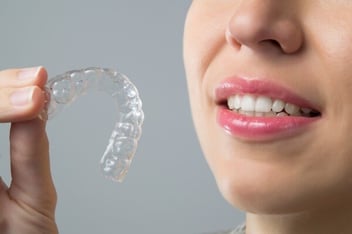
For patients looking to invest in Invisalign, the math can sometimes feel tricky. The 2026 FSA contribution limit is $3,200, but comprehensive orthodontic treatment can sometimes exceed that amount. You do not have to pay the difference out of your standard checking account if you time it right. Orthodontic treatments are unique under IRS rules because you can pay for them in installments. If you start your Invisalign journey in late fall, you can use the remaining balance of your 2026 FSA for your down payment. Then, starting in January, you can set up your monthly aligner payments to draw directly from your newly reloaded 2027 FSA. This cross-year splitting technique is a favorite among our patients, allowing you to fund nearly your entire smile transformation using strictly pre-tax dollars.
Comparing Your Long-Term Smile Investments
Selecting the right treatment depends on your goals, your timeline, and your available funds. Here is how the most common FSA-eligible treatments compare:
|
Treatment Option |
Estimated Cost Impact |
Durability |
Maintenance Level |
FSA / HSA Eligibility |
|
Traditional Braces |
Moderate |
Permanent (with retainer) |
High (Requires special brushing) |
Fully Eligible |
|
Invisalign |
Moderate to Premium |
Permanent (with retainer) |
Medium (Removable for easy cleaning) |
Fully Eligible |
|
Dental Implants |
Premium |
Lifetime (for the titanium post) |
Low (Treat like natural teeth) |
Fully Eligible |
|
Teeth Whitening |
Low |
1-3 Years |
Low (Occasional touch-ups) |
Not Eligible (Cosmetic) |
Combining Your Employer PPO Insurance With Your HSA
If you are a "Career Climber" with a robust employer benefits package, you likely have both a PPO dental insurance plan and a Health Savings Account (HSA). Figuring out which one to use first can feel overwhelming. We take that burden off your shoulders. First, our administrative team bills your PPO insurance for your medically necessary procedures, like the extraction of a failing tooth and the placement of a dental implant. Once your insurance pays its maximum allowable portion—often 50% for major services—we apply your HSA funds to the remaining balance. Because your HSA dollars are tax-free, you effectively discount that remaining balance by another 20% to 30%. You walk out of the clinic with a restored smile and zero unexpected hits to your personal savings account.
Retainers, Bone Grafts, and Hidden Costs: What Else Qualifies?
When budgeting for major dental work, "The Practical Parent" often worries about surprise charges for extra parts and pieces. You might wonder if the preparatory work or the aftercare products are also eligible for tax-free spending. Because the IRS focuses on the function and health of your mouth, most necessary supplementary treatments qualify. Here is a quick breakdown of what you can safely buy with your FSA or HSA card:
- Bone Grafts: If you need bone grafting to build up your jaw before an implant, this is fully eligible.
- Post-Braces Retainers: Clear retainers (like Vivera) or wire retainers required to keep your teeth straight after braces are covered.
- Bite Guards: Custom night guards to protect your expensive new implant crowns from teeth grinding are eligible.
- Excluded Items: Remember, if you decide to buy whitening gel to put inside your Invisalign trays, that specific cosmetic add-on will not qualify.
The HSA Receipt Rule: Reimbursing Yourself for Orthodontics Later
Life moves fast. Perhaps you already paid for your teenager's braces out of pocket earlier this year using your regular credit card, and now you are kicking yourself for not using your HSA. Do not stress—you have not lost that money. Unlike an FSA, which has strict yearly use-it-or-lose-it rules, an HSA acts like a long-term medical trust fund. As long as your HSA was open and active at the time you paid for the braces, you can reimburse yourself at any time. You can simply transfer the exact cost of the orthodontic down payment from your HSA back into your personal checking account today, tax-free. Just make sure you keep the itemized receipt from Clove Dental in your tax files. Our front desk is always happy to reprint your past ledgers to help you claim the money that belongs to you.
FAQs
1. Can I use my FSA to pay for Invisalign if my motivation is partly cosmetic?
Even if you are getting Invisalign because you want a straighter smile, the IRS considers orthodontic treatment a legitimate medical expense. Clear aligners also fix your bite, making your teeth easier to clean and preventing future decay. Therefore, clear aligners are fully eligible for FSA and HSA reimbursement.
2. What happens to my FSA dental funds if I do not spend them by the end of 2026?
FSAs are “use it or lose it” accounts. If you do not spend your funds by December 31st, the money is usually lost to your employer. Some plans allow a minor rollover (up to $640) or a short grace period into the new year, but you should always aim to complete your dental work before the year ends. HSAs, on the other hand, roll over indefinitely.
3. Can I use my HSA to pay for a family member's braces?
Absolutely. You can use your HSA funds to pay for qualified dental expenses for yourself, your spouse, and any qualified dependents claimed on your tax return.
References
[1] FSAstore. (2026). FSA eligible INVISALIGN orthodontics | FSA eligibility - FSA store | FSA eligibility list | FSA store. Null | FSA Store. https://fsastore.com/fsa-eligibility-list/i/invisalign-orthodontics?srsltid=AfmBOooPGIOFFwf61OVFyW6OKsnrV_1UBnt67QvmSC2y0JUSriaDEIND[2] 2025-Module-deadlines - SOA. (2025). Soa.Org. https://www.soa.org/education/general-info/edu-transition-resources/2025-module-deadlines/