.png?width=80&height=80&name=Clove%20Dental%20White%20Small%20(28).png "Clove Dental White Small (28)")
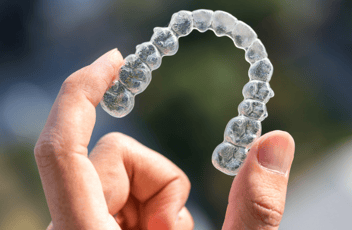
Invisalign uses a series of custom-fitted, removable clear aligners to shift teeth into their correct positions, addressing crooked teeth, gaps, crowding, overbites, underbites and crossbites without metal brackets or wires. Treatment timelines vary widely depending on case complexity but most adults complete treatment in 12 to 18 months.
Key Takeaways
- Invisalign treats a wider range of alignment issues than most patients expect, including overbites, underbites, crossbites and gaps, not just crooked teeth.
- Treatment timelines vary significantly between patients based on case complexity. Comparing your progress to someone else's is rarely useful.
- Teeth can appear slightly worse in position during certain aligner stages before reaching the final result.
- Stopping Invisalign mid-treatment allows teeth to relapse toward their original positions, often requiring retreatment from the beginning.
Are you thinking about straightening your teeth but dreading the idea of metal braces? You are far from alone. Invisalign has become one of the most popular orthodontic options for adults precisely because it fits into real life, no brackets, no wires, and no obvious hardware when you smile.
But choosing Invisalign and getting great results from Invisalign are two different things. At Clove Dental, we have seen what separates patients who finish treatment delighted with their smile from those who feel like it did not quite deliver. Most of the time, it comes down to a few key decisions made well before the first aligner goes in. Here is what an experienced Invisalign dentist wants you to know going in.
Why More Adults Are Choosing Invisalign Than Ever Before
The appeal is straightforward. Invisalign aligners are removable; you take them out to eat, drink anything other than water, and brush and floss normally. There is no dietary restriction list and no special cleaning routine around brackets. For adults managing professional and social lives, that flexibility is significant.
The aesthetics matter too. Clear aligners are far less noticeable than traditional braces, which removes one of the most common barriers adults cite when considering orthodontic treatment. And the technology behind Invisalign has advanced considerably, the range of cases it can treat effectively has expanded well beyond simple crowding.
Can Invisalign Fix More Than Just Crooked Teeth?
Yes and this surprises many patients. Invisalign is commonly associated with straightening visibly crooked or crowded teeth, but modern aligner systems can address a meaningful range of bite issues as well.
Invisalign is used to treat overbites, underbites, open bites, crossbites, and spacing issues including gaps between teeth. More complex cases may require additional features such as attachments, small tooth-colored bumps bonded to certain teeth that give the aligner extra grip to move stubborn teeth or interproximal reduction, which creates small amounts of space between teeth to allow movement.
The key is having a thorough evaluation from a qualified Invisalign dentist before assuming your case is or is not treatable. What looks simple can occasionally be complex, and what looks complex is sometimes more straightforward than expected.
Why Two Invisalign Patients Can Have Very Different Treatment Timelines
Treatment length depends on how much movement is required and how complex the tooth movements are not on any single visible factor. Two patients with teeth that look similarly crowded can have very different underlying bite relationships, which directly affect how long treatment takes.
Mild cases may be complete in six months. Comprehensive cases involving significant bite correction can run 18 to 24 months. This is why timeline estimates from an Invisalign dentist are case-specific and should not be compared to a friend's experience or a general number found online.
The Biggest Invisalign Mistake Adults Make
Not wearing the aligners enough. This is not a close call; it is the most consistent pattern behind delayed timelines and underwhelming results. Invisalign requires 20 to 22 hours of wear daily. Those two to four hours out of the aligners are intended for eating and oral hygiene, not extended breaks, social events, or moments of forgetfulness.
Each aligner is designed to move teeth a precise, small amount over a specific number of days. If the aligner is not in the mouth long enough, those movements do not complete on schedule. The next aligner then does not fit properly, and the planned sequence begins to fall apart. Wear time is not a suggestion; it is the mechanism by which the treatment works.
Why Teeth Sometimes Look Worse Before They Look Better
Some patients reach a mid-treatment stage and become concerned that their teeth look more uneven than when they started. This is a recognized and expected part of the process. Invisalign moves teeth in a planned sequence which sometimes means creating temporary space, rotating a tooth in isolation, or tipping a tooth before uprighting it.
The intermediate stages are not the final result. If you are worried about what you are seeing partway through treatment, bring it up with your Invisalign dentist rather than stopping the planned endpoint may look quite different from the current stage.
What an Invisalign Dentist Looks for Before Approving Treatment
Not every patient is a strong Invisalign candidate, and a thorough evaluation before starting matters. Your Invisalign dentist will assess your bite relationship in three dimensions, the health of your gums and bone, the amount of movement required, and whether any preparatory treatment such as addressing existing decay or gum disease, needs to happen first.
Patients with significant bone loss from gum disease, very severe skeletal discrepancies, or teeth that have limited root length may be better served by traditional orthodontics or a combined orthodontic and surgical approach. An honest candidacy assessment upfront protects patients from investing in treatment that cannot deliver what they need.
What Happens If You Stop Invisalign Mid-Treatment?
Teeth that have been moved but not yet stabilized in their new positions will begin shifting back toward where they started, sometimes quickly. Stopping mid-treatment means the planned result is not reached, and the movement that has already occurred begins to reverse.
Restarting after a significant gap requires a new scan and a new set of aligners which means additional cost and time. In most cases, patients who stop and restart end up spending more total time in treatment than they would have if they had continued consistently. Retainers worn after completing treatment are what make tooth positions permanent without finishing. There is nothing to retain.
How Clove Dental Creates Personalized Invisalign Treatment Plans
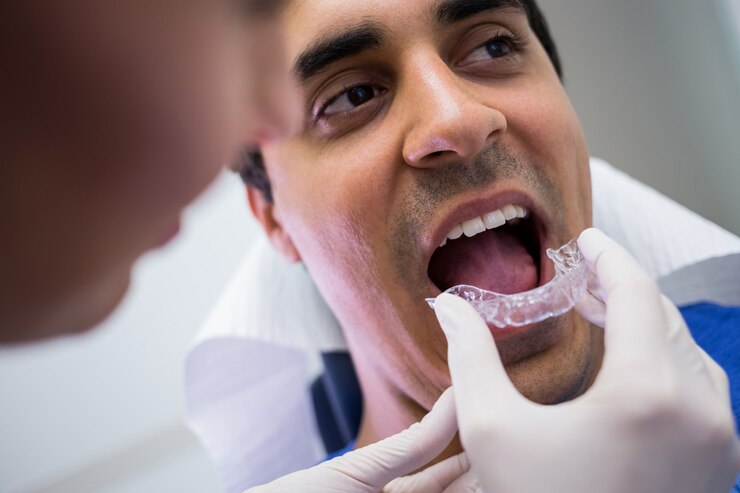
At Clove Dental, Invisalign treatment begins with a digital scan of your teeth and a full bite assessment, with no physical impressions required. We use that data to map a precise tooth movement sequence and show you a preview of your projected final result before treatment begins.
We build in regular progress checks throughout treatment to confirm teeth are tracking as planned and to address any fit issues early before they affect the outcome. Our team is straightforward about candidacy. If a different approach would serve you better, we will say so.

Conclusion
Invisalign can deliver genuinely transformative results but only when the treatment is well-planned, candidacy is honestly assessed, and the patient is committed to consistent wear.
The clear aligner is a tool. What determines the outcome is the plan behind it and the discipline to follow through.
At Clove Dental, we take both seriously. Book your Invisalign consultation today at clovedds.com and take the first step toward a straighter, healthier smile on a timeline that actually works.
FAQs
How do I find a qualified Invisalign dentist?
Look for a provider with Invisalign certification and a track record of treating cases similar in complexity to yours. Ask to see before-and-after examples and confirm that your evaluation includes a full bite assessment, not just a visual look at tooth alignment.
Can I eat normally with Invisalign?
Yes, because aligners are removed for meals, there are no food restrictions. The key is to brush and rinse before putting aligners back in after eating, and to avoid drinking anything other than water while aligners are in to prevent staining and decay.
How long do I need to wear a retainer after Invisalign?
Retainer wear after completing Invisalign is typically nightly, long-term. Teeth are not permanently fixed in their new positions until the surrounding bone fully stabilizes a process that takes time. Stopping retainer wear entirely, even years later, can allow gradual relapse.
Is Invisalign more expensive than traditional braces?
Cost varies depending on case complexity and provider. For comparable cases, Invisalign and traditional braces are often similarly priced. Many dental insurance plans that cover orthodontics apply the benefit to Invisalign. Payment plans are also widely available.
.jpg?width=352&name=image(655).jpg)
.jpg?width=352&name=image(1412).jpg)