.png?width=80&height=80&name=Clove%20Dental%20White%20Small%20(28).png "Clove Dental White Small (28)")
.jpg?width=626&height=416&name=image(1143).jpg)
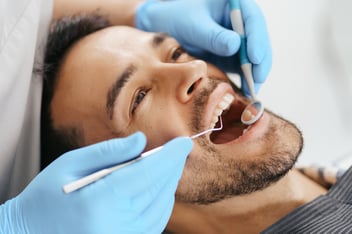
A routine professional cleaning is called dental prophylaxis. It helps to eliminate plaque and tartar which brushing and flossing alone can't. This helps to protect teeth and gums. A teeth cleaning in Encino is recommended every six months.
Key Takeaways
- Prophylaxis is just the clinical name for a routine professional cleaning.
- Clean-feeling teeth don't always mean plaque and tartar are gone.
- Professional cleanings protect gums as much as they protect teeth.
- Prophylaxis and deep cleaning are related but not the same procedure.
- Delaying cleanings tends to make the eventual visit longer and more involved.
Ever notice your dentist writes "prophylaxis" on your paperwork and wondered what that actually means? It sounds more complicated than it is. Prophylaxis is simply the clinical term for the cleaning you already know, the one where a hygienist scrapes away buildup and polishes your teeth at the end.
The name might be unfamiliar but the purpose isn't. It's one of the most effective, routine tools for keeping small problems from becoming bigger ones. Here's what happens during that cleaning and why teeth cleaning in Encino matters more than a lot of patients assume.
What Is Dental Prophylaxis and What Does a Routine Cleaning Actually Remove?
Prophylaxis specifically refers to preventive cleaning, meant to remove plaque and tartar before they cause decay or gum problems. During the appointment, a hygienist uses specialized tools to scrape away hardened tartar along the gumline and between teeth.
After that, teeth are polished which smooths the surface and makes it slightly harder for new plaque to stick in the short term. The whole process usually finishes with a fluoride treatment, adding an extra layer of protection against decay.

Why Can Your Teeth Feel Clean but Still Need Professional Cleaning?
Smooth, clean-feeling teeth are misleading. Plaque can be present without any noticeable texture change, especially in areas you can't see well, like between back teeth or right along the gumline. Once plaque hardens into tartar, it bonds to the tooth surface in a way that no amount of home brushing will remove.
This is why "my teeth feel fine" isn't a reliable substitute for a professional check. Tartar buildup, early gum inflammation and small areas of decay don't create any noticeable sensation until they've progressed further than they should have.
How Does Professional Teeth Cleaning Protect Your Gums?
Plaque and tartar buildup along the gumline is one of the leading causes of gum irritation and eventually, gum disease. Removing that buildup during a cleaning reduces the bacteria directly responsible for gum inflammation which is why regular cleanings are considered one of the most effective tools for preventing gingivitis.
Beyond removal, a cleaning also gives your hygienist a chance to check gum health directly, measuring pocket depth around teeth and catching early signs of recession or inflammation before they become noticeable to you.
Is Dental Prophylaxis the Same as a Deep Cleaning?
Not quite, though the two are related. Prophylaxis refers to a standard preventive cleaning for patients with generally healthy gums. If the gum disease is already advanced, a more intensive treatment known as deep cleaning or scaling and root planing is performed, removing accumulations that a regular cleaning would not reach below the gum line.
If your dentist recommends a deep cleaning instead of a routine one, it means gum measurements have shown signs of disease that go beyond what prophylaxis alone can address. It's not an upsell, it's a different level of care matched to what's actually happening in your mouth.
What Can Happen When Professional Cleanings Keep Getting Delayed?
Skipping cleanings doesn't pause the process of plaque turning into tartar, it just gives that process more time to run. The longer tartar sits, the more it irritates gum tissue and the more likely early gum disease becomes.
Delayed cleanings also tend to take longer once you finally do go in, since there's simply more buildup to remove. What could've been a quick, routine visit turns into a longer appointment, sometimes with a recommendation for a deeper cleaning instead of a standard one.
When Should You Schedule Teeth Cleaning in Encino Instead of Waiting for Your Next Checkup?
Most people do well with a cleaning every six months but a few signs suggest it's worth moving that timeline up-
- Gums that bleed noticeably during brushing or flossing.
- A rough or gritty feeling along the gumline that wasn't there before.
- Persistent bad breath despite consistent brushing.
- A visible buildup of tartar, appearing as a yellowish deposit near the gumline.
If any of these show up before your next scheduled visit, it's worth calling to get in sooner rather than waiting out the calendar.
Conclusion
Dental prophylaxis might sound like a complicated clinical term but it's really just the routine cleaning that keeps plaque and tartar from turning into bigger problems. Regular visits protect both your teeth and your gums in ways daily brushing alone can't fully cover. If it is been more than six months since your last visit or you are noticing any of the warning signs above, our team at Clove Dental is ready to help with thorough teeth cleaning in Encino.
FAQs
How long does a routine dental cleaning take?
Most cleanings range from 30 minutes to an hour depending on the amount of buildup in the tank.
Does dental prophylaxis hurt?
Very few patients will complain of any pain or discomfort, although some sensitivity is possible if there is a lot of tartar.
How often should I schedule teeth cleaning?
Every six months is standard for most patients, though your dentist may recommend more frequent visits based on your gum health.
What's the difference between a cleaning and a deep cleaning?
A standard cleaning addresses buildup above the gumline while a deep cleaning targets buildup below it, for patients with gum disease.
Can I just use an electric toothbrush instead of getting professional cleanings?
No, an electric toothbrush improves daily cleaning but can not remove hardened tartar the way professional tools can.