.png?width=80&height=80&name=Clove%20Dental%20White%20Small%20(28).png "Clove Dental White Small (28)")
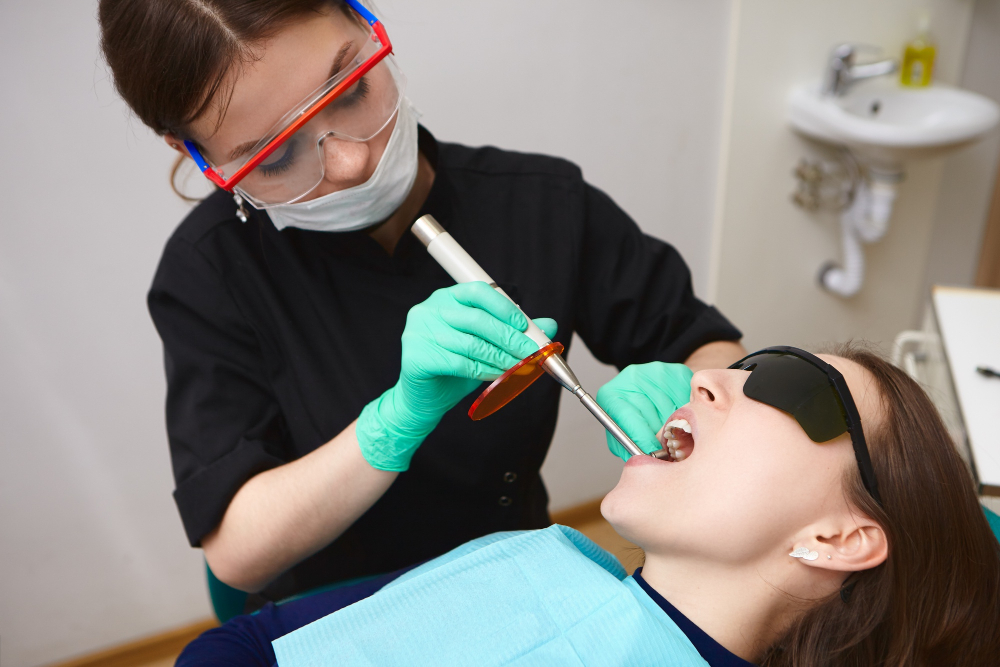
Skipping a teeth cleaning in Camarillo for several years allows plaque to calcify into tartar that brushing can't remove, gum inflammation to progress toward bone loss and small cavities to expand into teeth that may need crowns, root canals or extraction. The first year or two shows early, reversible changes. By year three or beyond, permanent changes to bone and tooth structure are more common. The longer the gap, the more complex the path back to a healthy baseline.
Key Takeaways
- Skipping a teeth cleaning in Camarillo for a year produces no symptoms which is why most people who've been avoiding the dentist genuinely believe they're fine.
- By years two and three, calculus buildup becomes significant, early bone loss may be detectable on X-rays and small cavities that could have been filled easily are growing.
- The changes most people miss are the ones below the gumline bone levels, pocket depths and root surface calculus that only professional assessment can identify.
- Patients who return after years away are never turned away or judged getting in is always better than continuing to wait.
If you've skipped dental cleanings for a few years, you probably already know it. What you may not know is what's been happening in your mouth during that time and whether the fact that nothing hurts means nothing is wrong.
It usually doesn't. The gap between "nothing feels wrong" and "something is significantly wrong" is exactly where years of skipped teeth cleaning in Camarillo appointments accumulate their damage quietly, predictably and in ways that show up clearly on X-rays and in periodontal charts even when they produce no symptoms at all.
Here's the real progression, year by year.

Year One: Why Most People Think They've "Gotten Away With It"
The first year of skipped cleanings is the most deceptive. For most patients with reasonably good home care, nothing dramatic happens.
What is happening: plaque that isn't removed in the areas that home care consistently misses between teeth, just below the gumline, in the deep grooves of molars begins mineralizing into calculus. By the end of year one, calculus is present in the areas your toothbrush can't adequately reach and the bacterial environment in those areas has become more established than it was at your last professional cleaning.
Years Two and Three: The Changes That Usually Stay Hidden
The second and third years are when the accumulation starts to matter clinically even though it still doesn't hurt.
Calculus that began forming in year one continues mineralizing and spreading. The bacterial film beneath the gumline becomes more organized and produces more inflammatory signals in the surrounding gum tissue.
Cavities that were in the white-spot stage at the one-year mark potentially reversible with fluoride and improved hygiene have now advanced into enamel and begun penetrating into dentin.
None of this announces itself. No pain and no visible change in the mirror. The changes that most affect long-term dental outcomes are occurring entirely below the surface and below the gumline.
Several Years Later: When Small Problems Start Changing the Treatment Plan
Beyond three years, the progression from reversible to irreversible begins to tip decisively.
Bone loss that was early and detectable at year two has continued. Pocket depths that might have responded well to a deep cleaning in year two may now require a more involved approach.
Cavities that were filling-sized have grown. A tooth that would have been a $200 filling is now a $2,000 root canal and crown or an extraction and the beginning of an implant conversation.
The Part Most People Never Notice Until the Dentist Shows Them
The findings that matter most in a multi-year gap aren't usually the ones patients suspect. Most people expect to hear they have cavities. What surprises them is the bone.
On a periapical or bitewing X-ray, bone levels are visible as a clearly defined line around each tooth root. In a healthy mouth, that line sits close to the cementoenamel junction, the point where the crown of the tooth meets the root.
Patients who've skipped teeth cleaning in Camarillo appointments for several years frequently have their first indication that something significant happened when a hygienist or dentist shows them their X-rays and points to the bone level.
The First Appointment After Years Away: What Should You Expect?
Returning after a multi-year gap feels daunting for most patients. A few things are worth knowing before you make the call.
The first appointment is usually a comprehensive exam and X-ray series, not a cleaning. The exam gives the dental team a complete picture of what's present before any treatment is planned. This is the right sequence: cleaning an unknown situation without a diagnosis isn't good care.
The clinical team at Clove Dental doesn't treat returning patients differently based on how long they've been away. The exam is a medical assessment, not an audit. Every patient who comes back after a gap has made the right decision by coming back and the first appointment is about establishing a starting point, not assigning blame for the gap.
Conclusion
Skipping a teeth cleaning in Camarillo for a year feels fine. Skipping for several years produces changes that don't feel like anything but show up clearly in the clinical record. The longer the gap, the more those silent changes have compounded into findings that require more time and more involved treatment to address.
The most useful thing that can be said about coming back after years away: the sooner, the simpler.
At Clove Dental, we meet patients where they are and we'll build a plan that makes getting back on track as straightforward as possible.
FAQs
Will a teeth cleaning in Camarillo after several years be painful?
It depends on how much calculus has accumulated and the state of the gum tissue. Significant calculus below the gumline on inflamed tissue can make cleaning more uncomfortable than a routine visit.
Do I need to disclose that I haven't been to the dentist in years?
Yes, it helps the dental team prepare for the appointment appropriately, order the right X-rays, and allocate enough time. There's no judgment attached to the disclosure.
Is it too late to fix the damage from years of skipped cleanings?
For most patients, no significant improvement is achievable regardless of how long the gap has been. Bone loss that has occurred can't be regenerated, but it can be stabilized. Teeth that need fillings or crowns can be restored.