.png?width=80&height=80&name=Clove%20Dental%20White%20Small%20(28).png "Clove Dental White Small (28)")
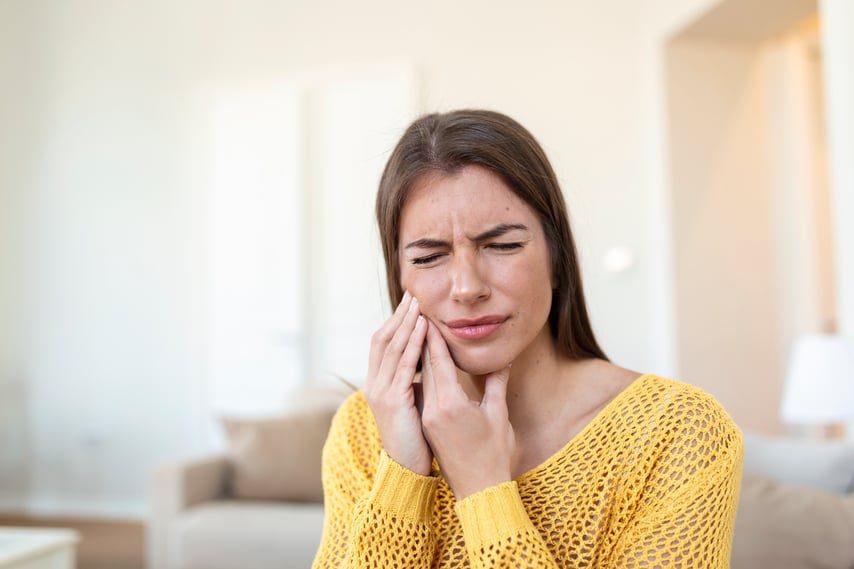
Sensitivity of the teeth following a dental cleaning is normal and can be completely resolved in 24 to 48 hours. It occurs since scaling eliminates tartar that had been covering the roots of the teeth and the gum line making the sensitive parts temporarily exposed to air and temperature variations. It is more experienced in patients with receding gums, deep pockets, or long intercleaning intervals.
Key Takeaways
- Post-cleaning sensitivity is common and normally it passes off in 24-48 hours.
- The elimination of tartar leaves the sensitive surfaces of the tooth temporarily exposed but this is not an indication that something has gone amiss.
- Any sensitivity persisting more than two days, increasing, and localized to a single tooth is worth exploring.
- When patients miss cleanings, they tend to be more sensitive rather than less sensitive upon seeing the dentist.
- Clove Dental operates with the help of soft treatment methods and desensitization to ensure that cleaning is as comfortable as possible.
Did you have a slight sensitivity in your teeth following your last dental cleaning? Cold water perhaps smack, or a breath of air made you pout. Then, you are in fine company and there is nothing much to fret about, in most cases.
But sensitivity is not something to rule out either. It is really different when it comes to the temporary discomfort you experience after a regular cleaning and the discomfort that indicates that something is amiss.
This is one of the questions that we frequently receive at Clove Dental as a dentist in Thousand Oaks. This guide will present you with a clear and straightforward breakdown of what is normal and what is not and what to do in case the sensitivity lingers longer than anticipated.
Is Tooth Sensitivity After a Cleaning Normal?
Yes, within limits. A certain amount of sensitivity following a professional cleaning is quite normal, particularly when it is the first time in a long time you have had your periodontal therapy or when you have an early-stage gum disease. It does not mean that something has gone amiss with the appointment.
The most important question is its duration. Normal post-cleaning sensitivity disappears in 24-48 hours. When you continue to experience discomfort after 2 to 3 days, especially when it is located in a specific area and is becoming more severe, then that is the time when you can make a follow-up appointment with your Thousand Oaks dental care provider.
What Causes Sensitivity After a Cleaning? (Not What Most People Think)
The majority of patients presume that sensitivity is caused by the cleaning being done too hard. The actual cause is simpler.
Tartar Hardened plaque is deposited over time along the gum line and on the tooth roots. After it becomes hard, it serves as insulation to delicate surfaces. For the first time in many months, those surfaces are exposed to the open air of your mouth, to air, temperature, pressure, etc. when your hygienist removes it during scaling.
The temporary exposure is the cause of sensitivity. It is not the harm, it is your teeth getting used to being clean again. Minor inflammation of the gums in the vicinity of newly scaled areas may contribute to the sensation temporarily. Both are resolved easily with due care.
Why Some Patients Feel It More Than Others
Not all people walk away with a cleaning. The amount of post cleaning sensitivity depends on a number of factors-
- Gum recession: When gums have been drawn back, there is more root surface naturally exposed cleaning of these areas can be more intense.
- Tartar beneath the gum line: Patients with initial gum disease have deeper pockets of gum and need more in-depth scaling.
- Long intervals between cleaning: The more is removed during one visit, the greater the amount of surface area that is newly exposed at any given time.
- Naturally thin enamel: It is a baseline of some patients who have more sensitive teeth, despite the cleaning itself.
- Teeth grinding: Bruxism removes the layer of enamel with time, which causes teeth to be more sensitive following dental procedures.
In case any of them applies to you, please state it prior to your cleaning. Our dentists Thousand Oaks team can adapt and provide desensitizing services to ensure that you feel comfortable even before the procedure.
When Sensitivity Is a Warning Sign (Don’t Ignore This)
Certain patterns of sensitivity exceed the post-cleaning window. Note down, should you observe-
- Lasting sensitivity (more than 48-72 hours) following your cleaning.
- The pain was localized in one tooth as opposed to general mouth pain.
- Severe, stinging pain instead of dull pain or warmth.
- Bad taste and sensitivity, along with visible changes to the gum.
- Pain that disturbs your sleep or gets worse without any apparent cause.
These trends indicate more than a simple adaptation. They can be signs of a hollow, a defected tooth or of an abscess or gum disease requiring some treatment more than a regular cleaning. Call your dentist in Thousand Oaks, do not leave it.
What Could Be Causing Persistent Sensitivity?
When sensitivity does not take the 24 to 48 hour expected schedule, a number of underlying matters can be eliminated-
- Cavities: Decay reveals the inner tooth layer which is extremely sensitive to temperature and pressure.
- Cracked teeth: Hairline cracks do not necessarily appear, but cause acute pain when biting or chewing.
- Active gum disease: Continued infection of periodontal tissue leaves gum tissue inflamed, which increases its sensitivity even after cleaning.
- Exposed roots surfaces:Roots have no enamel to shield the crown, and are much more sensitive.
- Failure of restorations: A fractured or improperly bonded filling or a crown may result in continued localized sensitivity.
At Clove Dental, the team of multiple specialty specialists will be able to identify the cause of persistent sensitivity almost instantly, even during the same appointment, without referring to any third-party.
How to Reduce Sensitivity After a Cleaning
Post-cleaning sensitivity is easy to manage, and is normally effective in a day or two-
- Apply a toothpaste that is desensitizing. Potassium nitrate or stannous fluoride products are used to prevent the nerve impulses that cause sensitivity.
- Do not expose yourself to extreme temperatures within 24-48 hours. Freshly scaled surfaces will be worsened by hot coffee, ice cream and cold drinks.
- Warm salt water rinse to calm down swollen gum tissue and decrease slight swelling of rinsed sites.
- Brush teeth with a soft-bristled toothbrush. The hard scrubbing is counter-productive immediately after a cleaning.
Enquire about fluoride application. Clove Dental is now offering professional fluoride treatments, which are applied at the end of your cleaning to remineralize and protect enamel.
Why Skipping Cleanings Makes Sensitivity Worse Over Time
This is the irony that most patients do not anticipate: not wanting to have cleanings due to sensitivity nearly always leads to worse sensitivity in the future rather than better
By letting tartar build up over 18 months or two years rather than six, a lot more has to be removed at the next appointment. Greater scaling amounts to greater surface area being newly exposed, and a much longer, more painful period of healing. Regular patients always arrive with minimal to no post-cleaning sensitivity due to the less to be removed every time.
The best approach to ensure that the sensitivity to a minimum and the procedure as comfortable as possible is to have consistent Thousand Oaks dental care at the correct time of the day. Depending on your gum condition and the tartar formation, your hygienist will advise the appropriate schedule.
How Clove Dental Approaches Comfortable, Preventive Care
At Clove Dental, we know that one of the primary reasons why patients wait to get dental care is because they are afraid of the pain. We put our philosophy of Thousand Oaks dental care on making each appointment as comfortable as it is effective.
- Gentle scaling method: Our hygienists are trained to work effectively with minimum tissue trauma particularly among patients with known sensitivity.
- Topical anesthetics: Topical anesthetics can be offered to patients who find the cleaning process itself to be painful.
- Professional desensitizing treatments: Administered at the end of your cleaning when necessary to decrease post appointment sensitivity.
- Individualized cleaning plans: Gum disease patients or high sensitivity patients are put on a 3 to 4 month recall factor to ensure that every appointment is within reach.
- In-house specialists: Once constant sensitivity indicates there is something more wrong, our general dentists, periodontists, and endodontists are all under one roof and no referrals, no waiting.

Conclusion
Some post-professional cleaning sensitivity is the normal reaction of your mouth to having accumulated tartar removed, rather than a cause of concern. It goes away quickly and it is a low cost to the health of the gums and cavity prevention that routine cleanings provide.
What you do not want to do is to discount sensitivity that persists, intensifies or is localized to a single tooth. Such discomfort is worth exploration and the earlier the cause is caught the cheaper and easier it is to deal with almost always.
Ready to have a cleaning as comfortable as it can be comprehensive? Book your appointment at Clove Dental, the dental practice you can trust with your Thousand Oaks dental care needs, and leave the rest to our team.
FAQs
How long should teeth be sensitive after a cleaning?
The normal post cleaning sensitivity is 24-48 hours. Two to three days later, in case you are still experiencing sensitivity, or your symptoms are not improving, see your dentist in Thousand Oaks who will evaluate you again.
Is it normal for gums to be sore after a cleaning?
Yes. Mild soreness of the gums, particularly around the places where there is an accumulation of tartar is normal during the first day or two. Warm salt water can help. Should soreness be severe or should it not go away in 48 hours, inform your dentist.
Can I eat normally after a cleaning?
Yes, however, do not eat or drink very hot, cold or acidic within the first 24 hours. These may worsen newly polished surfaces and make them more sensitive. The safest foods that can be eaten the rest of the day are soft and room-temperature foods.
Does a deep cleaning cause more sensitivity than a regular cleaning?
Generally, yes. A thorough cleaning, scaling and root planing, goes further below the gum line to treat active gum disease. A greater area is covered and therefore sensitivity and soreness of gums can take a few days to be experienced than with a standard cleaning. Your Clove Dental hygienist will discuss with you what to expect in advance
Why do my teeth feel sensitive even though I brush regularly?
It cannot be removed with the help of regular brushing, as soon as it has hardened, and it can be done with professional scaling. When the tartar is removed beneath the gum line, the underlying surfaces will be exposed for the first time in months, leading to temporary sensitivity no matter how hard you might brush at home.
.jpg?width=352&name=image(853).jpg)