.png?width=80&height=80&name=Clove%20Dental%20White%20Small%20(28).png "Clove Dental White Small (28)")

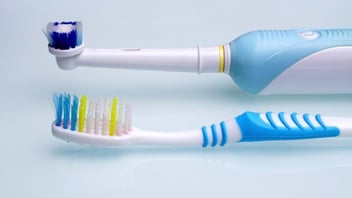
An electric toothbrush is a battery-powered device that uses sonic or oscillating bristles to remove up to 21% more plaque than a standard manual toothbrush. The medical literature supports the claim that powered toothbrushes help people brush in a way that is optimal for removing plaque and improving gingival health [1] (Jain, 2013). Dr. Puri at Clove Dental recommends electric models for California families because built-in timers and pressure sensors correct poor brushing habits and prevent permanent gum recession.
The Anatomy of a Perfect Brush Head: What to Look For
Buying a high-tech electric base is only half the battle. The actual brush head does the heavy lifting. When you stand in the dental aisle, you will notice brush heads come in various shapes—some are perfectly flat, while others have angled or rubberized bristles. Clinical literature indicates that toothbrushes with a tapered, cross-angled soft-bristled design are more effective at removing dental plaque [2] (Mazza et al., 2014). For the "Wellness Enthusiast" who wants optimal daily health, Dr. Puri recommends cross-action or angled bristles. These specialized designs sweep deep into the crevices between your teeth, physically breaking up plaque where a flat brush glides right over. Regardless of the shape you choose, always check the packaging for the word "soft" or "extra-soft." Stiff bristles do not equal cleaner teeth; they equal damaged gums. By combining a soft, angled brush head with the rapid vibrations of an electric base, you achieve a professional-level clean without risking enamel wear.
Gamifying the Bedtime Routine with Smart Brush Apps
Medical evidence indicates that Smart toothbrushes equipped with inertial sensors are emerging as high-tech oral health products in personalized health care [3] (Chen et al., 2021). If you are a "Practical Parent," you know that getting young kids to brush for two full minutes often feels like a nightly negotiation. The year 2026 brings a powerful solution to this daily struggle: Bluetooth-connected smart brushes. Many modern electric toothbrushes for kids now sync directly to smartphone apps. These apps gamify the brushing experience. As your child moves the brush across different zones of their mouth, a character on the screen defeats "sugar bugs" or earns points to unlock digital rewards. This technology transforms a boring chore into an engaging, interactive game. Instead of policing their bathroom habits, you can simply review their brushing score on your phone while relaxing in your St. Matthews living room. It takes the stress out of your evening and builds lifelong healthy habits for your kids.
Manual vs. Electric: The Daily Maintenance Comparison
Understanding how these tools perform over time helps you make the best investment for your household.
|
Feature |
Standard Manual Brush |
Basic Electric (Kids) |
Premium Smart Brush (Adults) |
|
Plaque Removal Efficacy |
Moderate (Depends on user skill) |
High (Vibrations lift plaque) |
Very High (Sonic technology) |
|
Technique Forgiveness |
Low (Requires perfect angles) |
Moderate (Spinning does the work) |
High (Pressure sensors guide you) |
|
Durability |
Low (Replace every 3 months) |
High (Base lasts years) |
Very High (Base lasts 3-5+ years) |
|
Maintenance Level |
Low (Toss and replace) |
Moderate (Charge and swap heads) |
Moderate (Charge and swap heads) |
|
Estimated Cost |
$3 - $8 |
$20 - $40 (Base + Heads) |
$80 - $150+ (Base + Heads) |
Orthodontic Defense: Why Braces Require Sonic Power
Investing in orthodontic work for your teenager is a major financial commitment for the "Family CEO." However, traditional metal braces and even clear aligner attachments create dozens of tiny traps for food and bacteria. If your teen uses a standard manual brush, they will likely leave plaque sitting around their brackets, which causes permanent white stains on the enamel. Sonic electric toothbrushes act as an insurance policy for your orthodontic investment. These brushes vibrate at such high speeds that they create "fluid dynamics." This means the vibration pushes toothpaste and water deep into the tight spaces between wires and teeth, cleaning areas the physical bristles cannot even reach. If your child is currently undergoing orthodontic treatment at Clove Dental, upgrading them to a sonic brush is the most effective way to guarantee a spotless, stain-free smile on the day their braces come off.
Travel Strategies for the Busy California Professional
For the "Career Climber," a predictable routine is vital, but business trips can easily disrupt your oral care. You might wonder if it is worth packing your bulky electric toothbrush base and charging cord when flying out of California Muhammad Ali International Airport (SDF) for a quick weekend conference. Dr. Puri recommends a simple travel strategy. If your trip is shorter than three days, leave the heavy electric base at home. Pack a high-quality, soft-bristled manual brush. A few days of manual brushing will not derail your oral health as long as you maintain proper technique. For longer trips or week-long family vacations, invest in a slim, USB-charging travel case for your electric brush. This ensures you maintain your premium preventive care routine while living out of a suitcase, protecting your smile no matter where your schedule takes you.
Sustainability in the Bathroom: Reducing Plastic Waste
Many of our "Community Connector" patients actively look for ways to reduce their household waste. You might assume that buying an electronic device is less eco-friendly than using a simple plastic manual brush. However, the math tells a different story. Dental professionals recommend changing your toothbrush every three to four months. If a family of four uses manual brushes, that equals 16 full-sized plastic handles thrown into local Kentucky landfills every year. With an electric toothbrush, you keep the rechargeable base for several years. You only throw away the small, interchangeable plastic brush head. This significantly reduces your household's overall plastic footprint. By choosing an electric model, you protect your family’s teeth while making a responsible choice for the environment.
FAQS
1. Can my family share one electric toothbrush base to save money?
Yes. Sharing the motorized base is highly recommended for families. You just need to buy individual, color-coded brush heads for each family member. As long as you remove your personal brush head after use and rinse the base, it is a safe and budget-friendly strategy.
2. Do electric toothbrushes damage dental crowns or veneers?
No, they actually protect them. A high-quality electric toothbrush with a pressure sensor is safer for custom crowns and veneers than aggressive manual brushing. The gentle sonic vibrations clean around the margins of your restorative work without scratching the porcelain.
3. Are sonic vibrations safe for my toddler's gums?
While safe, sonic vibrations are usually too intense for toddlers. The buzzing sensation often causes sensory overload, making them fight the brushing process. Dr. Puri recommends sticking to a soft manual brush until your child is at least four or five years old.
References
[1] Jain Y. (2013). A comparison of the efficacy of powered and manual toothbrushes in controlling plaque and gingivitis: a clinical study. Clinical, cosmetic and investigational dentistry, 5, 3–9. https://doi.org/10.2147/CCIDE.S40656
[2] Mazza, L., Gatto, M. R., Monaco, G., & Pelliccioni, G. A. (2014). A laboratory based investigation of a new elastic toothbrush head. TheScientificWorldJournal, 2014, 763968. https://doi.org/10.1155/2014/763968
[3] Chen, C. H., Wang, C. C., & Chen, Y. Z. (2021). Intelligent Brushing Monitoring Using a Smart Toothbrush with Recurrent Probabilistic Neural Network. Sensors (Basel, Switzerland), 21(4), 1238. https://doi.org/10.3390/s21041238