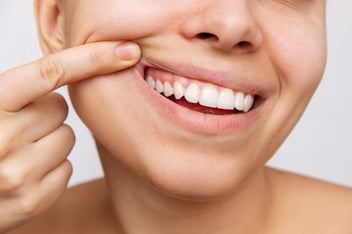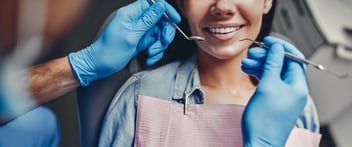
Uninsured scaling and root planing (SRP) in Los Angeles is a therapeutic deep cleaning that typically costs $200-$400 per quadrant out of pocket. This comprehensive fee covers local anesthesia, subgingival tartar removal, and precise root smoothing to stop active periodontal disease and prevent permanent tooth loss. Notably, medical literature supports that patients with periodontitis, with scaling intervals tailored to individual risk profile and periodontal status, can maintain health [1] (Matthews et al., 2025).
The Role of Ultrasonic Scalers vs. Manual Hand Tools in Your Deep Cleaning
Clinical literature supports that hand or ultrasonic scalers remove calculus and bacterial deposits subgingivally [2] (Oza et al., 2022). When you pay out of pocket, you want the most efficient service possible. At Clove Dental, we utilize a hybrid cleaning technology. The ultrasonic scaler uses high-frequency sound waves and a constant, cooling water spray to break tartar deposits into microscopic fragments. This "acoustic microstreaming" flushes out pockets that standard floss simply cannot reach. Following the ultrasonic phase, your hygienist uses precision Gracey curettes, traditional hand-held tools to manually feel for and smooth any remaining roughness on the tooth root. This dual-method approach leaves the root surface glass-smooth, physically preventing new bacteria from reattaching and giving you the best possible long-term return on your investment.
Why Scaling and Root Planing is a "Systemic" Health Investment
It is easy to think of a deep cleaning as just "mouth care," but periodontal disease is a whole-body issue. When deep pockets are filled with active bacteria, those pathogens do not stay in your gums; they enter your bloodstream every time you chew. This triggers a chronic inflammatory response throughout your body. Medical studies have linked untreated periodontitis to elevated risks for cardiovascular health issues and difficulty managing blood sugar levels. Paying for a deep cleaning is essentially "source control" for your immune system. Clearing this infection helps lower systemic inflammation, one of the most proactive steps you can take for overall physical wellness.

48-Hour Recovery: Managing Tissue Sensitivity After Your Procedure
After your deep cleaning, your gums will need a brief recovery window. Because we removed tartar from beneath the gum line, your tissue may feel slightly tender or "raw" for 24 to 48 hours. To speed up your healing, we recommend a strict "soft-food" protocol for the first two days; think yogurt, room-temperature soups, or mashed avocado. Avoid sharp or crunchy snacks like chips or popcorn, which can scrape the sensitive, healing tissue. If you experience minor discomfort, warm saltwater rinses are your best friend. Dissolving a half-teaspoon of salt in warm water and gently rinsing helps soothe the inflammation and naturally promotes cellular repair, helping your gums shrink back tightly against the teeth.
Comparisons: Periodontal Care for Uninsured Patients
Understanding the specific clinical value of your treatment helps you invest your healthcare dollars wisely. Here is how your cash-pay options compare:
|
Treatment Type |
Estimated LA Cash Cost |
Durability of Results |
Maintenance Level |
|
Standard Cleaning |
$100 – $200 (Total) |
Low (Cannot reach deep infections) |
Low (Standard daily brushing) |
|
Deep Cleaning (SRP) |
$200 – $400 (Per Quadrant) |
High (Stops active bone loss) |
High (Requires 3-4 visits per year) |
|
Periodontal Surgery |
$1,000+ (Per Quadrant) |
High (For advanced, severe disease) |
High (Strict post-op care needed) |
The "Bacterial Clock": Why Maintenance Frequency is Non-Negotiable
Once you have invested in your out-of-pocket deep cleaning, you want to make sure it lasts. We often emphasize that periodontal bacteria follow a strict biological clock: it takes about 90 days for pathogenic bacteria to repopulate and mature in a gum pocket. This is why we transition you to "Periodontal Maintenance" cleanings every three to four months. Skipping these maintenance visits is the fastest way to lose your initial investment. Without that 90-day reset, bacteria harden back into tartar, the infection returns, and you will eventually need another costly deep cleaning. Keeping your schedule is the single most effective way to prevent disease recurrence and avoid further structural bone loss.
Precision Home-Care Tools for the Cash-Pay Patient
The best way to save money on future deep cleanings is to make your home-care routine as effective as a professional's. If you are paying out-of-pocket, you should prioritize high-leverage tools. We highly recommend investing in a water flosser. Unlike string floss, which can sometimes push food deeper into a pocket, a water flosser uses a pulsating stream to flush bacteria from beneath the gum line. Pair it with an electric toothbrush with a pressure sensor. Aggressive manual brushing often causes gum recession, which exposes more root and creates new traps for tartar. Using the right tools at home can extend the clinical success of your deep cleaning, potentially lengthening the time between necessary professional visits.
FAQs
1. Is the numbing shot included in the cash price of a deep cleaning?
Yes. At Clove Dental, your quoted out-of-pocket fee for scaling and root planing includes the local anesthesia you need to stay comfortable. We believe transparent pricing means zero hidden surcharges for basic clinical comfort.
2. Can I just pay for a standard cleaning instead if I don't have insurance?
No. If a dentist diagnoses you with active periodontal disease, performing a standard cleaning is considered supervised neglect. A standard cleaning only targets the visible crown of the tooth and ignores the active bone infection below the gums. We must treat the active disease legally and ethically to protect your health.
3. What happens if I delay my deep cleaning to save money?
Gum disease is a progressive bacterial infection. It will not heal on its own. If you delay an SRP, bacteria will keep eating away at your jawbone. Eventually, your teeth will loosen and fall out, leaving you to pay for expensive extractions and dental implants.
References
[1] Matthews, D. C., & Al-Waeli, H. (2025). Benefits of Dental Scaling and Polishing in Adults: A Rapid Review and Evidence Synthesis. JDR clinical and translational research, 10(3), 269–281. https://doi.org/10.1177/23800844241271684
[2] Oza, R. R., Sharma, V., Multani, P., Balsara, K., Bajaj, P., & Dhadse, P. (2022). Comparing the Effectiveness of Ultrasonic Instruments Over Manual Instruments for Scaling and Root Planing in Patients With Chronic Periodontitis: A Systematic Review and Meta-Analysis. Cureus, 14(11), e31463. https://doi.org/10.7759/cureus.31463