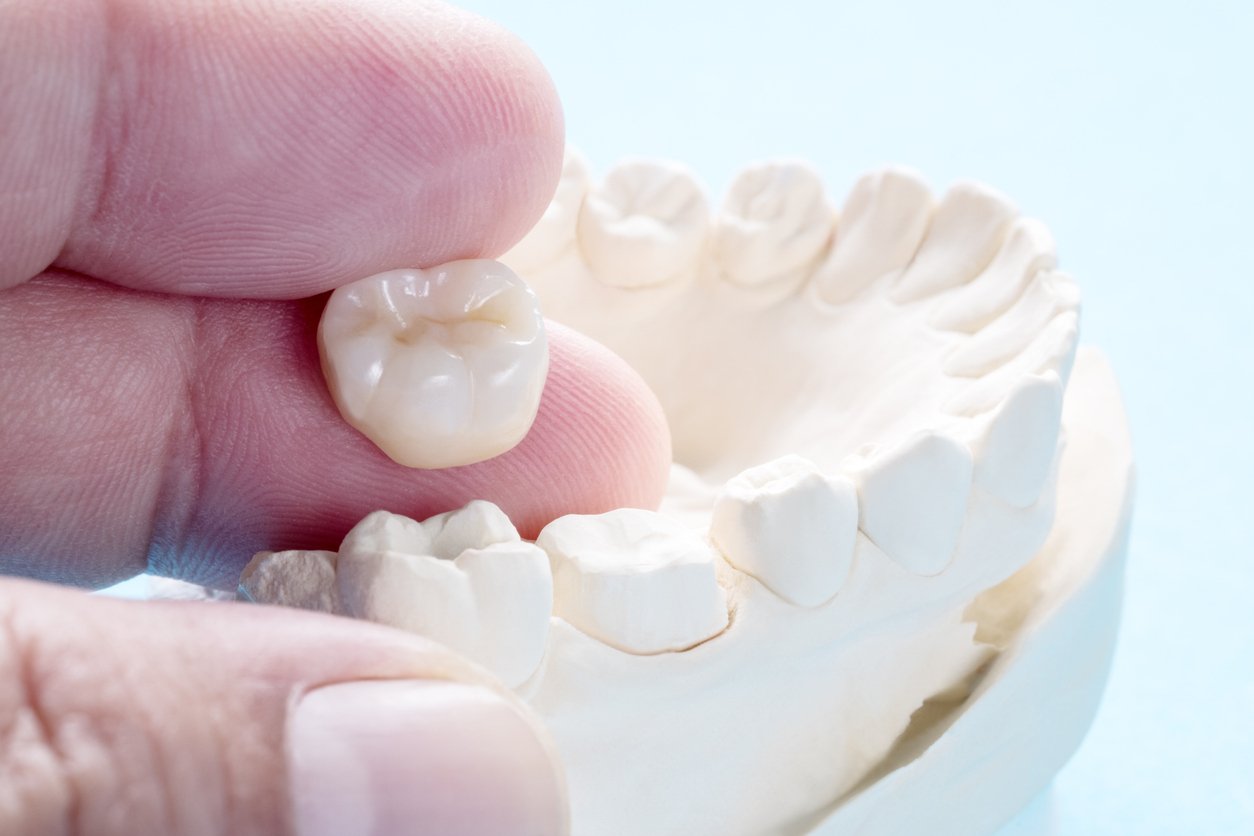
 Cigna Dental PPO covers zirconia and porcelain crowns under major restorative benefits, typically paying 50% after a 12-month waiting period. Cigna supports that major restorative care includes bridges, crowns, and dentures [1] (Cigna, n.d.). However, Cigna strictly limits full ceramic coverage to front teeth and often downgrades back molar crowns to a non-precious metal alternative.
Signs Your Tooth Needs a Crown Instead of a Simple Filling
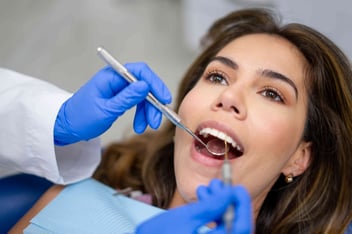
You might wonder why a basic filling will not work for your painful tooth. A filling works well for a small cavity, but it cannot fix structural failure. If decay covers more than half of your tooth, a filling may not support the heavy pressure of chewing. You will also need a crown if you get sharp pain when you release your bite, a classic sign of a cracked tooth. Cigna requires strict clinical proof that a crown is medically necessary. Our Clove Dental team takes high-resolution digital photos of your damaged tooth to document your need and help speed up your Cigna claim approval. Additionally, medical evidence supports the importance of digital photography in dentistry and provides guidelines for capturing orofacial structures [2] (Desai et al., 2013).
How We Make Your Crown Procedure Fast and Goop-Free
Historically, receiving a dental crown meant biting down on a messy, gag-inducing putty for several minutes. We know that old process can cause a lot of anxiety. At Clove Dental, we skip the putty entirely. We use sleek digital intraoral scanners to take a highly accurate 3D picture of your tooth in just a few seconds. Clinical literature shows that Crowns based on intraoral scanners have statistically significantly better marginal and internal adaptation before cementation than conventional impressions [3] (Haddadi et al., 2019). This modern technology helps ensure your new zirconia or porcelain crown fits your gum line perfectly on the first try. You spend less time sitting in the dental chair and more time enjoying your day in Los Angeles.

Stacking Dual Insurance to Cover Your Crown Upgrade
Many California families carry dual dental coverage. You might have Cigna through your employer, while your spouse carries a different PPO plan through theirs. You can use this dual coverage to your advantage. We utilize a billing strategy called Coordination of Benefits (COB). First, we bill Cigna for your crown. Once Cigna pays their allowed portion, we automatically submit the remaining balance to your secondary insurance. The secondary plan often covers the leftover copay or helps pay the material upgrade fee for your zirconia. This smart strategy frequently drops your final out-of-pocket cost to near zero.
Comparisons: Cigna Crown Coverage
Understanding how Cigna handles different materials helps you plan your healthcare spending.
|
Crown Material |
Aesthetic Quality |
Cigna Front Tooth Coverage |
Cigna Back Molar Coverage |
Durability Level |
|
Traditional Porcelain |
Best (Matches natural enamel) |
50% (Standard Major Benefit) |
Downgraded to Metal Rate |
Moderate (Can chip under pressure) |
|
Zirconia (White Steel) |
Excellent |
50% (Standard Major Benefit) |
Downgraded to Metal Rate |
Maximum (Resists heavy grinding) |
|
Non-Precious Metal |
Poor (Dark gray/silver) |
Rarely Used |
50% (Standard Major Benefit) |
High (Very strong but unappealing) |
Navigating Cigna's Missing Tooth Clause for Bridges
Changing jobs in Los Angeles often means changing your health benefits. If you had a tooth pulled before your Cigna PPO policy started, you must watch out for the "missing tooth clause." This contract rule means Cigna will not pay to place a crown or bridge over a gap that existed before your coverage began. If you need a zirconia bridge to replace an old missing tooth, our administrative team checks your specific policy limits on day one. If the clause applies to you, we will quickly help you find clear, alternative financing options so you can still finish your smile.
Protecting Your Zirconia Investment: Daily Care Tips
Once Cigna helps pay for your beautiful new crown, you want to make sure it lasts for decades. Zirconia is exceptionally strong, but the natural gum tissue surrounding it still needs your daily attention. Treat your new crown just like a natural tooth. Brush twice a day with a soft-bristled toothbrush and floss daily to sweep away plaque near the gum margin. If you carry stress in your jaw or grind your teeth at night, let us know. We can design a custom night guard to absorb that friction and protect your porcelain or zirconia from chipping while you rest.
FAQs
1. Does Cigna have a waiting period for zirconia crowns?
Yes. Most employer-sponsored Cigna PPO plans enforce a 12-month waiting period for major restorative services like crowns. If you recently started a new policy, our administrative team will check your exact activation date before we begin treatment.
2. Will Cigna pay to replace my old porcelain crown?
Cigna limits crown replacements, typically requiring the old crown to be at least five to seven years old. The replacement must also be medically necessary due to new decay or a fracture, not just for cosmetic upgrades.
3. Can I get a zirconia crown if Cigna only approves metal?
Absolutely. You always control your healthcare choices. We bill Cigna for the procedure, apply their metal-rate payout to your ledger, and you pay the remaining material cost out of pocket for the premium zirconia crown.
References
[1] Cigna. (n.d.). Full coverage dental insurance | Cigna. Www.Cigna.Com. Retrieved October 19, 2026, from https://www.cigna.com/knowledge-center/full-coverage-dental-insurance
[2] Desai, V., & Bumb, D. (2013). Digital dental photography: a contemporary revolution. International journal of clinical pediatric dentistry, 6(3), 193–196. https://doi.org/10.5005/jp-journals-10005-1217
[3] Haddadi Y, Bahrami G, Isidor F. Accuracy of crowns based on digital intraoral scanning compared to conventional impression-a split-mouth randomised clinical study. Clin Oral Investig. 2019;23(11):4043-4050. doi:10.1007/s00784-019-02840-0