.png?width=80&height=80&name=Clove%20Dental%20White%20Small%20(28).png "Clove Dental White Small (28)")
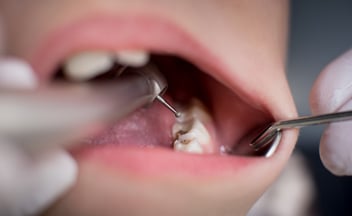
Is it normal to have pain 3 days after a tooth extraction? Clinical literature supports that Day three is usually the worst day of pain after a tooth extraction [1] (Cleveland Clinic, 2021). While mild soreness is expected, worsening pain 72 hours after surgery is a key symptom of dry socket. Dry socket, or alveolar osteitis, is a painful dental condition that occurs when the protective blood clot fails to form or is dislodged before the wound heals.
The Anatomy of a Healthy Healing Socket
Normal healing is a quiet, biological sequence. Once the tooth is removed, your body fills the space with a blood clot, which eventually transforms into "granulation tissue." This specialized, collagen-rich tissue acts as a scaffold for new bone. For the Wellness Enthusiast, it helps to know that a healthy socket often looks creamy white or grayish as it heals—this is not pus or infection, but the new tissue forming. At Clove Dental, we monitor this transition during your follow-up to ensure your jawbone regenerates as it should. Additionally, medical evidence shows that a complete seal of the socket with mature, mineralized trabecular bone and marrow is achieved around the 12th week on average [2] (Udeabor et al., 2023).
Suction and Carbonation: Avoiding the California “Vacuum Effect”
Many of our Up-and-Comers and Career Climbers are eager to return to their daily routines, but the physics of drinking can be a risk. Dry socket is often caused by a "vacuum effect" in the mouth. Using a straw for your morning iced coffee or drinking carbonated kombucha creates pressure changes that can physically pull the blood clot out of place. Clinical evidence indicates that the best way to prevent dry socket is to avoid negative pressure in the mouth that can pull the clot out of the socket [3] (Catanese, 2025). To protect your smile, we recommend avoiding all straws and bubbly drinks for at least five days. This simple habit helps keep your "living bandage" in place while you recover.

The Trigeminal Connection: Why Dry Socket Pain Radiates to the Ear
One of the most confusing dry socket symptoms is pain in your ear or temple. This happens because of the trigeminal nerve, the largest sensory nerve in your head. When the bone in your jaw is exposed, the "alarm bells" travel along this shared nerve pathway, tricking your brain into thinking the pain is coming from your ear. This is a classic marker of dry socket that is rarely present with a standard cavity. Recognizing this radiating sensation helps our Practical Parents quickly identify when their teen needs a professional checkup, not just more rest.
Comparison: Normal Healing vs. Dry Socket
Understanding the difference between typical recovery and a complication helps you decide when to call our California office.
|
Feature |
Normal Extraction Healing |
Dry Socket (Alveolar Osteitis) |
|
Pain Peak |
Within the first 24–48 hours |
Starts or worsens after 72 hours |
|
Pain Quality |
Dull, manageable ache |
Intense, radiating, "neuralgic" pain |
|
Visual Appearance |
Dark red/black blood clot |
Empty socket; visible white bone |
|
Oral Odor |
Normal |
Noticeable bad breath or foul taste |
|
Cost to Treat |
Included in follow-up |
Low (Simple medicated dressing) |
|
Durability |
Permanent healing in 7–10 days |
Requires 1–2 clinical visits to resolve |
Non-Invasive Relief: What Happens During a Dry Socket Treatment
A common fear for the Social Sharer is that treating a dry socket will require more needles or "going back under the drill." This is a myth. Treating dry socket at Clove Dental is gentle and non-invasive. We carefully flush the socket with a warm, medicated rinse to remove any trapped debris. Then, we place a specialized "sedative dressing" containing natural eugenol (clove oil). Most patients feel their pain level drop from a 9 to a 2 within minutes of application. No shots are usually required, and you can return to your Los Angeles office immediately.
Long-Term Outlook: Does Dry Socket Impact Future Implants?
A dry socket can seem like a major setback for our Preventive Planners and Long-Term Locals planning for a future dental implant. You might worry that the bone will not be strong enough for an implant later on. The good news is that you will not normally be refused an implant due to dry socket. It just slows the initial healing of the gum tissue.” Treating the socket right away at Clove Dental stabilizes the area and preserves the bone underneath, keeping your long-term plan for a full, beautiful smile on track.
FAQs
1. How do I know if I have a dry socket or just a normal toothache?
A normal toothache after extraction stays localized and fades by day three. Dry socket pain is "radiating" it often travels up to the ear or down the jawline on the side of the extraction. If the pain is increasing on the third or fourth day, it is likely a dry socket.
2. Can I treat a dry socket at home with salt water?
Salt water rinses are excellent for keeping the area clean, but they cannot replace the missing blood clot. You need a dentist to apply a specialized medicated dressing (containing clove oil or similar agents) that acts as a physical barrier to soothe the exposed bone.
3. Does insurance cover dry socket treatment in California?
Most PPO and Medi-Cal/Denti-Cal plans cover post-operative care within a certain window of the extraction. Our administrative team at Clove Dental verifies your specific coverage to ensure your relief comes with zero financial surprises.
References
[1] Cleveland Clinic. (2021, November 30). Tooth extraction: Procedure, aftercare & recovery. Cleveland Clinic. https://my.clevelandclinic.org/health/treatments/22120-tooth-extraction
[2] Udeabor, S. E., Heselich, A., Al-Maawi, S., Alqahtani, A. F., Sader, R., & Ghanaati, S. (2023). Current Knowledge on the Healing of the Extraction Socket: A Narrative Review. Bioengineering (Basel, Switzerland), 10(10), 1145. https://doi.org/10.3390/bioengineering10101145
[3] Catanese, L. (2025, June 2). Dry socket: Preventing and treating a painful condition that can occur after tooth extraction - Harvard Health. Harvard Health. https://www.health.harvard.edu/diseases-and-conditions/dry-socket-preventing-and-treating-a-painful-condition-that-can-occur-after-tooth-extraction