.png?width=80&height=80&name=Clove%20Dental%20White%20Small%20(28).png "Clove Dental White Small (28)")
A dental emergency involving trauma, a knocked-out tooth, a fractured tooth, a displaced restoration or soft tissue injury requires fast, informed action in the minutes before you reach a dentist in Beverly Hills. For a knocked-out permanent tooth, handling it by the crown only, keeping it moist in milk or saliva and arriving within 30 to 60 minutes gives the best chance of reimplantation. Fractured teeth should be assessed same-day regardless of pain level.
Key Takeaways
- Dental trauma knocked-out teeth, fractures and avulsed restorations is time-sensitive in ways that dental infections aren't; the first hour determines what's salvageable.
- A fractured tooth without pain is not a reason to wait, the absence of pain doesn't indicate structural integrity and some fractures that feel mild are clinically serious.
- Emergency appointments at Clove Dental with a dentist in Beverly Hills prioritize stabilization, pain management and preservation not just symptom relief.
- Knowing what to do in the first 15 minutes after a dental injury changes the outcome more than any in-office treatment can if the window has already closed.
Dental emergencies don't arrive on schedule. A knocked-out tooth from a sports collision, a fractured crown on a Friday evening, a child who falls and chips a front tooth these situations require fast decisions with information most people don't have ready.
At Clove Dental, our dentist in Beverly Hills team handles acute dental trauma with the understanding that what happens in the first hour before you even reach the office is the determining factor in what can be saved. This blog covers the practical side of trauma-related dental emergencies: what to do immediately, what to bring, what the appointment looks like and what the goal is beyond simply stopping the pain.

"Can This Wait Until Tomorrow?" The First Question Almost Every Dental Emergency Starts With
For dental trauma, the answer is almost always no and the reason is specific to how traumatized dental tissue behaves.
A knocked-out tooth dries out within minutes without the right storage medium. The ligament fibers on the root surface that allow reimplantation to succeed begin dying almost immediately when the root is exposed to air. Every minute of dry time reduces the probability of successful reattachment.
Soft tissue injuries lacerations to the lip, tongue or gum bleed significantly because of the vascular nature of oral tissue. Most slow with sustained pressure and don't require emergency room care. Injuries that don't slow after 15 to 20 minutes of firm gauze pressure or that are deep enough to require suturing, are exceptions.
How a Dentist Decides Whether Your Situation Needs Immediate Care
Not every dental trauma has the same urgency profile. A dentist in Beverly Hills triaging a call about a dental injury considers several factors quickly:
Is a permanent tooth involved?
Trauma to primary (baby) teeth is assessed differently from permanent tooth trauma, the approach to a knocked-out baby tooth, for example, is generally not to reimplant it, to avoid damaging the developing permanent tooth beneath.
Is the tooth still in the socket, displaced or completely out?
A tooth that's been avulsed (completely knocked out) has the tightest time window. A tooth that's been intruded (pushed further into the gum) or luxated (shifted in position) has more flexibility but still needs same-day evaluation.
Is there soft tissue involvement, swelling or bleeding that's ongoing?
These findings may change whether the appropriate first stop is a dental office or an emergency room.
What You Should Do Before You Reach the Dental Office
For a knocked-out permanent tooth:
- Handle only by the crown, never the root. The ligament fibers on the root surface are what allow reimplantation to work; touching or scrubbing the root destroys them.
- If the tooth is dirty, rinse gently with milk or saline. Do not use tap water, it's hypotonic and damages root cells rapidly.
- The best storage is reimplanting the tooth into the socket immediately if the patient is calm and cooperative enough to do so safely.
For a fractured tooth:
- Rinse the mouth gently with warm water.
- If a fragment broke off, keep it and bring it to the appointment. In some cases it can be bonded back.
- Apply a cold compress to the outside of the face if there's swelling.
- Avoid chewing on that side until evaluated.
For soft tissue injury with bleeding:
- Apply firm, steady pressure with clean gauze or cloth.
- Maintain pressure continuously for 15 to 20 minutes without checking intermittent pressure restarts the clotting process.
- If bleeding doesn't slow meaningfully after this window, go to an emergency room.
What Happens Once You Arrive for an Emergency Appointment?
Emergency appointments with a dentist in Beverly Hills at Clove Dental are structured differently from routine visits. The sequence is: immediate pain management, clinical assessment, imaging as needed, stabilization.
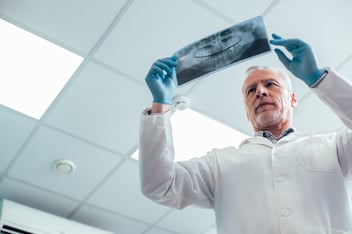
For fractures, imaging identifies whether the fracture line has extended below the gum line or toward the pulp, which determines whether a crown, root canal or extraction is the appropriate treatment. A temporary restoration may be placed to protect the tooth until definitive treatment is completed.
In all cases, pain management comes first the assessment and treatment plan happen once the patient is comfortable enough to participate in the process.
Conclusion
Dental trauma is one of the few dental situations where what happens in the minutes before you reach the office matters as much as what happens during treatment. Knowing how to handle an avulsed tooth, when to call immediately versus wait until morning and what to expect when you arrive converts a disorienting emergency into a manageable one.
At Clove Dental, our Beverly Hills team is ready for dental emergencies. Call us immediately when trauma happens, and we'll guide you through every step.
FAQs
What's the realistic window for reimplanting a knocked-out tooth?
The best outcomes occur when the tooth is reimplanted within 30 minutes. Success rates decline after 60 minutes outside the socket, particularly if the tooth was stored dry. Teeth stored in milk or saliva have better viability than dry storage even teeth outside the mouth for over an hour have been successfully reimplanted when stored correctly.
Can a chipped front tooth wait until a scheduled appointment?
A small chip with no sensitivity and no sharp edge may wait a day or two. A larger fracture, a fracture with sensitivity, or one with a sharp edge that's cutting soft tissue should be seen same-day.
What if my child knocks out a baby tooth?
Baby teeth are generally not reimplanted, the primary concern is whether the underlying permanent tooth was affected by the impact. A same-day evaluation is still appropriate to assess the socket, adjacent teeth and whether imaging of the area is needed to rule out impact to the developing permanent tooth.
How do I prevent dental trauma during sports?
A custom-fitted athletic mouthguard from a dental office provides significantly better protection than over-the-counter options. For any contact sport, even "low-contact" activities where collisions can happen, a mouthguard is the most effective single intervention for preventing dental trauma.