.png?width=80&height=80&name=Clove%20Dental%20White%20Small%20(28).png "Clove Dental White Small (28)")
.jpg?width=6000&height=4000&name=dentist-process-dental-services-dental-office-dental-treatment%20(3).jpg)
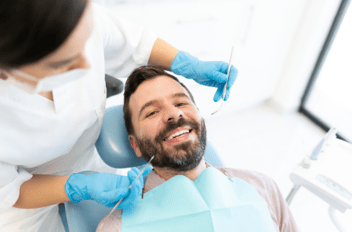
Patient education at a dentist in Camarillo means more than handing out a pamphlet after your cleaning. It means explaining what's happening in your mouth in plain language, why a specific treatment is being recommended, what happens if you wait and what your options actually are. Informed patients make better treatment decisions, follow through more consistently with home care, and are less likely to develop the same problems again after treatment.
Key Takeaways
- Patients who understand their dental condition, not just the recommended treatment, make more confident decisions and follow through more effectively on home care.
- The most valuable dental questions aren't just about cost and timing, they're about the cause of a problem and how to prevent it from recurring.
- Taking time to understand treatment options before making a decision rarely leads to worse outcomes, and often leads to better ones.
- Patient education is one of the most effective preventive tools available understanding why a problem develops is what makes avoiding the next one possible.
How often do you leave a dental appointment genuinely understanding what the dentist found, why a specific treatment was recommended and what you can do differently before your next visit? For many patients, the honest answer is not enough
Patient education in dentistry isn't a soft extra, it's a clinical tool. Patients who understand what's happening in their mouths make better decisions, maintain better home care habits and are more likely to return for follow-up before a small problem becomes a significant one. A dentist in Camarillo who prioritizes that understanding is building something more durable than clean teeth, they're building an informed patient.
At Clove Dental, we treat education as part of every appointment. Here's why that matters.

Why Understanding Your Dental Condition Can Change the Treatment You Choose
Treatment recommendations carry more weight when patients understand what's behind them. A recommendation to place a crown, for example, means something different to a patient who understands that the tooth has cracked below a safe threshold versus one who just hears "you need a crown" without context.
Understanding the clinical reasoning behind a recommendation helps patients evaluate it accurately, distinguishing between genuinely urgent treatment and something that can be monitored or between a conservative option and a more comprehensive one with a different risk and benefit profile.
A dentist in Camarillo who explains the why before what gives patients the information they need to make genuinely informed decisions, not just to sign a consent form.
The Dental Questions Patients Wish They Had Asked Earlier
Most patients who've experienced a significant dental problem, a root canal, a tooth loss, a sudden abscess can look back and identify earlier warning signs that weren't given enough weight.
Some of the most valuable questions to ask at any routine visit:
"What specifically is causing this?"- Understanding the mechanism behind a cavity, gum disease finding or wear pattern gives you something actionable.
"What happens if I wait?"- Not every dental problem requires immediate treatment. For those that do, understanding the timeline and consequences of delay makes the urgency concrete rather than arbitrary.
"What can I do differently before my next visit?"- The answer to this question varies by patient and by finding. A patient with early gum inflammation needs different guidance than one with enamel erosion from acid reflux.
"Are there other options?"- Most dental problems have more than one treatment approach. Understanding the alternatives including their trade-offs is part of what informed consent means.
Why the Best Dental Decisions Aren't Always the Fastest Ones
There's a pattern in dental care where patients feel pressure to decide immediately about treatment, timing, and cost before they've had a chance to fully process what was explained in the appointment.
For elective or complex treatment, taking time to understand the options, ask additional questions and confirm that the recommended approach aligns with their goals leads to better outcomes.
Genuinely urgent treatment, an acute infection, a fracture at risk of worsening, a tooth that can only be saved within a narrow window is a different category. A good dentist in Camarillo makes that distinction clearly, so patients know when delay has real consequences versus when deliberation is entirely appropriate.
How Patient Education Helps Prevent Repeat Dental Problems
The most undervalued role of patient education is in preventing recurrence. Treating a cavity without explaining what caused it leaves the patient with a filled tooth and the same risk factors that produced the cavity in the first place.
Understanding that frequent snacking, not just the presence of sugar drives acid exposure helps patients make more targeted dietary adjustments.
These connections don't emerge from treatment alone. They come from a conversation from a dentist in Camarillo who takes time to explain not just what was found but why it happened and how it can be avoided going forward.
Conclusion
Patient education is one of the most practical tools in dentistry, not because it makes patients feel good, but because it makes them more effective participants in their own oral health. An informed patient brushes better, notices more, asks better questions and stays ahead of problems that might otherwise go unaddressed.
Schedule your next visit at Clove Dental with a dentist in Camarillo who believes that understanding your smile is part of caring for it.
FAQs
What should I bring to my first appointment with a dentist in Camarillo?
A complete list of current medications and supplements, any relevant health history particularly conditions like diabetes, heart disease or autoimmune disorders and any previous dental records or X-rays you have access to.
How can I remember everything discussed during my dental appointment?
Take notes if that helps or ask your dental team to send a visit summary. Most practices can provide written documentation of findings and recommendations. Asking for a brief recap at the end of the appointment "can you summarize what we covered today?" is a completely normal and useful request.
What if I don't understand a treatment recommendation?
Clinical language is second nature to dental teams and sometimes requires translation into plain terms. You're entitled to understand why a treatment is recommended, what the alternatives are and what the expected outcome is before agreeing to proceed.
How much of my oral health is in my own hands between visits?
Professional cleanings remove what brushing and flossing can't but the 175+ days between visits are shaped entirely by home care habits, dietary patterns, hydration and adherence to any specific guidance from your dental team.
.jpg?width=352&name=ezgif.com-webp-to-jpg-converter%20(1).jpg)