.png?width=80&height=80&name=Clove%20Dental%20White%20Small%20(28).png "Clove Dental White Small (28)")
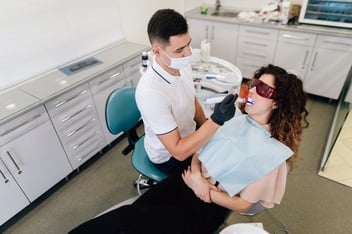
Patient education is a process that changes dental care from a one-sided affair to a two-way dialogue. A camarillo dentist that can clearly communicate the information to the patient and offers a step-by-step explanation of why each recommendation is being made, and educates patients about what to look for between visits, is likely to create a situation where issues are detected sooner and that the patient's home care routines are more effective, meaning there are fewer emergencies.
Key Takeaways
- Understanding the problem behind a dental recommendation, not just the treatment itself leads to better decisions and better outcomes.
- Every patient should ask three core questions before agreeing to any treatment: what's causing this, what happens if I wait and what are my options?
- The habits most worth building aren't complicated, they're small, specific adjustments tied directly to what your exam findings reveal.
- Education continues after the appointment: what a patient retains and applies between visits shapes more of their oral health than what happens during the visit itself.
Has a dentist ever recommended a treatment and left you nodding along, not entirely sure what you agreed to or why? It's more common than most people admit and it's not a reflection of intelligence. It's a reflection of how quickly clinical explanations can move when appointment time is limited.
At Clove Dental, we've built our approach around a different premise: a patient who understands their oral health is a patient who can protect it. A good dentist in Camarillo doesn't just tell you what needs to happen, they make sure you know why, what's at stake and what you can do about it outside the dental chair.
Here's what that commitment to patient education actually involves.

Why the Best Dental Decision Starts With Understanding the Problem, Not Choosing the Treatment
Most dental appointments follow a familiar sequence: exam, findings, recommendation, cost. The step that gets compressed is the one between findings and recommendation, the explanation of what the finding means clinically and why the proposed treatment addresses it specifically.
That explanation is where patient education lives. A crown is a crown but understanding that the tooth beneath it has a crack that's propagating under chewing pressure and what happens if that crack reaches the root gives the recommendation meaning that a price quote alone cannot.
A dentist in Camarillo who takes time in this middle step isn't slowing down care. They're increasing the likelihood that the patient follows through, maintains the work and doesn't repeat the same pattern that led to the problem in the first place.
The Three Questions Every Patient Should Ask Before Saying "Yes" to Treatment
These questions aren't about challenging a recommendation. They're about gathering the context that makes any treatment decision a well-informed one.
"What is causing this?" Knowing the mechanism behind a dental finding, not just its name, changes how you think about prevention. A cavity caused by nighttime dry mouth requires a different response than one caused by afternoon snack habits.
"What happens if I wait?" For some findings, a few weeks of deliberation makes no meaningful clinical difference. For others an infection, a propagating crack, bone loss around a tooth delay has measurable consequences.
"What are my options?" Most dental problems have more than one treatment path. The recommended option is what your dentist considers most appropriate given your specific clinical situation but understanding what alternatives exist and why they were or weren't selected, makes consent meaningful rather than procedural.
The Small Habits Patients Learn That Protect Their Smile for Years
Generic oral health advice: brush twice daily, floss, drink water is familiar but disconnected from a patient's specific situation. The most effective guidance is the kind that responds directly to what an exam actually revealed.
A patient with early enamel erosion along the gumline learns something specific about their brushing pressure, their toothbrush selection or the frequency of acidic foods in their diet, not just a reminder to brush more carefully.
This kind of targeted guidance is what patients retain and apply. It's not overwhelming because it's specific to them and because it connects directly to findings they've seen or been shown on an intraoral camera.
Education Doesn't End After Your Appointment
Most of what determines oral health happens between dental visits, not during them. The brushing technique, the snack timing, the water intake, the awareness of a particular tooth that's been slightly sensitive all of it occurs in the daily routine, far from the dental chair.
This is where patient education pays its most lasting dividend. A patient who left their last appointment understanding why they had two new cavities, what drove them and what specific adjustment would reduce that risk that patient brings different habits to the next six months than one who left knowing only that they had two cavities and a bill.
Conclusion
Dental care doesn't end when you leave the office, and it doesn't begin when you sit in the chair. It's a continuous process that's most effective when patients understand enough to be active participants in it, not just recipients of whatever was found and fixed.
Book your next appointment at Clove Dental with a dentist in Camarillo who makes sure you leave understanding more than you did when you arrived.
FAQs
How do I know if my dentist in Camarillo is explaining things clearly enough?
A simple test: at the end of an appointment, could you explain to someone else what was found and why the recommended treatment addresses it? If not, ask for a clearer explanation before leaving. You're entitled to understand your own oral health findings.
What if I disagree with a treatment recommendation?
A good dentist welcomes pushback, it's an opportunity to explain the clinical reasoning more fully or to discuss alternatives that may better fit your preferences or circumstances.
How can I remember what was discussed during my appointment?
Most practices can document findings and recommendations in plain language. Taking brief notes during the appointment or asking for a recap before you leave are both reasonable requests.
What's the most important piece of dental knowledge for a patient to have?
Understanding that dental disease is progressive, not static may be the single most useful thing a patient can grasp. Problems don't wait. They develop, enlarge, and compound while life gets busy.
.jpg?width=352&name=woman-patient-dentist%20(12).jpg)