.png?width=80&height=80&name=Clove%20Dental%20White%20Small%20(28).png "Clove Dental White Small (28)")
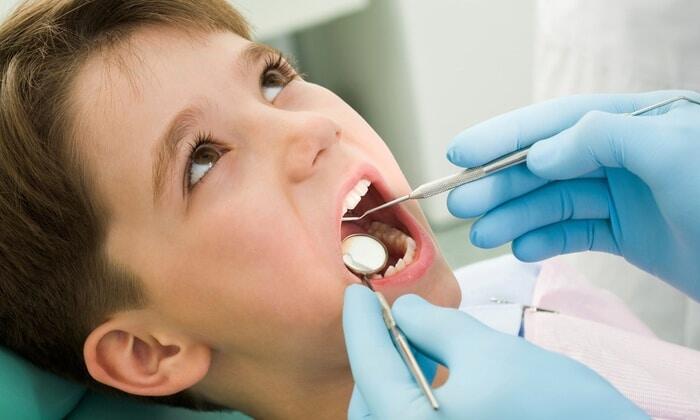
Adult fluoride treatment is a fast, one-minute, in-office dental treatment that uses a high-level fluoride gel, foam or varnish to reinforce teeth enamel and stop cavities. It is particularly helpful in adults who are at more risk of decay, such as those with dry mouth, receding gums, regular cavities, or sensitivity. Although toothpaste containing fluoride is helpful, professional fluoride treatment is much more powerful with more lasting effects.
Key Takeaways
- It is not only kids that need fluoride therapy and adults who are in danger of developing cavities will have a lot to gain.
- It acts by remineralizing the enamel that is weak and prevents the bacteria that cause tooth decay.
- The amount of fluoride applied in a professional treatment is much higher than that provided in any over-the-counter product.
- Long-term results are achieved, although the process will only require a few minutes in the office of your dentist.
- The treatment cost of fluoride is usually significantly lower than that of a cavity, regardless of whether or not your insurance will cover it.
Do you think fluoride treatment is something only kids need? You are not alone and you might be wrong.
The majority of adults believe that after the full development of teeth, fluoride is not of any importance to them. However, that is a widespread misfeasance that may silently cost you dental health. One of the least used and least appreciated preventive measures in dentistry today is the adult treatment with fluoride.
Here is a list of seven things each adult ought to understand about fluoride treatment before the next dentist visit.
The 7 Things You Need to Know
Not Everyone Needs Fluoride Treatment
We will begin with truthfulness: fluoride treatment cannot be a universal recommendation. Children who are excellent oral carriers, have low sugar levels in their diets, and have no records of having cavities may not require it during all visits.
But when any of the following are applicable to you, it may be highly suggested by your dentist-
- You have two or more cavities within the last year.
- You have chronic dry mouth (due to medicine or a medical condition)
- You have a recession of the gums exposing teeth roots.
- You have braces, bridges, or other dentures.
- You have a history of head or neck radiation therapy.
- You have acidic food or beverages frequently.
The trick is an individualized risk evaluation, something your dentist at Clove Dental can take you through.
It’s More About Prevention Than Treatment
The term fluoride treatment can be somewhat confusing. It is practically all prevention in fact.
Fluoride works by-
- Re-mineralizing of the enamel that has begun to be weak due to acid exposure.
- Permanent hardening and acid resistance of the enamels.
- Blocking the pathway of bacteria that make cavity-causing acids.
- Consider it a strengthening of your teeth, done before the damage is done, not after.
Adults With “Healthy Teeth” Still Get Cavities
There is this fact that may shock most people: you can have teeth that look perfectly clean, and at the same time be in the development stages of decay. Holes usually start at places that are difficult to notice such as between teeth, in the gum or on the back molars.
Root cavities decay that develops on exposed root surfaces but not on the enamel crown are also becoming a growing threat to adults. Root surfaces are not as hard as enamel and are more susceptible to acid attack. Fluoride therapy is particularly beneficial in safeguarding these susceptible areas.
Fluoride applications and regular checkups at the dentist will provide your dentist with the best opportunity to prevent and intervene on early decay before it turns into an expensive issue.
It Works Best in Specific Situations
Professional fluoride treatment is not the magic shield to everyone at any given time, but it is more successful in the due contexts. It comes in handy especially-
- Following cleaning when the teeth are freshly scaled and are more accepting of the mineral uptake.
- Prior to and subsequent to orthodontic therapy when plaque may be more difficult to remove.
- In the case of sensitivity and exposure of root surfaces.
- In patients who take drugs that slow down the flow of saliva (naturally covering the teeth)
- In elderly patients whose enamel can have naturally decreased over the decades.
Under such circumstances the high concentration fluoride varnish/gel that is used by your dentist is faster and deeper penetrating than anything that can be found over the counter.
It’s Quick but the Benefits Are Long-Term
Among the most underestimated factors of professional fluoride treatment, the time-to-benefit ratio should be mentioned. The process itself lasts about a minute to four.
Your hygienist or dentist paints fluoride in either a varnish, gel, or foam on your tooth surfaces. About 30 minutes after that, you are requested to avoid eating or drinking to allow the fluoride some time to absorb.
However, the coverage it provides is three to six months and even more. A single check-up, months of extra coverage. It is a really positive investment payoff.
Insurance May or May Not Cover It
The practical part is here. Fluoride treatment among children is usually included in dental insurance plans until the age of 18. In the case of adults, it differs greatly.
Part of the plans includes fluoride treatment of the high-risk adult categories. It is not covered by others at all. Before your appointment, it is also a good idea to check your particular plan or have our staff at Clove Dental check to confirm your benefits.
On its own, professional fluoride treatment can usually be found between 20-50 out of pocket, a fraction of a single filling. When framed as cavity preventive, it can easily pay off.
Skipping It Can Matter More Than You Think
In moderate to high-risk adults (adults who are not at high risk), not using fluoride is not a neutral choice, it is an opportunity cost of not protecting your enamel at this stage when prevention is still possible.
Loss of enamel cannot be replaced. It cannot be regenerated in the body. Weakening of enamel in its early stages can be reversed by fluoride, but a fully developed cavity needs to be drilled and filled, which is more invasive, more costly, and in some cases marks the start of a new cycle of dental treatment.
The cost of not taking time or money to treat fluoride may cost a lot more of both.
Should You Get Fluoride Treatment?
Yes, almost certainly, as advised by your dentist. The suggestion is not standard checkbox action. It is based on your specific risk profile, your dental history, and what your dentist sees at your visit.
In case you are not sure whether you should be treated with fluoride, simply ask your dentist: Am I more prone to getting cavities? The response will assist you in making a well-informed choice as opposed to a knee-jerk.
What Happens If You Say Yes
It is easy and painless. This is what to expect with Clove Dental-
- Your teeth are brushed so as to cleanse them of plaque or debris.
- Fluoride varnish, gel, or foam is put on all surfaces of the teeth directly.
- You wait a few minutes as it sets, there is nothing painful about it.
- You will not eat or drink within 30 minutes to allow the fluoride to be absorbed.
- You walk away with tougher enamel that is more fortified.
That is it. Easy, fast and clinically tested to cut down cavity risk by up to 30-40 percent in at-risk adults.

Final Takeaway
Fluoride is not a childhood-only conversation. As a fully grown person, when you want to maintain your natural teeth healthy and not waste money on the unnecessary dental treatment, fluoride treatment should be included in your preventive health care program.
We evaluate patients one-on-one at Clove Dental, and only prescribe fluoride when it would truly benefit your treatment. You can have a question on your cavity risk or you can know whether or not fluoride suits you, make a visit to us and book a visit at clovedds.com. The best place to start your strongest defense against cavities begins with the right information and the right team.
FAQs
Is fluoride treatment worth it for adults with no cavities?
Yes. The treatment of fluoride averts the unformed cavities. Being cavity-free today does not guarantee cavity-resistant forever especially when your enamel begins to thin or gums have receded.
How do I know if I’m “high risk”?
Risk is assessed by your dentist depending upon your cavity history, diet, medications, saliva levels, gum health and oral hygiene habits. In case you are exposed to two or more risk factors, then chances are that you are at moderate-high risk.
Does fluoride treatment help with sensitivity immediately?
It may desensitize with time by obstructing the small dentinal tubules which carry pain signals to the nerve. Other patients feel better in a matter of days; others, in a matter of weeks of regular protection.
Can I skip it if I use fluoride toothpaste?
Toothpaste that is made of fluoride has around 1,000-1,500 ppm of fluoride. Formulations of professional fluoride treatment are between 5,000 and 22,600 ppm. There is no trifling difference in concentration and protective depth, the two do not interchange, but are complementary.