.png?width=80&height=80&name=Clove%20Dental%20White%20Small%20(28).png "Clove Dental White Small (28)")
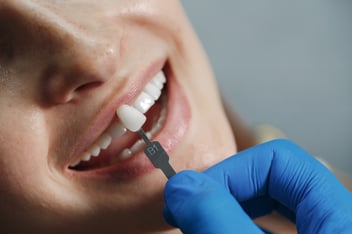
Good veneers vary slightly in shade and shape and follow the contour of natural gum tissue. Bad veneers tend to be uniformly white, identically shaped, and flatter than the smile they replaced. The difference comes down to planning facial structure and enamel texture, not just whiteness. Choosing the right provider for porcelain veneers in Oxnard starts with knowing what separates thoughtful design from templated work.
Key Takeaways
- Natural-looking veneers vary slightly in shade and shape uniform whiteness often signals a templated case.
- The most common regret is teeth too big or too white for the patient's face.
- Properly planned cases involve a mockup before permanent tooth reduction.
- Before-and-after photos can be staged they don't reliably show actual skill.
- Good candidacy depends on tooth structure, bite, and gum health, not just aesthetic goals.
Have you ever spotted a smile that just looks like veneers? Too white, too uniform, somehow off even if you couldn't say exactly why. That instinct is usually picking up on real design flaws, not just an unfamiliar shade of white.
The honest answer to "how do you tell good veneers from bad ones" comes down to planning, not porcelain. Most labs use comparable materials. What separates a natural result from an obvious one is the thinking that happens before any tooth is touched and that's exactly what we'll walk through here.
Why Some Veneers Look Like Natural Teeth and Others Look Like Chiclets
The difference rarely comes down to the porcelain itself most labs use comparable materials. It comes down to design decisions made before any tooth is touched. Artificial-looking veneers are usually flat, uniformly opaque, and identical from tooth to tooth. Natural teeth have subtle variation and translucency that shifts with light.
Skip that nuance for a flatter, whiter, more symmetrical result, and the case reads as "veneers" rather than teeth, the most common reason a smile ends up looking done.
The Biggest Veneer Mistake Patients Notice Too Late
Going too big. Teeth too long or too wide for the face are the single most frequent veneer regret, rarely obvious until the veneers are already in place.
This happens when proportions are chosen for whiteness and size rather than calibrated to lip length and face shape. Once enamel is reduced for larger veneers, there's no simple way back.
What Dentists Mean When They Talk About "Natural-Looking" Veneers
"Natural-looking" refers to observable design choices: varying translucency at the edges, micro-texture that catches light unevenly, and slight asymmetry between left and right.
A well-designed case replicates these deliberately. A poorly designed one smooths them away for a flatter look that reads artificial under normal lighting, even if it photographs well.
The 5 Signs a Veneer Case Was Planned Properly
- A mockup or trial smile shown before permanent reduction.
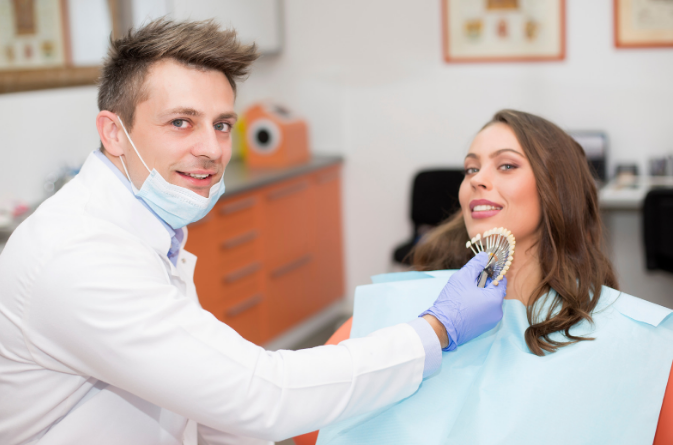
- Shade selection referenced skin tone and eye color, not a generic guide.
- Proportions measured against your face and lip line.
- The dentist asked about your bite, not just appearance.
- A specific ceramist or lab discussed with attention to craftsmanship
Skip most of these, and the case was likely routine production, not personalized design.
Why Porcelain Veneers in Oxnard Should Be Designed Around Your Face, Not a Trend
Smile trends shifted square, ultra-white veneers gave way to softer, rounded designs. Chasing whatever trends on social media rarely produces a result that ages well or fits an individual face.
The more reliable approach for porcelain veneers in Oxnard is designing around what's already there natural proportions, gum line, facial symmetry and adjusting only what genuinely needs correcting.
Before-and-After Photos Can Be Misleading: Here's What to Look For Instead
Studio lighting and selective examples make almost any portfolio look impressive. Photos alone don't show how a case was planned or whether the patient was happy later.
Look instead for photos in natural daylight, a range of smile widths, and documentation of the planning process mockups, shade notes, face-matching discussion. A provider willing to show the process is the more trustworthy signal.
How to Tell If You're a Good Candidate for Veneers in the First Place
Good candidates have healthy gums, no active decay, and enough enamel to support a thin porcelain shell. Significant grinding needs addressing first, since heavy bite forces chip veneers prematurely.
Veneers aren't right for structurally compromised or significantly misaligned teeth, those usually call for orthodontics or crowns first. A thorough exam, not just an aesthetics talk, determines real candidacy.

Conclusion
The line between good and bad veneers is drawn during planning, not fabrication. Asking the right questions before treatment begins about mockups, proportions, and how your face was considered tells you more than any portfolio photo can.
At Clove Dental, we treat porcelain veneers in Oxnard as a design process, not a production line. Book a consultation at clovedds.com.
FAQs
Can bad veneers be fixed later?
Sometimes. If enamel reduction was minimal, redesigning is possible. With significant reduction, options narrow toward crowns instead.
How long should veneer planning take?
A thorough consultation, mockup review and shade selection span one to two visits before permanent preparation.
Are more expensive veneers always better?
Not necessarily skill and planning matter more than price. Ask about the design process, not just the cost.
Do veneers need replacing over time?
Most last 10 to 15 years with good care. Replacement is usually due to wear or shifting gum lines, not material failure.
What should I bring to a consultation?
Photos of smiles you like, and an honest list of what bothers you about your current smile.
.jpg?width=352&name=image(1420).jpg)