.png?width=80&height=80&name=Clove%20Dental%20White%20Small%20(28).png "Clove Dental White Small (28)")
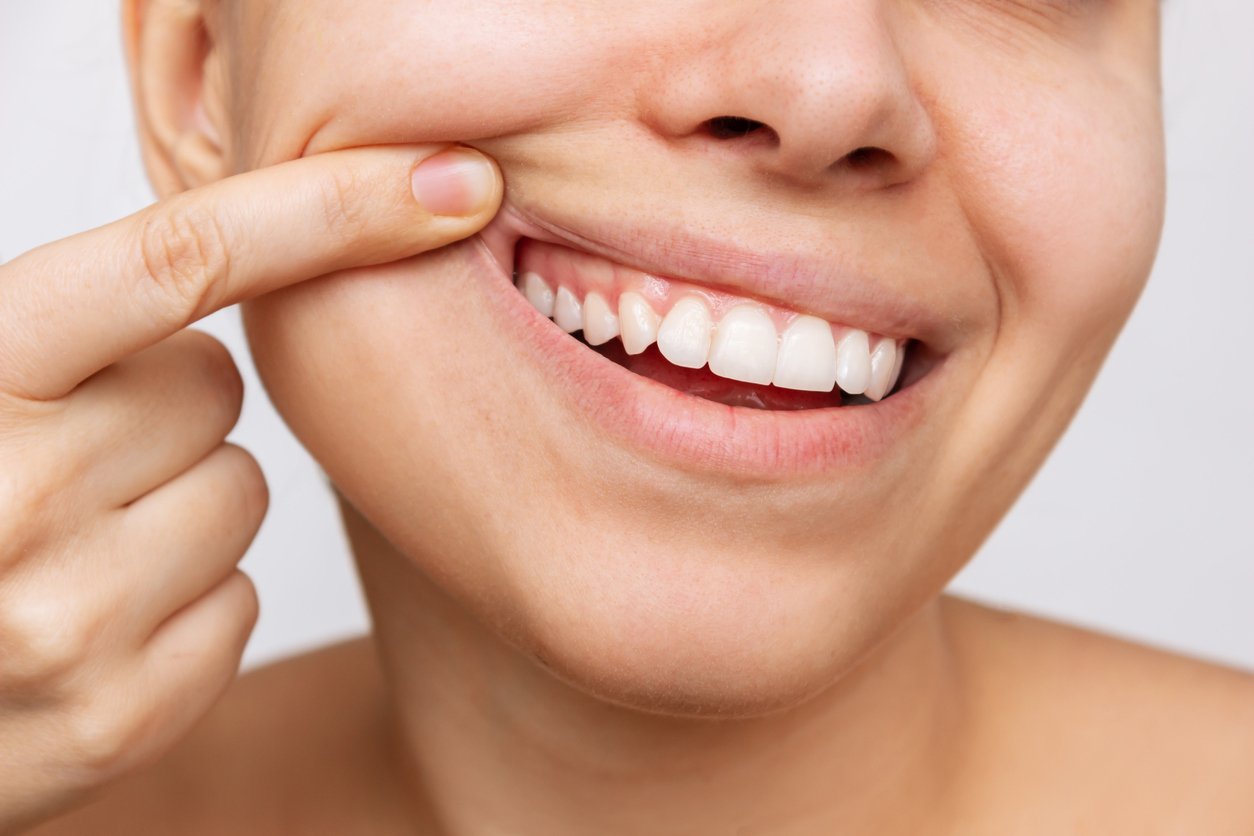
Localized gum pain is inflammation in one area that happens when food particles, tartar buildup, or bacteria get stuck around a single tooth. Clinical evidence supports classifying gingivitis as localized when approximately 30% or less of the gingival tissue bleeds on periodontal probing [1] (Suhana et al., 2020). This irritation can cause minor bleeding and tenderness, and it often requires professional cleaning to remove the blockage and prevent further infection.
At-Home Relief vs. When to Call the Dentist
When a single spot hurts, it is instinctual to try to heal it yourself. Patients will typically try aggressive flossing or poking the swollen area with a wooden toothpick. However, poking with sharp, rigid objects often pushes the food debris deeper into your gum pocket. Instead, try a warm saltwater rinse to soothe the tissue. Clinical literature supports saltwater rinses as an adjunct to mechanical plaque control [2] (Ferrara et al., 2026). You can also gently use a water flosser on a low setting to try to dislodge the irritant. However, if the bleeding and tenderness persist beyond 48 hours, home remedies will no longer work. You need professional, sterile tools to safely extract the blockage without damaging your delicate gum tissue.
The Hidden Risks of Ignoring Single-Tooth Inflammation
It is easy to brush off a small, localized ache, believing it will resolve on its own. Unfortunately, ignoring trapped debris allows bad bacteria to multiply rapidly in a confined space. Left untreated, this localized inflammation can quickly turn into a periodontal abscess: a painful, pus-filled infection that attacks the roots of your tooth. Worse, prolonged bacterial attacks will destroy the bone holding that specific tooth in place. Do not wait for a minor ache to become a severe dental emergency. A quick, targeted cleaning at Clove Dental removes the threat before any permanent bone loss occurs.

Why Does Food Always Get Stuck in the Same Spot?
Does meat or spinach always seem to get trapped between the exact same two teeth? This is not bad luck. It is a structural issue. You likely have an "open contact," which is a microscopic gap caused by natural tooth shifting or mild crowding. Another common culprit is an aging filling or crown with a tiny, rough overhang. These minor dental irregularities act like a net, catching debris every time you eat. Our Los Angeles dental team can easily smooth out old fillings or recommend clear aligners to close those frustrating gaps for good.
Comparisons: General Gingivitis vs. Localized Impaction
Understanding the difference between a whole-mouth issue and a single-tooth problem helps you know what to expect for your care.
|
Condition Type |
Primary Cause |
Treatment Cost Scope |
Recovery Time |
Maintenance Level |
|
Localized Impaction |
Trapped food or isolated tartar |
Low (Single visit debridement) |
24 to 48 hours |
Standard home care |
|
General Gingivitis |
Widespread plaque buildup |
Moderate (Standard cleaning) |
1 to 2 weeks |
Improved daily routine |
|
Periodontal Disease |
Advanced bacteria & bone loss |
Higher (Deep cleaning/Laser) |
Ongoing management |
Strict 3-month visits |
Preventive Strategies for Busy Los Angeles Lifestyles
Whether you are commuting up the coast for work or managing a busy family schedule in the Valley, your oral care routine needs to be efficient. Standard string floss is great, but it sometimes slides right past stubborn debris in deep pockets. To protect your gums, upgrade your prevention toolkit. Keep interdental brushes in your desk or car to safely remove food right after lunch. Invest in a high-quality water flosser for your nighttime routine. A water flosser uses a pulsating stream of water to flush out the hidden debris that regular floss leaves behind, keeping your problem areas clean and healthy.
What to Expect During Your Targeted Gum Treatment
Feeling nervous about visiting the dentist for a painful gum issue is normal. When you arrive at our clinic, we do not force you through a full-mouth, generalized cleaning. We focus directly on the problem area. First, we apply a strong, fast-acting topical numbing gel to keep you comfortable. Next, your hygienist uses precision ultrasonic instruments. These tools use gentle vibrations and water pressure to safely wash away the trapped tartar or food. The actual cleaning process takes only a few minutes. You walk out with immediate relief, zero lingering pain, and a healthier smile.
FAQs
1. Why do my gums bleed in only one spot when I floss?
If your gums bleed in just one spot, it means bacteria or debris is trapped in that specific gum pocket. Your body sends extra blood to the irritated tissue to fight the localized infection, causing the area to bleed easily when touched by floss.
2. Can a popcorn kernel cause an infected gum?
Yes. Popcorn hulls are notorious for sliding under the gumline and getting stuck. Because they do not dissolve, your gum tissue will swell around the hull, often leading to a painful localized infection or a dental abscess if a dentist does not remove it.
3. How long does it take for an irritated gum to heal after removing trapped food?
Once a dentist professionally removes the trapped food or tartar, the localized inflammation usually subsides within 24 to 48 hours. Warm saltwater rinses at home can help accelerate this healing process.
References
[1] Intan Suhana, M. A., Farha, A., & Hassan, B. M. (2020). Inflammation of the Gums. Malaysian family physician : the official journal of the Academy of Family Physicians of Malaysia, 15(1), 71–73.
[2] Ferrara, E., Scaramuzzino, M., Rapone, B., Murmura, G., & Sinjari, B. (2026). From Thermal Springs to Saline Solutions: A Scoping Review of Salt-Based Oral Healthcare Interventions. Dentistry journal, 14(1), 32. https://doi.org/10.3390/dj14010032