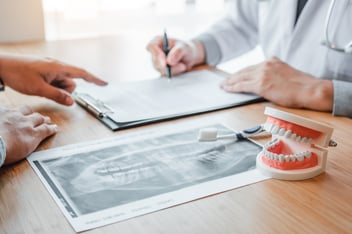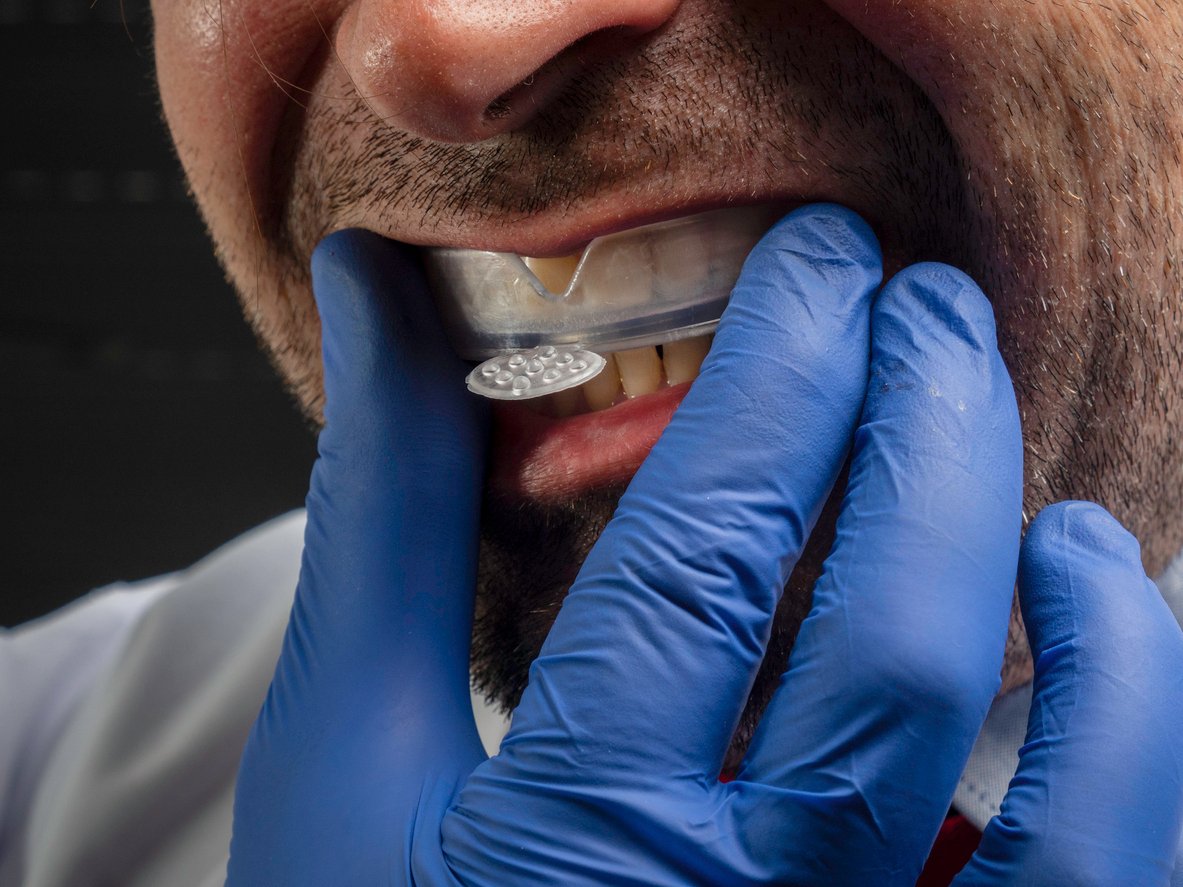
A custom occlusal guard (night guard) is a removable dental appliance billed under CDT codes D9944, D9945, or D9946. Clinical literature supports that CDT codes are ADA intellectual property that serves dentists and the dental community at large as the HIPAA standard for documenting and reporting services delivered to patients [1] (Pokorny, 2024). Many dental PPO plans cover 50% to 100% of the cost when a dentist prescribes the device to prevent structural tooth damage from severe grinding (bruxism), subject to standard frequency limits.
The Power of Pre-Determinations: Avoiding Surprise Dental Bills
As the head of household, you want to know your exact out-of-pocket responsibility before anyone touches your teeth. Clinical evidence shows dentists use the pre-authorization process to determine a patient's coverage [2] (ADA, 2024). At Clove Dental, we eliminate the guesswork by filing a formal "Pre-Determination of Benefits" for your custom night guard. This is a written request we send to your insurance provider prior to sending your digital impressions to the lab. The carrier reviews the clinical photos of your enamel wear and sends back a binding document stating exactly how much they will pay. This proactive step ensures you will not get a surprise bill weeks after picking up your appliance.
Stacking Your Benefits: Navigating Dual Dental Coverage
If you and your spouse both work for companies that offer dental PPO plans, you have a distinct financial advantage. We use a strategic billing process known as Coordination of Benefits (COB) to maximize your dual coverage. By law, we bill your primary employer plan first. Once they pay their standard 50% for the occlusal guard, we automatically submit the remaining balance to your spouse's secondary plan. This secondary plan often covers the leftover copay. By expertly "stacking" these two policies, our administrative team frequently drops your final out-of-pocket cost to zero.

The Delivery Timeline: When Does Your Insurance Actually Pay?
For the Preventive Planner, timing your dental care is the secret to maximizing your annual budget. Fabricating a custom night guard is a two-step process: the initial digital scan and the final fitting (the "seat date") a week or two later. Insurance companies almost always bill the procedure on the seat date. Why does this matter? If we take your digital scans in late December, but you pick up your guard in early January, the insurance payout pulls from your new year’s annual maximum. Our Los Angeles team monitors your remaining benefits closely. We schedule your delivery date to pull from the exact calendar year that saves you the most money.
Comparisons: Financial Pathways for Your Night Guard
Understanding your payment options helps the Family CEO budget effectively for the year. Here is how different financial strategies compare when acquiring a custom occlusal guard:
|
Payment Pathway |
Estimated Out-of-Pocket Cost |
Administrative Hassle |
Replacement Frequency Limits |
|
In-Network PPO Insurance |
$100 - $300 (Copay) |
Low (Clove Dental files the claim) |
Strict (Usually 1 guard every 3–5 years) |
|
Out-of-Network PPO |
$400 - $600+ |
High (Patient may need to submit Superbills) |
Strict (Usually 1 guard every 3–5 years) |
|
Clove In-House Membership |
Fixed percentage discount |
Very Low (No claims to file or deny) |
None (Replace as often as needed) |
|
Medical Insurance Cross-Billing |
Varies by deductible |
Very High (Requires severe medical necessity proof) |
Varies strictly by specific medical policy |
Lost or Dog-Chewed Guards: Understanding Replacement Rules
It happens more often than you think: you leave your night guard on the nightstand, and your new puppy mistakes it for a chew toy. If this happens, you might assume your insurance will simply buy you a new one. Unfortunately, dental policies enforce strict "frequency limitations." Most California PPO plans only cover one custom guard every three to five years. If your device is lost or destroyed before that clock resets, the insurance company will automatically deny the replacement claim. If you face this frustrating scenario, Clove Dental steps in with transparent, discounted cash-pay options to get your smile protected again without waiting years for a reset.
Year-End Strategy: Rescuing Your FSA Funds Before They Expire
November and December are critical months for the Career Climber managing a household budget. If your employer offers a Flexible Spending Account (FSA), those pre-tax funds operate on a strict "use it or lose it" rule. Because a custom occlusal guard is an FDA-approved medical device prescribed by a doctor, it is fully eligible for FSA spending. If you have a few hundred dollars left in your account as the year ends, investing in a night guard is the perfect strategy. You can swipe your FSA card right at our front desk to cover your copay, protecting your teeth while rescuing your hard-earned tax dollars before they expire on December 31st.
FAQs
1. Does Medi-Cal / Denti-Cal cover custom night guards for adults?
Standard Denti-Cal policies for adults generally do not cover custom occlusal guards for bruxism or TMJ. The state classifies these appliances as non-essential benefits for adults. However, Clove Dental provides transparent, discounted cash-pay options and membership plans to help our state-funded patients afford this vital protective gear.
2. How often will my PPO insurance pay for a replacement night guard?
Insurance carriers enforce strict "frequency limitations" on dental appliances. Most major PPO plans will only pay for one new occlusal guard every three to five years. If you lose your guard or your dog chews it up before that timeline expires, your insurance will not cover the replacement, and you will need to pay out-of-pocket.
3. Can I bill my major medical insurance for a dental night guard?
Sometimes. If your standard dental PPO denies the claim due to a TMJ exclusion, we can occasionally cross-bill your major medical insurance. Medical plans usually require extensive proof, such as documented sleep apnea or severe, diagnosed facial neuralgia, to approve an oral appliance. Our billing team will guide you through this complex coordination of benefits if necessary.
References
[1] Pokorny, F. J. (2024). Dentistry’s CDT Code: Its Origins, Use and Future. ADACommons. https://commons.ada.org/journalmichigandentalassociation/vol106/iss4/3/
[2] ADA. (2024). Pre-authorizations. Ada.Org. https://www.ada.org/resources/practice/dental-insurance/pre-authorizations