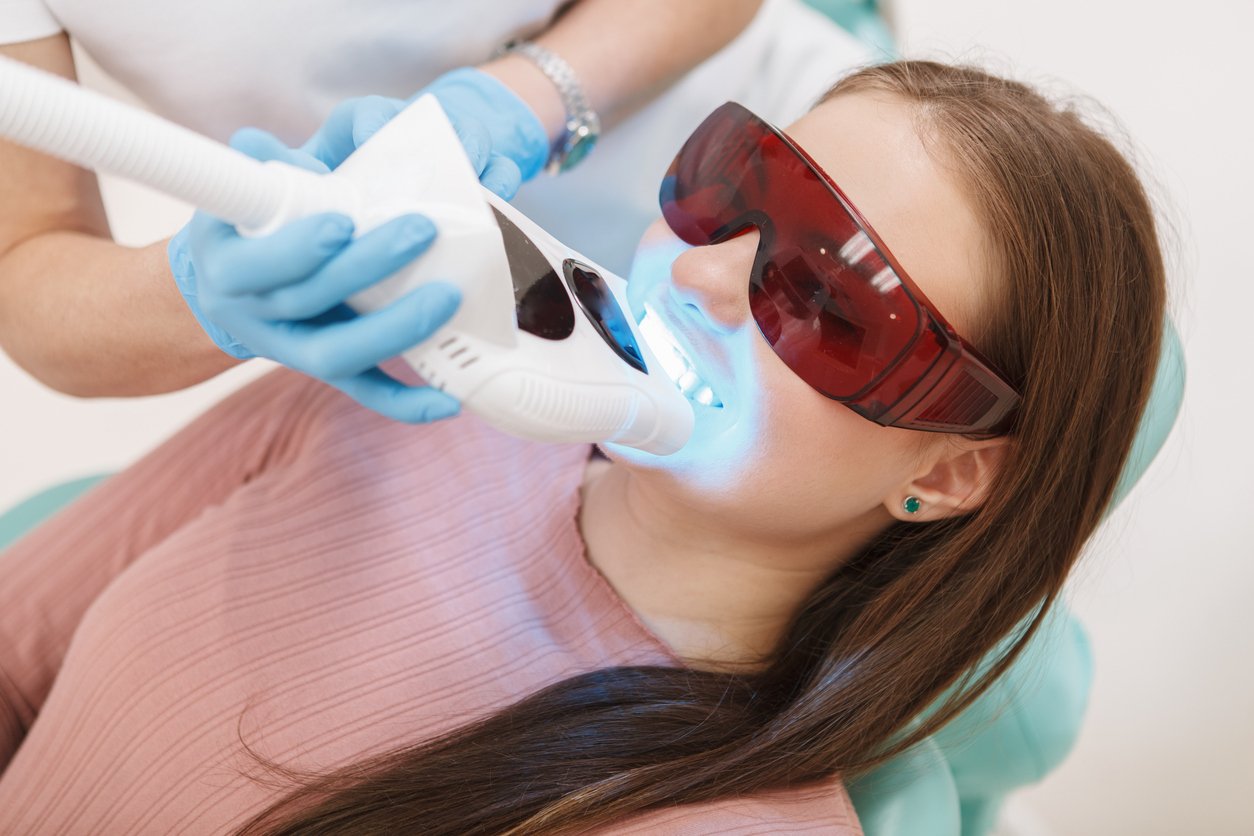
Tooth sensitivity after professional whitening at Clove Dental is a temporary nerve response caused by hydrogen peroxide penetrating the enamel to oxidize stains. Medical evidence indicates that about 10 percent of patients may experience moderate sensitivity, and 4 percent may experience severe sensitivity for one to two weeks [1] (Jorgensen et al., 2002). The chemical reaction directly stimulates the dental pulp, causing quick, sharp sensations called “zingers,” which usually resolve completely within 48 to 72 hours.
The "White Diet": Eating for Comfort and Color Protection
Immediately after your bleaching session, your enamel is temporarily porous. Eating a bowl of hot soup or biting into a cold popsicle will send a direct shock right to your nerves. Highly acidic foods like citrus fruits, vinegars, and tomatoes also lower your oral pH, which can amplify the pain. To protect your comfort and your new shade, we recommend the "White Diet" for the first 48 hours. Stick to room-temperature, mild foods like plain chicken, white rice, pasta, and yogurt. This gives your teeth the calm environment they need to remineralize without triggering sharp zingers.
In-Office vs. Take-Home Trays: What Is Best for Sensitive Teeth?
If you are a busy L.A. professional, you may be wondering whether taking home custom trays is safer for your nerves than a quick, one-hour clinic visit. In-office whitening uses a stronger hydrogen peroxide gel for quick results, but it can cause temporary sensitivity. Medical literature shows no differences between at-home and in-office bleaching in risk/intensity of tooth sensitivity [2] (De Geus et al., 2016). Custom take-home trays, however, use a lower concentration of carbamide peroxide applied over a few weeks. This slower, controlled process is a great option for patients with a known history of sensitive teeth. It allows your dental pulp to gradually adjust. Dr. Puri will evaluate your enamel and help you choose the exact path that fits your timeline and your biology.

Comparisons: Is It Whitening Sensitivity or Something Else?
Understanding the type of pain you feel helps you know if your reaction is normal or requires a quick checkup.
|
Pain Source |
Sensation Type |
Estimated Cost to Fix |
Durability of Pain |
Maintenance Level |
|
Whitening "Zingers" |
Intermittent, sharp, shooting electrical pulses. |
$0 (Resolves naturally) |
Fades in 2 to 3 days |
Low (Use desensitizing paste) |
|
Active Cavity |
Lingering ache after eating sweet or cold foods. |
$150 - $300 (Composite filling) |
Permanent until filled |
Moderate (Requires clinical repair) |
|
Gum Recession |
Sharp pain directly at the gum line when breathing cold air. |
$30 - $60 (Fluoride Varnish) |
Chronic without treatment |
High (Requires soft brushing habits) |
Why Hydration is Your Best Defense Against Bleaching Pain
Your body has a built-in healing mechanism to stop sensitivity: your saliva. Saliva is packed with natural calcium and phosphate. It actively rebuilds the protective layer over your enamel, known as the salivary pellicle, filling the microscopic pores left open by the whitening gel. To keep your saliva flowing, you must stay hydrated. Drinking plenty of room-temperature water after your appointment prevents dry mouth and speeds up this natural repair process. A well-hydrated mouth recovers from whitening shocks much faster than a dry one.
Skip the Numbing Gels: Better Ways to Relieve Nighttime Zingers
If you experience a sharp zinger before bed, your first instinct might be to grab a drugstore numbing gel. However, topical gels only numb your soft gum tissue. They cannot penetrate the hard outer shell of your tooth to reach the irritated nerve inside. Instead of relying on gels that wear off in minutes, take an over-the-counter anti-inflammatory like ibuprofen. This medication reduces the nerve inflammation from the inside out, effectively dulling the pulses so you can get a restful night of sleep.
The Whitening Timeline: How Often Can You Safely Bleach Your Teeth?
Achieving a glowing, bright smile is exciting, but over-bleaching is a fast track to chronic tooth pain. If you use whitening products constantly, your enamel never gets a chance to fully harden and recover. This leaves your nerves exposed to daily temperature changes. For most patients, a professional in-office session once a year is the perfect balance. Dr. Puri carefully tracks your aesthetic schedule. We ensure your desire for a white smile never compromises your daily comfort or your long-term dental health.
FAQs
1. How long does tooth sensitivity last after professional teeth whitening?
If you experience tooth sensitivity after a whitening session, the "zingers" usually peak within the first 12 to 24 hours. Research shows that this reaction is temporary and typically fades completely on its own within two to three days.
2. Can I drink coffee or cold water immediately after whitening?
Avoid extremely hot or cold beverages for the first 48 hours. Because the pores of your enamel are temporarily open, extreme temperatures will trigger sharp nerve pain. Stick to room-temperature water. You must also avoid dark liquids like coffee and red wine for 48 hours to prevent new stains from locking into your freshly whitened teeth.
3. Do over-the-counter whitening strips cause less sensitivity than the dentist?
Not necessarily. While store-bought strips use weaker peroxide, the one-size-fits-all plastic often pushes the bleaching gel directly onto your sensitive gum tissue, causing chemical burns and root pain. Professional in-office whitening includes custom barriers that protect your gums, resulting in a safer, more comfortable experience.
References
[1] Jorgensen MG, Carroll WB. Incidence of tooth sensitivity after home whitening treatment. J Am Dent Assoc. 2002;133(8):1076-1095. doi:10.14219/jada.archive.2002.0332
[2] de Geus JL, Wambier LM, Kossatz S, Loguercio AD, Reis A. At-home vs In-office Bleaching: A Systematic Review and Meta-analysis. Oper Dent. 2016;41(4):341-356. doi:10.2341/15-287-LIT