
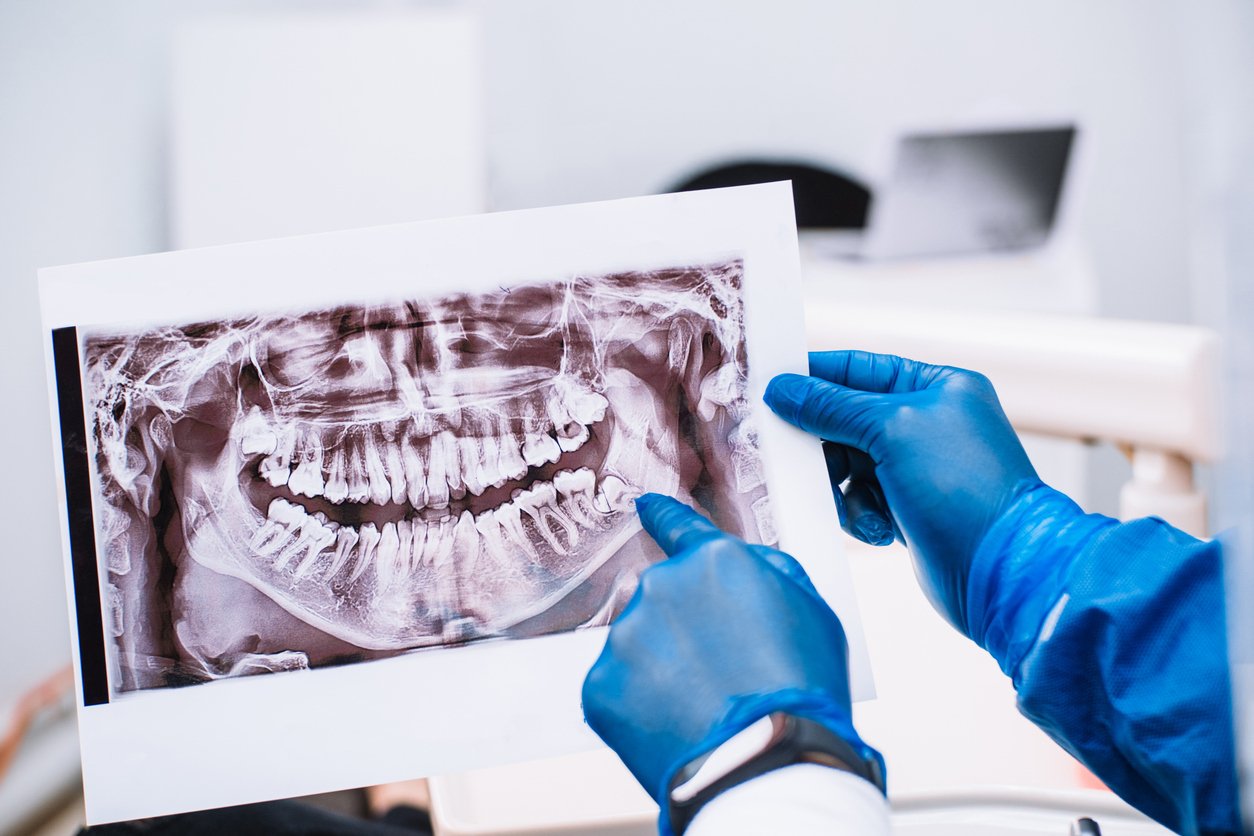
 Early wisdom tooth extraction at Clove Dental is a proactive oral surgery that removes developing third molars in teenagers, typically between ages 15 and 18, before their roots fully anchor into the jawbone. Medical evidence indicates that Wisdom teeth are usually only removed if they cause problems or are likely to in the future [1] (Informedhealth, 2023). This preventive procedure stops future impactions, painful crowding, and damage to adjacent healthy teeth as the jaw finishes growing.
Protecting Your Orthodontic Investment: Why Braces and Wisdom Teeth Do Not Mix
You just spent the last two years driving your teenager to orthodontic appointments to achieve that perfect, straight smile. The last thing you want is for all that hard work to be undone. Clinical literature supports that orthodontically treated patients may develop a higher likelihood of partially erupted third molars [2] (Miclotte et al., 2015). As wisdom teeth begin to develop in the back of the jaw, they often lack the vertical space to erupt properly. As a result, they push forward against the neighboring molars in a process known as "mesial drift." This forward pressure acts like a domino effect, shifting the teeth all the way to the front of the mouth. You might start to notice your teenager's lower front teeth overlapping or crowding again. By strategically extracting the third molars before they exert this pressure, you lock in the results of their braces. This proactive step helps ensure you will not have to pay for a second round of clear aligners when your child heads off to college.
Scheduling Around the Academic Calendar: The "Family CEO" Strategy
Between sports practices, SAT prep, and part-time jobs, your teenager's schedule is packed. For the parent acting as the "Family CEO," finding time for oral surgery feels like a logistical puzzle. However, planning the procedure on your own terms is always easier than managing an unexpected dental crisis. If you wait for a wisdom tooth to become infected, that emergency will almost certainly happen at the worst possible time, like the week of final exams or the day before a big tournament. We help California families take control of the timeline. The most strategic times to book a wisdom tooth extraction are during winter break, spring break, or right at the beginning of summer vacation. Reserving your surgical slot a few months in advance ensures your teen has plenty of downtime to recover on the couch without missing a single day of high school instruction.

Navigating Teen Anxiety and the "Viral Video" Fear
If your teenager is nervous about their upcoming procedure, social media is likely to blame. Platforms are flooded with videos of teens waking up from sedation acting confused or distressed. Young patients often fear feeling out of control or embarrassed in front of their parents. We take your teenager's dignity and emotional comfort very seriously. At Clove Dental, our modern sedation protocols are highly precise and tailored to your child's specific biology. We use a controlled, gentle approach that allows them to drift off peacefully and wake up feeling relaxed, sleepy, and calm. We closely monitor their recovery in a quiet, private room until they are ready to go home. You can reassure your teen that their experience will be safe, professional, and completely free of any embarrassing moments.
Early Prevention vs. Delayed Emergency Extractions
Understanding how timing impacts your teenager's recovery helps you make the smartest choice for their health.
|
Timing Strategy |
Healing & Recovery Time |
Surgical Complexity |
Estimated Cost Impact |
Long-Term Maintenance Level |
|
Early Extraction (Ages 15–17) |
Fast (3 to 5 days of mild swelling) |
Low (Roots are short; bone is soft and pliable) |
Moderate (Usually covered by standard dependent PPO plans) |
Low (Permanent prevention of crowding) |
|
Delayed Extraction (Ages 20+) |
Slower (7 to 10+ days of soreness) |
High (Roots are fully anchored; higher risk of nerve irritation) |
Higher (Requires more surgical time and advanced techniques) |
Moderate (May require treatment for damage done to adjacent teeth) |
|
Emergency Wait-and-See |
Very Slow (Infection must be treated first) |
Very High (Requires managing abscesses or cysts) |
Highest (Often requires emergency specialists) |
High (Potential for permanent bone loss or shifting) |
The first question most teenagers ask before surgery is, "When can I eat real food again?" While they must stick to a soft diet for the first few days, keeping them fed and hydrated does not have to be a struggle. Proper nutrition speeds up cellular healing and keeps their energy levels stable while they rest. Before surgery day, stock your California kitchen with easy-to-eat favorites. Greek yogurt, mashed potatoes, lukewarm smooth soups, and scrambled eggs are excellent choices. Protein shakes and fruit smoothies are also great for recovery, but you must enforce one strict rule: no straws. The sucking motion creates a vacuum in the mouth that can easily dislodge the protective blood clot, leading to a painful complication known as a dry socket. Have your teen drink all smoothies directly from a spoon or an open cup for at least the first five days.
The Day of Surgery: A Parent’s Ultimate Checklist
Walking into a surgical appointment is much easier when you know exactly what to expect. To ensure a smooth, stress-free morning at Clove Dental, we provide parents with a simple preparation checklist. If your teen is having IV sedation or oral conscious sedation, they will need to arrive on an empty stomach first. Usually, you cannot eat or drink water for at least eight hours before the appointment. Second, have them wear loose, comfy clothing with short sleeves so that our clinical team can easily monitor their vital signs. Finally, create a “recovery zone” at home before you leave. Add a couple of extra pillows to their bed so they can sleep with their head elevated, which naturally helps to reduce facial swelling. By preparing their favorite movies and keeping ice packs ready in the freezer, you transition them seamlessly from our care right into a comfortable healing environment at home.
FAQs
1. Can my teen's wisdom teeth stay in if they are not hurting?
Pain is a late-stage symptom. A wisdom tooth can grow silently at a dangerous 90-degree angle for years without causing a single ache. By the time it actually hurts, it has usually already caused irreversible damage to the adjacent teeth or triggered a localized bone infection.
2. How long is the recovery for a high school athlete after wisdom teeth removal?
For a healthy 16-year-old, the primary recovery takes about three to four days. They should plan to rest on the couch and eat a soft diet during this time. Most teens can return to school by day four, but they should avoid heavy lifting, running, or contact sports for at least one full week to ensure the blood clots in the healing sockets remain secure.
3. Does California Denti-Cal cover preventive wisdom tooth extractions for teenagers?
Yes. For patients under the age of 21, Medi-Cal/Denti-Cal generally covers the extraction of impacted wisdom teeth when it is deemed medically necessary. Our Clove Dental administrative team will submit the required digital X-rays to the state to secure your pre-authorization quickly and smoothly.
References
[1] InformedHealth.org [Internet]. Cologne, Germany: Institute for Quality and Efficiency in Health Care (IQWiG); 2006-. Wisdom teeth: Learn More – Should you have your wisdom teeth removed? [Updated 2023 Sep 5]. Available from: https://www.ncbi.nlm.nih.gov/books/NBK279590/
[2] Miclotte A, Franco A, Guerrero ME, Willems G, Jacobs R. The association between orthodontic treatment and third molar position, inferior alveolar nerve involvement, and prediction of wisdom tooth eruption. Surg Radiol Anat. 2015;37(4):333-339. doi:10.1007/s00276-014-1357-8