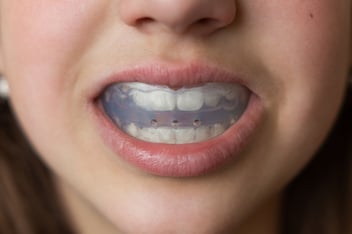
Stress-induced teeth clenching, known clinically as awake bruxism, is an involuntary muscular habit triggered by anxiety or intense concentration. Medical evidence indicates that stress and bruxism are positively related, as stressed people have a 97% higher chance of presenting with bruxism [1] (Chemelo et al., 2020). This constant pressure bruises the periodontal ligaments around your roots, causing a generalized, dull ache across all your teeth that often mimics widespread cavity pain.
The Biology of the Grind: How Commutes and "Tech Neck" Fuel Clenching
When you experience stress, your body enters a sympathetic state of "fight or flight." Your nervous system releases cortisol and adrenaline, which preemptively activates your muscles for action. If you are sitting in gridlock on the 10 Freeway or staring intently at a laptop in a high-stakes Century City office, that physical energy has nowhere to go. Your brain redirects some of this sympathetic response to your masseter muscles, which function to close your jaw. Poor posture also plays a major role. Hunching over a keyboard creates a "tech neck," which pulls on the muscles of your upper back and neck. This misalignment forces your lower jaw backward, causing your teeth to clamp together just to stabilize your head. Understanding this biological chain reaction is the first step to breaking the habit.
Craze Lines and Abfractions: The Hidden Damage to Your Enamel
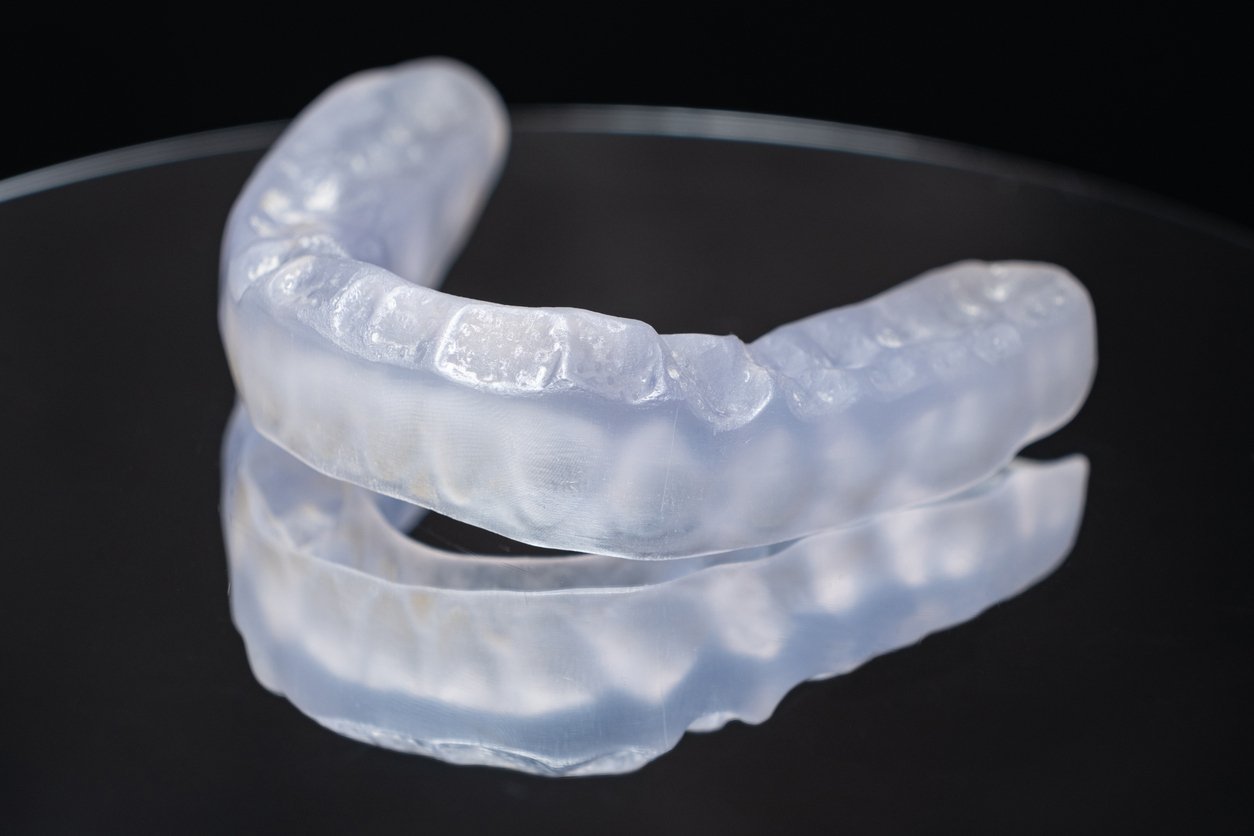
Clinical literature supports that craze lines are tiny and harmless cracks that occur in the outer enamel of the tooth [2] (Zidane, 2022). While a sprained dental ligament causes immediate pain, the long-term physical damage to your teeth occurs insidiously. Your jaw muscles can generate over 200 pounds of force. Your teeth simply are not meant to sustain that kind of static pressure for hours at a time. If left unprotected, this stress causes two distinct types of damage. First, you may develop "craze lines," microscopic vertical hairline fractures in the outer enamel. While they do not usually cause pain, they can quickly pick up coffee and tea stains. Second, intense flexing of the tooth can cause the fragile enamel near your gum line to flake off. Dentists call these notches "abfractions." A custom guard safely absorbs this extreme force, stopping micro-fractures before they compromise the structural safety of your smile.

Lips Together, Teeth Apart: Daily Habits to Relax Your Jaw
A custom daytime or nighttime guard provides an excellent physical barrier, but you can also train your brain to release jaw tension. For the Wellness Enthusiast looking to build better daily habits, cognitive reprogramming is a powerful tool to use alongside your dental care. The golden rule for a healthy resting mouth is "lips together, teeth apart." When you are not actively chewing food, your upper and lower teeth should never touch. Try resting the tip of your tongue gently against the roof of your mouth, right behind your front teeth. This simple tongue placement physically prevents you from clenching. We recommend setting a silent alarm on your phone to vibrate every two hours during the workday. When it goes off, do a quick mental check. Drop your shoulders, take a deep breath, and separate your teeth.
Precision Diagnostics: How We Spot Stress Clenching Early
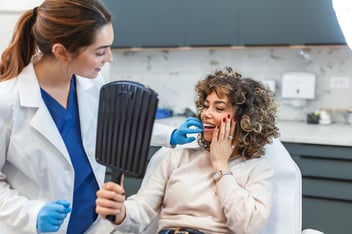
Because stress-induced tooth pain mimics the feeling of multiple cavities, you need a clinical team that knows exactly what to look for. Additionally, medical literature indicates that symptoms of bruxism include flattened, chipped, cracked, or loose teeth [3] (NIH, 2022). At Clove Dental, we look past standard decay to evaluate how your lifestyle affects your oral health. During your exam, we perform a comprehensive bite analysis. We palpate (feel) the muscles of your face for localized soreness or muscle enlargement. We also scan the edges of your teeth with high-definition intraoral cameras. We project these images onto a monitor right in front of you and identify specific wear patterns or thinned enamel that indicate chronic clenching. This transparent, technology-driven approach removes the guesswork and allows us to create an accurate treatment plan together.
Custom Guard Care: Maximizing the value of your investment
Protecting your smile for years to come is as simple as investing in a custom guard and keeping it clean and safe. Your appliance lives in a moist environment, so good hygiene is a must to avoid bacterial buildup and bad smells. When you remove your guard, rinse it immediately with cool water. Never use hot water, as the heat will permanently warp the custom plastic shape. Gently brush the inside with a soft-bristled toothbrush and mild, non-abrasive clear soap. Avoid using standard toothpaste, which contains microscopic abrasives that will scratch the acrylic and create traps for bacteria. Finally, when you are not wearing the guard, always store it in its hard, ventilated case.
FAQs
1. Can stress clenching cause my teeth to feel loose?
Yes. When the periodontal ligament becomes severely bruised and inflamed from constant pressure, it can temporarily widen. This makes the affected teeth feel slightly mobile or loose when you push on them with your tongue. Once you start wearing a custom guard, the ligament heals and the teeth firm back up.
2. Should I wear my guard during the day if I only clench at work?
If your primary trigger is daytime stress, we can design a specialized, ultra-thin daytime guard. These are much slimmer than traditional night guards, allowing you to speak clearly and drink water while keeping your jaw safely disengaged during your most stressful hours.
3. How do I know if my tooth pain is from clenching or a real cavity?
Cavity pain is usually sharp, localized to one specific tooth, and triggered by sweet foods or cold drinks. Clenching pain is typically a dull, constant ache that radiates across several teeth or the entire jaw. However, only a clinical exam and digital X-rays can definitively rule out hidden decay.
References
[1] Chemelo, V. D. S., Né, Y. G. S., Frazão, D. R., de Souza-Rodrigues, R. D., Fagundes, N. C. F., Magno, M. B., da Silva, C. M. T., Maia, L. C., & Lima, R. R. (2020). Is There Association Between Stress and Bruxism? A Systematic Review and Meta-Analysis. Frontiers in neurology, 11, 590779. https://doi.org/10.3389/fneur.2020.590779
[2] Zidane B. (2022). Recent Advances in the Diagnosis of Enamel Cracks: A Narrative Review. Diagnostics (Basel, Switzerland), 12(8), 2027. https://doi.org/10.3390/diagnostics12082027[3] NIH. (2022, July). Bruxism | National Institute of Dental and Craniofacial Research. Www.Nidcr.Nih.Gov. https://www.nidcr.nih.gov/health-info/bruxism