.png?width=80&height=80&name=Clove%20Dental%20White%20Small%20(28).png "Clove Dental White Small (28)")
.jpg?width=626&height=417&name=image(869).jpg)
Digital smile design, 3D imaging, and shade-matching technology let patients preview results and give dentists far more precision than traditional methods allowed. These tools have changed what cosmetic dentistry in Thousand Oaks actually looks like from consultation to final result.
Key Takeaways
- Digital planning tools let patients see a preview of potential results before any work begins.
- Digital X-rays and 3D imaging give dentists a far more precise picture of underlying bone and root structure.
- Shade-matching technology helps veneers, crowns and bonding blend naturally with surrounding teeth.
- Digital imaging plays a major role in planning Invisalign and other alignment treatments accurately.
- The goal of this technology isn't just precision, it's making sure results look natural rather than obviously "done."
Ever wonder how a dentist can show you what your new smile will look like before any work even starts? That's not guesswork anymore, it's digital smile design, and it's just one piece of how technology has reshaped cosmetic dentistry in Thousand Oaks over the past several years. From planning to execution, digital tools now play a role in nearly every stage of a cosmetic treatment, and understanding what they actually do helps explain why modern results tend to look more natural and predictable than older methods allowed.
How Has Technology Changed the Way Cosmetic Dental Treatments Are Planned?
Cosmetic treatment planning used to rely heavily on a dentist's eye, physical impressions, and a fair amount of trial and error once treatment started. Digital tools have shifted a lot of that guesswork into the planning phase, before any irreversible work happens. 3D scans capture precise measurements of teeth, gums and bite alignment, giving a level of detail that traditional molds simply couldn't match.
This shift matters because cosmetic work, unlike some restorative procedures is highly visible and personal. Getting the plan right before starting reduces the chances of needing adjustments later. Cosmetic dentistry in Thousand Oaks that leans on this kind of digital planning tends to produce more predictable, first-attempt results than approaches relying mainly on manual estimation.

How Does Digital Smile Design Help Patients Preview Potential Changes?
Digital smile design software takes photos or scans of your current smile and overlays potential changes, showing roughly how veneers, whitening or alignment adjustments would look before any treatment begins. This is not just a rough sketch, it's based on actual measurements of your face and teeth makes the preview meaningfully closer to the eventual result.
For patients, this changes the whole decision-making process. Instead of trusting a verbal description of what "slightly whiter and straighter" might look like, you get to see it. That preview also gives you a chance to request adjustments to the plan itself, like a different shade or shape, before committing to treatment.
When Are Digital X-Rays Used Before Cosmetic Treatment?
Digital X-rays are typically taken early in the planning process for cosmetic dentistry in Thousand Oaks for procedures involving veneers, crowns or any treatment that could affect the tooth's underlying structure. These images reveal root position, bone density and any hidden decay or structural issues that would need addressing before cosmetic work moves forward.
This matters because cosmetic treatment built on top of an unaddressed underlying problem doesn't hold up well long term. Digital X-rays also produce far less radiation than older film X-rays and provide instant, high-resolution images that a dentist can zoom into for a more detailed look at specific areas of concern.
How Is Technology Used to Match Veneers, Crowns and Bonding to Natural Teeth?
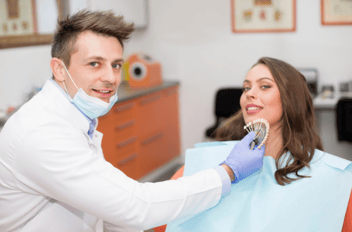
Shade matching used to depend heavily on a dentist's visual judgment under office lighting which is not always consistent with how a smile looks in natural daylight. Digital shade-matching devices now measure the exact color, translucency, and texture of surrounding teeth, generating data that gets sent directly to the lab producing veneers or crowns.
This precision matters most in cases involving a single tooth or a small number of teeth, where even a slight color mismatch is noticeable. Technology here doesn't replace a dentist's skill, but it does remove a lot of the guesswork that used to make matching restorations to natural teeth one of the trickier parts of cosmetic treatment.
What Role Does Digital Imaging Play in Planning Invisalign and Other Smile-Alignment Treatments?
Invisalign and similar clear aligner systems rely almost entirely on digital planning. A 3D scan of your teeth creates a full digital model, which software then uses to map out a sequence of small movements from your current tooth position to the final planned result. Each stage of that sequence corresponds to a specific aligner in the series.
This digital mapping lets both patient and dentist see a simulation of the entire treatment progression before a single aligner is made. Adjustments to the plan can happen at this stage too, which is far more efficient than the older process of periodically checking progress and adjusting physical appliances along the way.
How Does Technology Improve the Accuracy of Cosmetic Treatment Without Making Results Look Artificial?
There is a common concern that heavily planned, tech-driven cosmetic work might end up looking overly uniform or artificial. The opposite tends to be true when the technology is used well. Digital tools capture natural variation, like slight color differences between teeth or subtle asymmetry in a smile, and factor that into the plan rather than smoothing it away.
The goal of well-executed cosmetic dentistry in Thousand Oaks isn't a flawless, identical set of teeth, it's a result that looks like an improved, healthier version of what was already there. Technology's real value is in giving a dentist the precision to hit that target consistently, rather than relying on estimation and hoping the outcome matches what was discussed during the consultation.
Conclusion
Technology hasn't replaced the skill involved in cosmetic dentistry, but it's changed how much guesswork is left in the process. From digital smile previews to precise shade matching and 3D-planned aligner sequences, these tools give both patients and dentists a clearer picture of the outcome before treatment even begins. If you're considering cosmetic dentistry in Thousand Oaks, asking what digital planning tools a practice uses is a reasonable way to gauge how predictable and natural your results are likely to be.
FAQs
Can I really see what my smile will look like before treatment starts?
Yes. Digital smile design software creates a preview based on your actual measurements,. This gives a reasonably accurate look at potential results before committing.
How does shade matching work for veneers or crowns?
A digital device measures the exact color and translucency of your natural teeth sending precise data to the lab creating your restoration for a closer match.
Does digital planning make Invisalign treatment faster?
It doesn't necessarily shorten treatment time but it does make the planning more accurate which can reduce the need for adjustments along the way.
Will cosmetic work done with digital technology look unnatural?
Not when used well. Good digital planning accounts for natural variation in your smile rather than creating an artificially uniform result.