.png?width=80&height=80&name=Clove%20Dental%20White%20Small%20(28).png "Clove Dental White Small (28)")
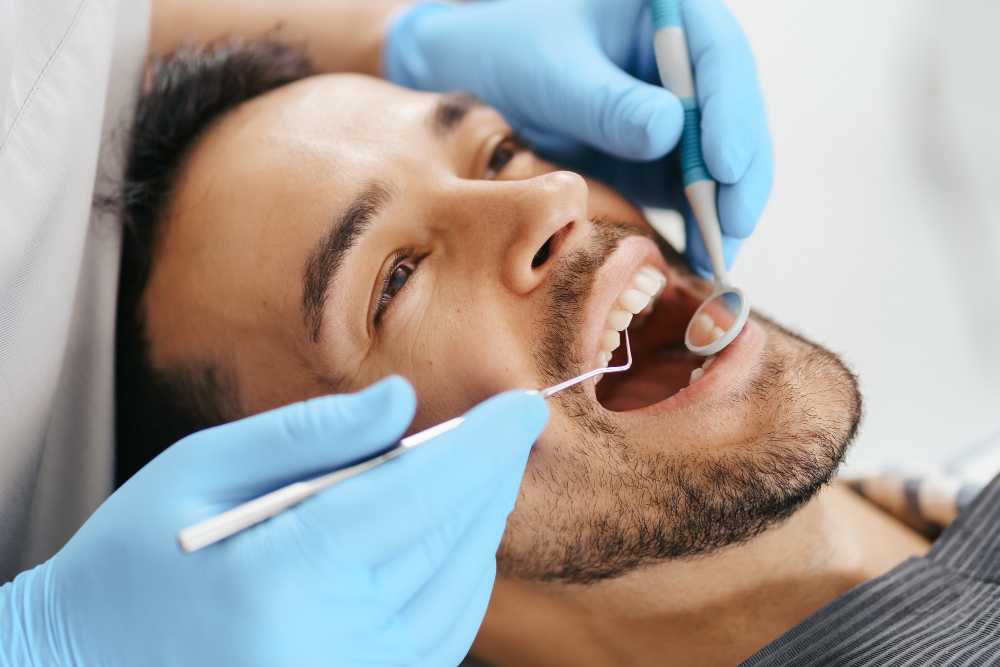
Preparing for a tooth extraction at a dentist in Santa Monica involves arranging post-procedure transportation if sedation is used, eating a normal meal beforehand unless told otherwise and gathering soft foods for recovery. The extraction itself is performed under local anesthesia patients feel pressure and movement but not pain. Recovery follows a predictable pattern: controlled bleeding and rest on day one, peak swelling on days two and three and significant improvement by day seven.
Key Takeaways
- Preparation for a tooth extraction at a dentist in Santa Monica is straightforward: arrange transportation if sedation is involved, eat normally beforehand unless instructed otherwise and stock soft foods for the first few days.
- Local anesthesia makes the extraction itself pain-free; pressure, vibration and movement are felt but not pain.
- Recovery follows a predictable day-by-day pattern bleeding and resting on day one, swelling peaking by day three, significant improvement by day seven.
- The extraction decisions patients worry about most anesthesia, pain and recovery time are almost always less significant in practice than the anticipation suggests.
Most patients facing a tooth extraction are less concerned about the extraction itself than about what they don't know what it will feel like, how long recovery will take, what they'll be able to eat and what warning signs mean something has gone wrong.
These are reasonable things to want to know before sitting in the chair, not after. A dentist in Santa Monica who explains what to expect at each stage of a tooth extraction removes most of the anxiety that comes from uncertainty because most of what patients imagine is more difficult than what the procedure and recovery actually involve.

The 24 Hours Before Your Extraction: What Makes the Biggest Difference?
Preparation for a tooth extraction is straightforward but a few things done (or not done) in the 24 hours before the appointment affect how smoothly the procedure and recovery go.
- Eat normally before a local anesthesia extraction- Unless your dentist has given you specific fasting instructions which apply to IV sedation or general anesthesia, eating a normal meal before your appointment is fine and actually advisable. Arriving hungry makes it more likely you'll feel lightheaded from the anesthesia and you won't be eating normally for a few hours after the procedure.
- Arrange transportation if sedation is involved- Local anesthesia alone doesn't impair driving. Nitrous oxide (laughing gas) clears quickly enough that most patients can drive afterward but confirm this with your dentist.
- Gather what you'll need for recovery beforehand- Soft foods (yogurt, soup, mashed potatoes, scrambled eggs, smoothies without straws), gauze pads, ice packs and any prescribed medication.
- Avoid alcohol and blood thinners if advised- Alcohol can increase bleeding; if your dentist has asked you to avoid it, do so.
What to Expect on the Day of Your Appointment
The extraction itself is almost universally less dramatic than patients expect.
After the dentist in Santa Monica administers local anesthesia, several minutes pass while the area becomes fully numb. The extraction that follows involves pressure and movement, the tooth being loosened from its socket but not pain.
Simple extractions on teeth with accessible roots take minutes. Surgical extractions involving impacted teeth, teeth with complex root anatomy or teeth that need to be sectioned take longer and involve more preparation but are still performed under adequate anesthesia.
After the extraction, gauze is placed over the socket and you bite down firmly for 30 to 45 minutes to initiate clot formation.
Your Recovery Timeline: What's Normal on Day 1, Day 3 and One Week Later
Day 1- Controlled bleeding that slows with gauze pressure. Mild to moderate pain as the anesthesia wears off, managed with prescribed or over-the-counter medication as directed. Swelling begins to develop, particularly for surgical extractions.
Days 2 to 3- Swelling peaks this is expected, not alarming. The area will look more swollen and may feel more uncomfortable than day one. This is the normal inflammatory peak and begins to resolve from here.
Day 7- Most patients feel significantly better. For simple extractions, many are back to near-normal eating by this point. For surgical extractions, some soreness and jaw stiffness may persist into the second week.
The direction that matters- improvement should be the consistent direction after day three. Anything worsening rather than improving after the third or fourth day is a reason to not wait until the next scheduled appointment.
The Recovery Mistakes That Slow Healing the Most
Most post-extraction complications are preventable. The mistakes that most commonly cause problems-
Using a straw- The negative pressure created by straw suction can dislodge the blood clot from the socket, causing dry socket a painful condition where exposed bone is left without the clot's protective covering.
Smoking- The same suction risk as a straw, plus reduced blood oxygen that impairs healing. Smoking is the single strongest risk factor for dry socket and should be avoided for at least 72 hours ideally longer.
Rinsing or spitting forcefully in the first 24 hours- Aggressive rinsing dislodges the clot mechanically. Gentle rinsing with warm salt water can begin after 24 hours and helps keep the area clean but the first day should involve no rinsing at all.
Eating foods that enter the socket- Small-particle foods like rice, seeds or chips can pack into the socket and delay healing. Soft, smooth foods for the first several days protect the site.
Returning to normal activity too quickly- Strenuous physical activity increases blood pressure and can cause rebleeding. Rest on day one; return to light activity on day two if feeling well; resume full activity when soreness allows, after several days.
Conclusion
A tooth extraction at a dentist in Santa Monica when you know what to expect and follow recovery instructions carefully is a manageable procedure with a predictable, relatively brief recovery. The anticipation is almost always worse than the event.
At Clove Dental in Santa Monica, we walk you through preparation and recovery before your appointment so you're never guessing.
FAQs
How long does it take to fully recover from a tooth extraction?
For a simple extraction, most patients feel close to normal within one week. For surgical extractions of impacted wisdom teeth or teeth with complex roots, the recovery may extend two to three weeks before the socket is fully healed.
What can I eat after a tooth extraction?
The first day or two, stick to soft foods that don't require chewing and won't enter the socket yogurt, soup, mashed potatoes, smoothies (no straw), scrambled eggs.
Will I need someone to drive me home?
If local anesthesia only is used, most patients can drive themselves. If nitrous oxide is used, confirm with your dentist whether driving is safe afterward. IV sedation or oral sedation requires a driver.
How soon after extraction can I consider a replacement tooth like an implant?
Timing for implant placement after extraction varies by case. In some situations, an immediate implant can be placed at the time of extraction. In others particularly where infection was present or bone grafting is needed a healing period of three to six months is required before placement.
.jpg?width=352&name=11570%20(1).jpg)
.jpg?width=352&name=image(1012).jpg)