.png?width=80&height=80&name=Clove%20Dental%20White%20Small%20(28).png "Clove Dental White Small (28)")
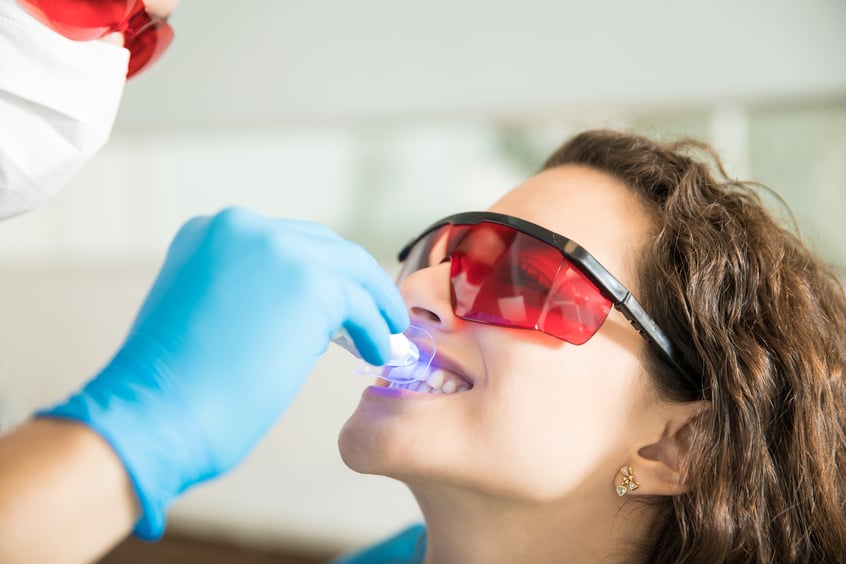
Whitening results fade primarily from dietary staining, tobacco use and inadequate post-whitening care. The first 48 hours after treatment are the most critical enamel pores remain open and absorb pigment more readily during this window. Steer clear of dark colored foods & beverages, brush with whitening toothpaste and have regular professional teeth cleanings in Encino.
Key Takeaways
- Enamel is most susceptible to restaining within 48 hours of whitening.
- Professional cleanings will get rid of any surface staining that you get between whitening appointments.
- Some teeth retain faster due to enamel porosity, existing restorations or intrinsic discoloration that whitening cannot fully address.
- Touch-up whitening using professional take-home trays periodically is more effective and less damaging than repeatedly running full treatment cycles.
Whitening your teeth is the easy part. Keeping them white is where most patients lose ground. The results from a professional whitening session can be genuinely impressive and they can begin fading within weeks if the post-treatment period is not handled correctly.
At Clove Dental, we follow up every whitening treatment with specific guidance because the longevity of results is almost entirely determined by what happens after the appointment. Teeth whitening in Encino is an investment, and protecting it does not require dramatic lifestyle changes, just a few targeted habits applied consistently..
Why Some Whitening Results Fade Faster Than Others
Enamel is porous. The whitening process opens those pores temporarily to allow peroxide to penetrate and break down pigment. After treatment, enamel gradually remineralizes and the pores tighten but that process takes roughly 48 hours. Patients with naturally more porous enamel or thinner enamel absorb staining pigments more readily and will see results fade faster, regardless of effort.
Diet plays the largest role for most people. Patients who drink coffee multiple times a day, regularly consume red wine, or eat diets high in acidic foods experience faster reabsorption than those who do not. Tobacco use smoking or chewing is one of the most aggressive staining contributors and essentially works against whitening continuously.
The First 48 Hours Matter More Than Most People Realize
The post-whitening 48-hour window is not a minor precaution; it is the period that most significantly determines how long the initial result holds. During this time, enamel pores are more open than usual and the tooth surface is more receptive to pigment absorption.
The guidance is straightforward: avoid anything that would stain a white shirt. Coffee, tea, red wine, tomato-based sauces, berries, soy sauce, and dark-colored beverages all carry pigment that can embed in temporarily sensitized enamel. Stick to white or colorless foods and water for the first two days. After that window, the enamel has remineralized enough to be significantly more resistant.
It's Not Just Coffee: The Everyday Habits That Quietly Darken Teeth Again
Coffee gets the most attention, but the restraining picture is broader. Acidic foods and beverages including sparkling water, citrus, and vinegar-based dressings, do not stain directly but soften enamel temporarily, making it more receptive to pigment from whatever is consumed alongside them.
Mouth breathing, dry mouth from medications, and inadequate hydration reduce saliva flow and saliva naturally rinses away staining compounds between meals. Patients with chronically low saliva levels restain faster because that rinsing function is impaired around the clock. Drinking water consistently throughout the day is a simple and underutilized whitening maintenance tool.
Why Professional Teeth Cleanings in Encino Help Whitening Last Longer
Surface staining accumulates between whitening sessions on everyone regardless of how carefully they manage their diet. This extrinsic staining builds up on enamel and in the microscopic irregularities of the tooth surface, creating a dull or yellowed appearance over time that no amount of whitening toothpaste fully removes.
Professional cleanings remove this accumulated surface staining with tools that at-home brushing cannot replicate. Patients who schedule consistent teeth cleanings in Encino at Clove Dental routinely notice that their whitening results look fresher and last measurably longer than those who skip or delay cleanings. The cleaning resets the surface before staining compounds have time to embed more deeply.
Why Some Teeth Never Stay as White as Patients Expect
Whitening works on extrinsic staining pigment on or near the enamel surface. It does not effectively address intrinsic staining, which originates within the tooth structure itself from tetracycline antibiotics, fluorosis, trauma, or genetics. Patients with significant intrinsic discoloration often find that whitening lifts surface stain but leaves a residual yellow or gray undertone that returns quickly because it was never fully addressed.
For these patients, repeated whitening cycles are not the answer. Porcelain veneers or crowns that cover the underlying discoloration entirely provide a more stable and lasting cosmetic result. A dental consultation can identify which type of staining is present and what treatment will actually produce the result being sought.
When a Touch-Up Makes More Sense Than Starting Over
Full whitening treatment every time results begin to fade is not the most effective or tooth-friendly approach. Repeated intensive whitening cycles can increase sensitivity and produce diminishing returns as enamel is repeatedly challenged.
Most patients find that one or two touch-up sessions per year, using trays from their original whitening treatment at Clove Dental, is sufficient to keep results consistently bright with minimal sensitivity.

Conclusion
Teeth whitening in Encino produces results worth protecting and protecting them is entirely achievable with consistent, targeted habits. The 48-hour post-treatment window, regular professional cleanings, smart daily choices around food and hydration, and periodic touch-ups are what separate patients whose whitening lasts years from those who feel like it faded in weeks.
At Clove Dental, we provide everything needed to maintain whitening results long-term, from custom take-home trays to regular professional cleanings that reset the surface between sessions.
FAQs
How long do professional whitening results last?
With good habits and periodic touch-ups, professional whitening results last one to three years. Diet, tobacco use and saliva levels are the primary variables that determine individual longevity.
Can I drink coffee after teeth whitening if I use a straw?
A straw reduces direct contact between coffee and front tooth surfaces but does not eliminate staining risk, as liquid still reaches posterior teeth and the lingual surfaces of front teeth. During the first 48 hours, avoiding coffee entirely is the most reliable approach.
Is it safe to whiten teeth repeatedly?
Occasional touch-up whitening with professional take-home trays is considered safe for most patients. Frequent full-cycle whitening can increase sensitivity and stress enamel over time.
Why do my teeth look more yellow near the gumline after whitening?
The gumline area is where enamel is thinnest, making the yellow dentin beneath more visible, particularly after whitening brightens the rest of the tooth surface. It is also a reason why in-office whitening with professionally fitted trays which reach the gumline more evenly, often produces more uniform results than generic strips.