.png?width=80&height=80&name=Clove%20Dental%20White%20Small%20(28).png "Clove Dental White Small (28)")
.jpg?width=1155&height=648&name=ezgif.com-webp-to-jpg-converter%20(1).jpg)
Porcelain veneers in Thousand Oaks can correct staining, chips, wear and minor spacing issues in a single treatment using a material that resists stains far better than natural enamel or composite bonding. Knowing what they can and can not fix helps set realistic expectations before starting.
Key Takeaways
- Healthy teeth can still look uneven, worn, or stained for reasons that have nothing to do with dental health.
- Porcelain veneers correct color, shape, chips, and minor spacing together, rather than as separate treatments.
- A small amount of enamel is typically removed before veneers are placed, which is why the decision isn't easily reversible.
- Veneers and bonding solve similar problems differently, with real trade-offs in cost, durability, and how much tooth structure is involved.
- Certain habits, like nail biting or skipping a nightguard, can damage porcelain veneers well before their expected lifespan ends.
Healthy teeth, no cavities, nothing your dentist is worried about, and yet your smile still doesn't look the way you want it to. That gap between "healthy" and "how it looks" is exactly where porcelain veneers in Thousand Oaks tend to come up in conversation. They're not a health fix, they're a cosmetic one, but a genuinely effective one when the right problems are being addressed. Here's what they actually correct, what happens to your natural teeth in the process, and when they're not actually the right call.
Your Teeth Are Healthy, So Why Do They Still Look Uneven, Stained, or Worn?
Dental health and dental appearance are two different things, and it's easy to have one without the other. Teeth can be completely cavity-free and still show years of coffee staining, minor chips from everyday wear, or edges that have flattened slightly from years of normal biting and chewing. None of that reflects poor dental health, it's just the natural accumulation of time and habit.
Genetics play a role too. Some people are simply born with slightly uneven tooth size or shape, teeth that are healthy in every clinical sense but don't line up the way they'd like along the smile line. Porcelain veneers in Thousand Oaks are often the answer for exactly this category of concern, cosmetic rather than medical, but no less real to the person looking in the mirror every day.

What Happens to Your Natural Teeth Before Veneers Are Placed?
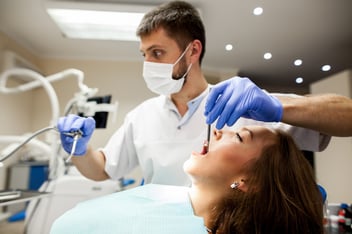
Before porcelain veneers go on, a small amount of enamel, usually less than half a millimeter, gets removed from the front surface of each tooth being treated. This step matters because it creates room for the veneer to sit flush without making the tooth look bulky or unnatural, and it also gives the porcelain a slightly rougher surface to bond to securely.
This is also why the decision isn't something to take lightly. Once enamel is removed, it doesn't grow back, so those teeth will need some form of veneer or restoration going forward. It's not a dangerous step, dentists take a conservative approach and remove as little as possible, but it's worth understanding clearly before committing, since it's part of why veneers are considered a long-term decision rather than a trial run.
What Habits Can Damage Porcelain Veneers After They're Placed?
Porcelain is strong, but it's not indestructible, and certain habits shorten its lifespan noticeably. Nail biting, chewing on pens, or using your teeth to open packaging all put concentrated stress on the edge of a veneer in a way it's not really designed to handle. Grinding at night without a nightguard is one of the more common causes of premature veneer damage, since that repetitive pressure adds up over months and years.
Very hard foods, ice, hard candy, unpopped popcorn kernels, are also worth avoiding, since a sudden hard bite can chip porcelain even though it resists everyday wear well. None of this means being overly cautious all the time, it just means being aware that veneers, like natural teeth, have limits, and a few small habit adjustments go a long way toward protecting the investment.
When Are Porcelain Veneers Not the Right Choice for a Smile Concern?
Veneers aren't the right tool for every situation. Significant misalignment or bite issues are better addressed with orthodontics first. Since veneers placed over crooked teeth can look unnatural or create uneven wear patterns later. Active gum disease or untreated decay also needs to be resolved before veneers are placed, since building cosmetic work on top of an unaddressed dental problem doesn't hold up well.
People who grind their teeth heavily and aren't willing to wear a nightguard should think carefully too, since that habit alone can significantly shorten how long veneers last. In these situations, a dentist evaluating candidacy for porcelain veneers in Thousand Oaks should be upfront about sequencing other treatment first, rather than moving straight to veneers on top of an unresolved issue.
Conclusion
Porcelain veneers solve a specific kind of problem well: healthy teeth that just don't look the way you want them to, whether that's staining, minor chips, small gaps, or uneven shape. They're a bigger commitment than whitening or bonding, both in cost and in the enamel removal involved, but for the right situation they deliver a long-lasting, cohesive result that's hard to match with smaller individual fixes. If you're considering porcelain veneers in Thousand Oaks, a thorough consultation that honestly addresses what they can and can't fix for your specific smile is the right place to start.
FAQs
Do porcelain veneers look fake or unnaturally white?
Not when properly planned. A good dentist matches shade, translucency, and shape to look natural rather than uniformly bright and artificial.
Can I get just one or two veneers instead of a full set?
Yes. Veneers can be placed on just the teeth that need correction though matching shade to your surrounding natural teeth requires careful planning.
How painful is the veneer preparation process?
Local anesthesia is used during enamel removal, so the procedure itself should not hurt though mild sensitivity afterward is common for a few days.
What is the real difference in cost between veneers and bonding?
Veneers cost significantly more per tooth than bonding but they last considerably longer and resist staining much better over time.