.png?width=80&height=80&name=Clove%20Dental%20White%20Small%20(28).png "Clove Dental White Small (28)")
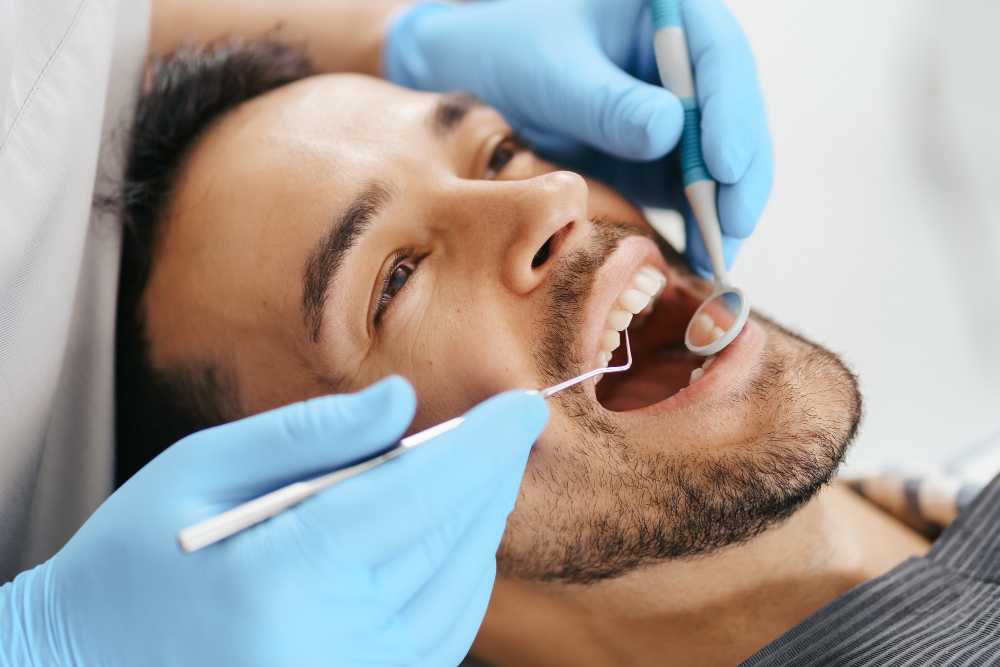
Cavities form when bacteria in your mouth feed on sugar and produce acid that slowly eats through tooth enamel. A dentist in Camarillo can spot early decay on X-rays before it causes pain which is why regular checkups matter. Treatment ranges from fluoride for early-stage decay to fillings, crowns or root canals depending on how deep the damage has gone.
Key Takeaways
- Cavities often cause no pain in early stages, which is why many go undetected without regular checkups
- A dentist in Camarillo can identify decay on X-rays long before it becomes visible or symptomatic
- Treatment gets more involved, and more expensive, the deeper decay is allowed to progress
- Some people are genetically more prone to cavities, but daily habits still make the biggest difference
- Catching a cavity early almost always means a faster, simpler, and less costly repair
Have you ever been surprised by a cavity at a routine checkup, even though nothing hurt and you brush every day? You're not doing something wrong. Cavities are sneaky, they develop quietly, often with no warning signs at all, until the damage is deep enough to cause real discomfort.
A dentist in Camarillo can catch decay long before it reaches that point. Understanding how cavities form, how they're treated, and what actually prevents them helps you stay ahead of the problem rather than react to it.
Why Do Some Cavities Hurt While Others Go Completely Unnoticed?
Pain is not a reliable indicator of how serious a cavity is. That's one of the most important things to understand about tooth decay.
In the earliest stages, decay is limited to the outer enamel layer. Enamel has no nerve endings, so there's nothing to trigger discomfort. You could have a cavity forming right now and feel absolutely nothing.
Pain typically starts when decay reaches the dentin, the softer layer underneath enamel. Dentin connects to the nerve through tiny channels, which is why you might suddenly feel sensitivity to cold, sweet foods, or pressure. By the time something hurts, the decay has usually been there for a while.
This is exactly why a dentist in Camarillo who checks for decay at every visit catches problems that patients would never find on their own.

What Can Your Dentist See Before You Notice a Cavity?
Quite a lot, actually. During a routine exam, your dentist uses a combination of visual inspection, a small probe, and dental X-rays to find decay at stages you'd never feel or see in a mirror.
X-rays are particularly useful for finding cavities between teeth, a very common location that's completely hidden from direct view. They also reveal how far existing decay has progressed into the tooth, information that directly shapes the treatment plan.
Other practices also incorporate the technology of cavity detection devices, such as lasers, which are able to detect changes to the density of the teeth before the decay itself is detected. We see it past the obvious at Clove Dental and ensure nothing is overlooked.
How Does Cavity Treatment Change as Tooth Decay Progresses?
Treatment is directly tied to how far the decay has traveled:
- Early-stage decay (enamel only): Fluoride treatment can sometimes remineralize the area and stop decay from progressing further, with no drilling needed
- Moderate decay (into dentin): A filling is the standard treatment, the decayed portion is removed and the space is filled with composite resin or another material
- Deep decay (near or at the pulp): A root canal becomes necessary to remove the infected tissue before the tooth can be restored with a crown
- Severely damaged teeth: In cases where too little tooth structure remains, extraction may be the only option
The gap between early-stage and deep decay isn't just about discomfort, it is about how much of your natural tooth can be saved. Seeing a dentist in Camarillo regularly keeps more options on the table.
What Daily Habits Make the Biggest Difference in Preventing Future Cavities?
A few consistent habits move the needle more than anything else:
- Floss once a day, brushing alone misses the spaces between teeth where decay most commonly starts
- Limit between-meal snacking, every time you eat, your mouth produces acid for about 20 minutes afterward. Fewer eating occasions mean fewer acid cycles
- Drink water after meals, water rinses away food particles and helps restore a neutral pH in your mouth
- Use fluoride toothpaste, fluoride strengthens enamel and makes it more resistant to acid erosion
- Don't skip your checkups, a professional cleaning removes hardened tartar that brushing can't touch, and your dentist catches anything forming before it progresses
Why Early Diagnosis by a Dentist in Camarillo Can Save More Than Just Your Tooth
A cavity caught in the enamel stage costs far less to treat, takes far less time in the chair, and preserves far more of your natural tooth than one caught at the root canal stage. That's not a small difference, it's often the difference between a 30-minute filling and a multi-visit procedure.
There's also the bigger picture. Untreated decay doesn't stay contained. It can spread to neighboring teeth, lead to infection, and in serious cases affect your overall health. Keeping up with your checkups at Clove Dental means small problems get handled while they're still small.
Conclusion
Cavities are common, but they're not inevitable, and the ones that do form don't have to turn into major procedures. Seeing a dentist in Camarillo regularly is the single most reliable way to catch decay early, treat it simply, and protect your teeth for the long run.
At Clove Dental, we make the process straightforward from the first X-ray to the last appointment. If it's been a while since your last checkup, now is a good time to book one.
FAQs
Can a cavity go away on its own without treatment?
Very early-stage decay in the enamel can sometimes be reversed with fluoride treatment, but once decay reaches the dentin it won't heal on its own. A dentist in Camarillo needs to remove the damaged tissue and restore the tooth.
How often should I see a dentist in Camarillo for cavity checks?
Most patients benefit from a checkup every six months. Your dentist might also suggest more regular check-ups if you have a tendency towards frequent cavities to prevent new cavities.
Does getting a filling hurt?
The area is numbed before any work begins, so the procedure itself is not painful. Some patients feel mild sensitivity for a day or two after which resolves on its own.
Are silver fillings better or worse than tooth-colored fillings?
Both are effective at restoring a tooth after decay is removed. Tooth-colored composite resin fillings bond directly to the tooth and look natural.
.jpg?width=352&name=image(1413).jpg)