.png?width=80&height=80&name=Clove%20Dental%20White%20Small%20(28).png "Clove Dental White Small (28)")
.jpg?width=626&height=417&name=image(866).jpg)
Gingivitis is early, reversible gum inflammation usually caused by plaque buildup along the gumline and it shows up as bleeding when you brush or floss. Left untreated for months, it can progress into periodontitis which involves permanent bone loss and requires a periodontist in Sherman Oaks to treat.
Key Takeaways
- Bleeding gums is one of the earliest signs of gingivitis. It is not something to shrug off as normal.
- Gingivitis can develop even with a solid brushing routine if flossing gets skipped or technique is off.
- Caught early, gingivitis is fully reversible once the plaque causing it is removed.
- Left alone for months, gingivitis can progress into periodontitis which involves permanent bone loss.
- Persistent bleeding, gum recession, or loose teeth are signs it's time to see a periodontist in Sherman Oaks rather than wait it out.
You spit into the sink after flossing and there's blood. Is that normal, or is something actually wrong? For a lot of people, that first drop of blood is gingivitis announcing itself, and it's a lot more common than most people realize. The good news is that gingivitis, caught early, is one of the easier dental problems to reverse. The bad news is that plenty of people ignore it for months because it doesn't hurt. Here's what's actually happening in your gums, what to watch for, and when it's time to stop managing it yourself and see a periodontist in Sherman Oaks instead.
Is Bleeding When You Floss Actually Gingivitis?
Short answer, usually yes. Healthy gums don't bleed just from the gentle pressure of floss or a soft-bristled toothbrush. When they do, it means there's inflammation happening right at the gumline, and that inflammation is almost always caused by plaque that's been sitting there a little too long.
A single bleeding episode after an aggressive flossing session isn't necessarily gingivitis. But if it happens consistently, every time or nearly every time you floss, that's a pattern, not a fluke. It's worth paying attention to rather than assuming your gums are just "sensitive."

What Changes in Your Gums Before Gingivitis Becomes Obvious?
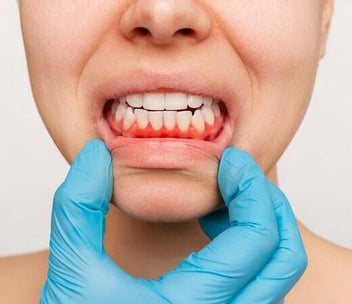
Gingivitis doesn't show up overnight. Before the bleeding starts, gums go through smaller changes that are easy to miss if you are not looking for them. They can shift from a pale pink to a deeper red, and they might look a little puffier than usual, especially right along the edge where the tooth meets the gum.
Some people notice their gums feel slightly tender when brushing, even before any blood shows up. None of this is dramatic. That's actually the problem. Gingivitis is subtle enough in its early stage that most people don't connect the dots until the bleeding starts, which is usually a few steps further along than when it began.
Can Gingivitis Clear Up Once the Plaque Causing It Is Removed?
Yes, and this is genuinely the encouraging part. Gingivitis is inflammation, not permanent damage. Once the plaque and tartar responsible for it are removed, whether through better home care or a professional cleaning, gum tissue can heal and return to normal within a couple of weeks in most cases.
That said, "better brushing for a few days" usually isn't enough on its own if tartar has already hardened along the gumline. Tartar can't be brushed away, so a professional cleaning is often the actual turning point, with consistent flossing afterward keeping things from building back up.
What Happens When Gingivitis Is Ignored for Months?
This is where things start to shift from reversible to not. If gingivitis goes untreated for an extended period, the inflammation can move deeper, past the gum tissue and into the structures that actually hold your teeth in place, including the bone. At that point, it's no longer gingivitis, it's periodontitis, and that damage doesn't reverse the same way.
Months of untreated inflammation also tends to create small pockets between the gum and tooth, which trap even more bacteria and make the problem harder to clean out on your own. It's a bit of a snowball. The longer it sits, the more it feeds itself.
When Does Bleeding Gums Become a Reason to See a Periodontist in Sherman Oaks?
If bleeding, swelling, or tenderness continues for more than a couple of weeks despite consistent brushing and flossing, that's a reasonable point to stop self-managing and get it checked. A general dentist can often treat straightforward gingivitis, but if there's any sign of gum recession, pocketing, or loose teeth, a periodontist in Sherman Oaks is better equipped to assess how far things have actually progressed.
Periodontists specialize specifically in gum and bone health, which means they're set up to measure pocket depths accurately and catch early periodontitis that a routine cleaning wouldn't necessarily reveal. Waiting for pain isn't a great strategy here, since gum disease can progress well before it actually hurts.
Conclusion
Gingivitis is common, usually painless, and, caught early, entirely reversible. The tricky part is that it's easy to write off as nothing, right up until it isn't nothing anymore. Bleeding gums, puffiness, or tenderness that stick around for more than a week or two are worth taking seriously rather than waiting out. If your gums aren't responding to better home care, or if you're noticing recession or looseness, it's time to talk to a periodontist in Sherman Oaks rather than hoping it resolves on its own.
FAQs
Is it normal for gums to bleed a little every time I floss?
No, consistent bleeding is a sign of gum inflammation, most commonly gingivitis and it is worth addressing rather than treating as routine.
How long does it take for gingivitis to heal once you start flossing regularly?
Mild gingivitis can improve within one to two weeks of consistent, thorough oral hygiene, though a professional cleaning speeds things up if tartar has already formed.
Can gingivitis come back after it's treated?
Yes. Gingivitis can return if plaque control slips again which is why consistent brushing and flossing matter even after symptoms clear up.
What is the difference between gingivitis and periodontitis?
Gingivitis is inflammation limited to the gum tissue and is reversible. Periodontitis involves damage to the bone and ligaments supporting the teeth and is not fully reversible.
.jpg?width=352&name=young-patient-black-goggles-getting-her-teeth-treated-by-female-hygienist-using-dental-curing-light(1).jpg)