.png?width=80&height=80&name=Clove%20Dental%20White%20Small%20(28).png "Clove Dental White Small (28)")
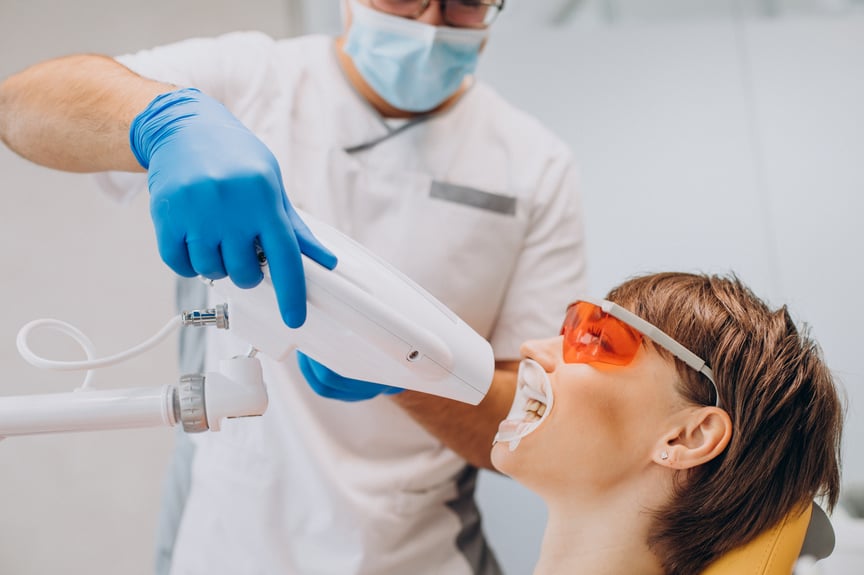
A cosmetic dental procedure that uses peroxide-based whitening agents to break down stain compounds in the enamel of teeth both within and on the surface of the enamel to make teeth appear lighter. Professional teeth whitening in Sherman Oaks uses gels with higher concentration than what can be obtained over the counter and results in faster, more even teeth whitened in a single appointment.
Key Takeaways
- The whitening effect involves the use of peroxide-based agents that break down stain molecules within the enamel, instead of the surface film.
- Professional teeth whitening in Sherman Oaks is much more effective than over-the-counter whitening products, and it will give you much more predictable results, in less time.
- Stains caused by the diet or from aging and smoking will respond well to whitening. Intrinsic stains from tetracycline or trauma are more resistant and may require alternative cosmetic approaches.
- Whitening does not damage enamel when used correctly during or after treatment which is common but temporary.
Have you been curious about teeth whitening but not sure what it actually does or whether it would even work for your teeth? The before-and-after photos look convincing but the details matter more than the marketing.
Teeth whitening in Sherman Oaks is one of the most requested cosmetic dental treatments and for good reason when it's the right fit, the results are fast and visible. But not all discoloration responds the same way and understanding why you have discoloration helps make a better decision before spending money on a treatment that might not address your specific situation.
If Teeth Aren't Naturally White, What Does Whitening Actually Do?
Natural tooth color isn't white it ranges from light yellow to light grey, depending on the thickness of the enamel and the shade of the dentin layer beneath it. Dentin, which is naturally yellow, shows through the semi-translucent enamel and accounts for most of a tooth's visible color. Thinner enamel means more yellow shows through; thicker, more mineralized enamel appears lighter.
Whitening doesn't scrub the surface clean or coat the tooth with anything. The bleaching agent, hydrogen peroxide or carbamide peroxide, penetrates the enamel and breaks apart the molecular chains of stain compounds through an oxidation reaction. This changes the actual color of the tooth structure, not just what's sitting on it.
Why Teeth Become Darker Even When You Brush Every Day
Brushing removes the soft plaque film and some surface deposits, but it can't reach the stain molecules that have already worked their way into the enamel's porous structure. Over time, compounds from coffee, tea, red wine and certain foods bind to the proteins in enamel and accumulate beneath what brushing can address.
Age accelerates the process independently. Enamel gradually thins over decades of use, making the yellow dentin beneath more visible. The pulp chamber inside the tooth also shrinks with age and dentin continues to be deposited inward, darkening the appearance of the tooth from the inside out. This natural yellowing is one of the most common reasons patients seek teeth whitening in Sherman Oaks and it responds well to professional treatment.
What Types of Stains Can Whitening Improve and Which Ones Can't It?
This is where expectations need to be set carefully, because whitening has a defined scope.
Responds well to whitening-
- Yellowing from coffee, tea, wine, and food pigments.
- Tobacco staining.
- Age-related darkening.
- General dullness from accumulated dietary staining.
More resistant to whitening-
- Tetracycline staining, antibiotic use during tooth development, causes deep grey or brown banding inside the tooth that bleaching agents struggle to reach adequately.
- Dental fluorosis: excess fluoride during development causes white spots or brown mottling that doesn't bleach evenly.
- Staining from tooth trauma, internal bleeding after injury, deposits dark pigment into dentin that standard whitening rarely resolves.
- Grey-toned discoloration generally whitens most dramatically on yellow tones; grey base shades respond less predictably.
If your discoloration falls into the resistant category, veneers or bonding may produce better cosmetic results than bleaching.
Why Some People See Dramatic Results While Others Don't
Starting shade is the primary factor. A patient with heavily stained enamel from years of coffee drinking may see a six to eight shade improvement. A patient whose teeth are already relatively light has less room to change and may notice a more modest shift.
The type of staining matters just as much as the amount. Yellow-toned staining from dietary sources bleaches efficiently. Grey-toned or intrinsic staining resists the same process. Enamel porosity, how readily the bleaching agent penetrates, also varies between individuals and affects how quickly and thoroughly results develop.
Existing restorations are another variable. Crowns, veneers, and composite fillings don't respond to bleaching agents. If whitening lightens the surrounding natural teeth, those restorations will appear darker by comparison and may need to be replaced to match. This is a conversation worth having before starting teeth whitening in Sherman Oaks, not after.
Does Teeth Whitening Damage Enamel?
When done correctly, professional whitening does not damage enamel. During bleaching, the bleaching agents temporarily penetrate the enamel, but do not irretrievably change its structure.
Whitening sensitivity is normal and will pass after the whitening, and is due to temporary irritation of the nerve, rather than damage. It resolves within 24 to 48 hours. Patients with pre-existing sensitivity, thin enamel or exposed root surfaces may experience more pronounced sensitivity and a dentist can recommend desensitizing protocols to reduce discomfort before and during treatment.

Conclusion
Teeth whitening works but it works best when the right type of staining is being treated, with the right product and concentration, under appropriate supervision. Understanding what whitening can and can't do is what separates a satisfying result from a disappointing one.
Schedule a whitening consultation at Clove Dental in Sherman Oaks to find out what's actually possible for your teeth.
FAQs
How long does professional teeth whitening in Sherman Oaks last?
Most patients see results that hold for six months to two years. Longevity depends on diet: coffee, tea, red wine and tobacco retain enamel faster and oral hygiene habits. Touch-up treatments or custom take-home trays can extend results significantly.
Can whitening make teeth look unnaturally white?
Professional whitening can make teeth several shades lighter but there is a natural limit set by the base shade of your enamel. Teeth don't bleach to pure white; they return to a lighter, more youthful version of their natural color. The risk of an artificial appearance is higher with poorly fitted or overused at-home products than with professionally supervised treatment.
At what age is teeth whitening appropriate?
Whitening is recommended for patients 18 years old and up who have fully grown permanent teeth. For younger patients that are concerned about their appearance, we discuss alternatives that are appropriate for their age.
Will whitening work on my dental crowns or veneers?
No dental restorations respond to bleaching agents. If you have crowns, veneers, or tooth-colored fillings in visible areas, discuss timing and matching with your dentist before whitening. Lightening around existing restorations could result in an increased color mismatch that will need further cosmetic treatment.
.jpg?width=352&name=image(1407).jpg)
.jpg?width=352&name=image(1405).jpg)