.png?width=80&height=80&name=Clove%20Dental%20White%20Small%20(28).png "Clove Dental White Small (28)")
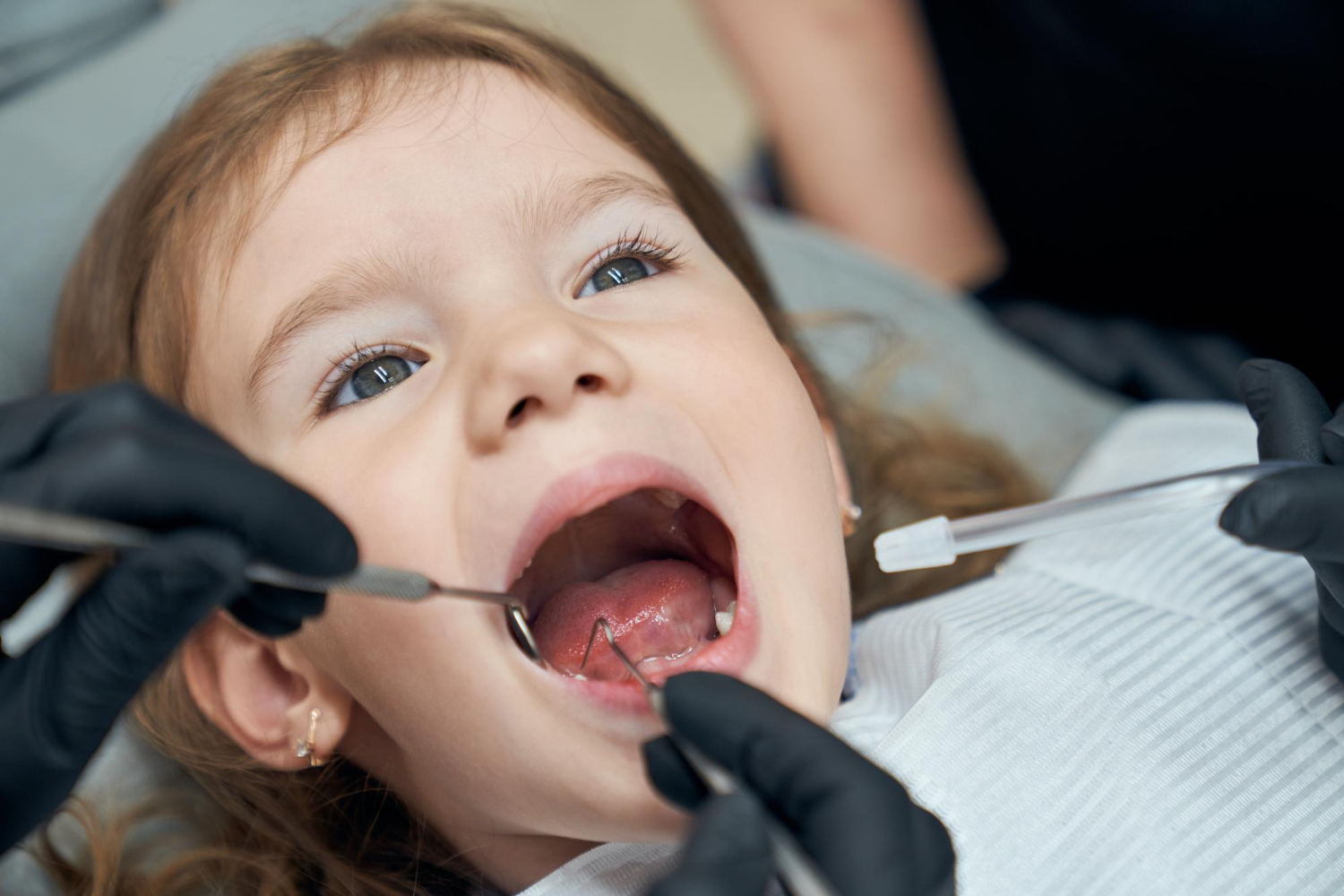
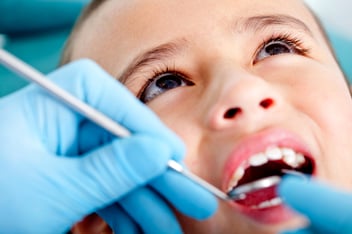
Baby teeth hold space in the jaw for the permanent teeth developing beneath them, guide the correct positioning of adult teeth as they erupt, and allow children to eat, speak and develop normally. When a baby tooth is lost too early due to decay or extraction the neighboring teeth can drift into the gap and leave insufficient space for the permanent tooth waiting to come in.
Key Takeaways
- Baby teeth hold space and guide adult teeth, losing them too early through decay or extraction can cause crowding and eruption problems in permanent teeth.
- Early dental visits, ideally by the first birthday, allow a dentist to monitor development and catch problems before they require more significant intervention.
- Two children the same age can have very different cavity risk and dental development timelines based on diet, hygiene habits, saliva composition, and genetics.
- A baby tooth that's infected or significantly decayed isn't always best left to fall out in some cases, treating or monitoring it is more appropriate than waiting.
Have you ever heard someone say "they're just baby teeth" when a parent asks whether a child's dental problem needs attention? It's one of the most commonly repeated pieces of incorrect dental advice, and it leads to delayed treatment, avoidable pain and problems that carry forward into permanent teeth.
At Clove Dental, a dentist in Camarillo who sees pediatric patients understands that baby teeth are not placeholders waiting to be replaced, they're active structures with important roles in development. Here's what parents need to know about what baby teeth actually do, what to watch for and when treatment matters even before the permanent teeth arrive.

"They're Just Baby Teeth" Why That One Sentence Causes So Many Dental Problems
The reasoning usually goes like this: if a baby tooth is going to fall out anyway, fixing a problem with it doesn't seem worth the effort, the cost or potentially the difficulty of getting a young child through dental treatment. On the surface, this makes intuitive sense. In practice, it consistently leads to outcomes parents wish they'd avoided.
Baby teeth erupt between roughly six months and two years of age and don't begin falling out until around age six. The last baby teeth may not be lost until age twelve or thirteen. That's a full decade or more during which a "temporary" tooth is expected to function normally, hold space in the arch, guide jaw development and support chewing and speech.
The Small Changes Parents Usually Notice First
Parents rarely see decay forming, they notice the secondary effects. A child who becomes picky about certain foods, particularly anything very cold or sweet, may be experiencing sensitivity that they can't articulate clearly. A young child who has stopped chewing on one side of the mouth may have pain they haven't been able to communicate.
Children don't always report tooth pain the way adults do. They adapt around discomfort, change their eating habits and sometimes become quietly unwell without a parent being able to identify the source. Routine dental visits twice yearly from the time the first tooth appears are how these signs get identified before they become infections.
Why Two Children the Same Age Can Have Completely Different Dental Needs
Cavity risk in children varies significantly based on factors that aren't all within a parent's control. Saliva composition plays a role, some children's saliva provides more buffering protection against acid than others.
Diet, frequency of eating, and beverage choices are major contributors. A child who drinks milk or juice throughout the day is bathing their teeth in sugar for extended periods.
Genetics influences jaw size, tooth spacing, enamel strength, and when teeth erupt and fall out. Two siblings with the same parents and the same household diet can have meaningfully different cavity rates and different developmental timelines.
This variability is why a dentist in Camarillo who knows a child's individual risk profile can give guidance that's actually calibrated to that child not generic advice that may over- or underestimate what's needed.
Waiting for a Baby Tooth to "Fall Out on Its Own" Isn't Always the Best Plan
When a baby tooth has significant decay or an infection, the instinct to wait for it to naturally exfoliate is understandable but clinically wrong. An infected tooth doesn't resolve its infection because it's going to fall out. The infection continues and can spread to the surrounding bone, damage the developing permanent tooth beneath it or cause the kind of systemic health concerns that follow untreated oral infections.
Equally, a baby tooth that is lost years earlier than expected through early extraction or trauma can allow neighboring teeth to move into space in ways that block the permanent tooth from erupting correctly.
Some baby teeth with early cavities can be treated conservatively with fluoride or minimal intervention. Others genuinely need a filling or a baby root canal treatment.
Healthy Baby Teeth Make the Transition to Adult Teeth Much Easier
There's a direct line between how well baby teeth are maintained and how smoothly the permanent teeth come in. Baby teeth guide permanent teeth into position during eruption, the adult tooth follows the path left by the baby tooth it replaces.
Beyond eruption guidance, healthy baby teeth support normal jaw growth. The chewing forces transmitted through a full set of functioning baby teeth stimulate bone development in a way that absent or significantly damaged teeth don't.
Conclusion
Baby teeth aren't waiting to be replaced, they're working. They hold space, guide development, support eating and speech, and lay the foundation for what comes next. Problems that start in baby teeth don't end with them.
At Clove Dental, a dentist in Camarillo who sees pediatric patients treats baby teeth with the same clinical attention as permanent ones, because the care taken during those early years shapes how the permanent teeth arrive.
FAQs
Do baby teeth need to be brushed?
Yes, from the moment the first tooth erupts. A small smear of fluoride toothpaste about the size of a grain of rice is recommended for children under three. From ages three to six, a pea-sized amount is appropriate.
What if my child is afraid of the dentist?
Pediatric dental fear is common and manageable. Practices experienced with children use age-appropriate explanations, slow pacing, distraction techniques, and in some cases nitrous oxide for anxious patients.
Can I brush my baby's teeth if they don't have many yet?
Yes. Gum tissue can be wiped with a clean damp cloth even before teeth erupt, and a small soft toothbrush should be introduced as soon as teeth appear.
Is bottle-feeding at night harmful to baby teeth?
Putting a baby to sleep with a bottle of milk, formula, or juice is a significant cavity risk factor. The sugar sits against the teeth throughout the night when saliva production is lowest. This is the primary cause of what's called "baby bottle tooth decay," which can damage the front teeth severely.