.png?width=80&height=80&name=Clove%20Dental%20White%20Small%20(28).png "Clove Dental White Small (28)")
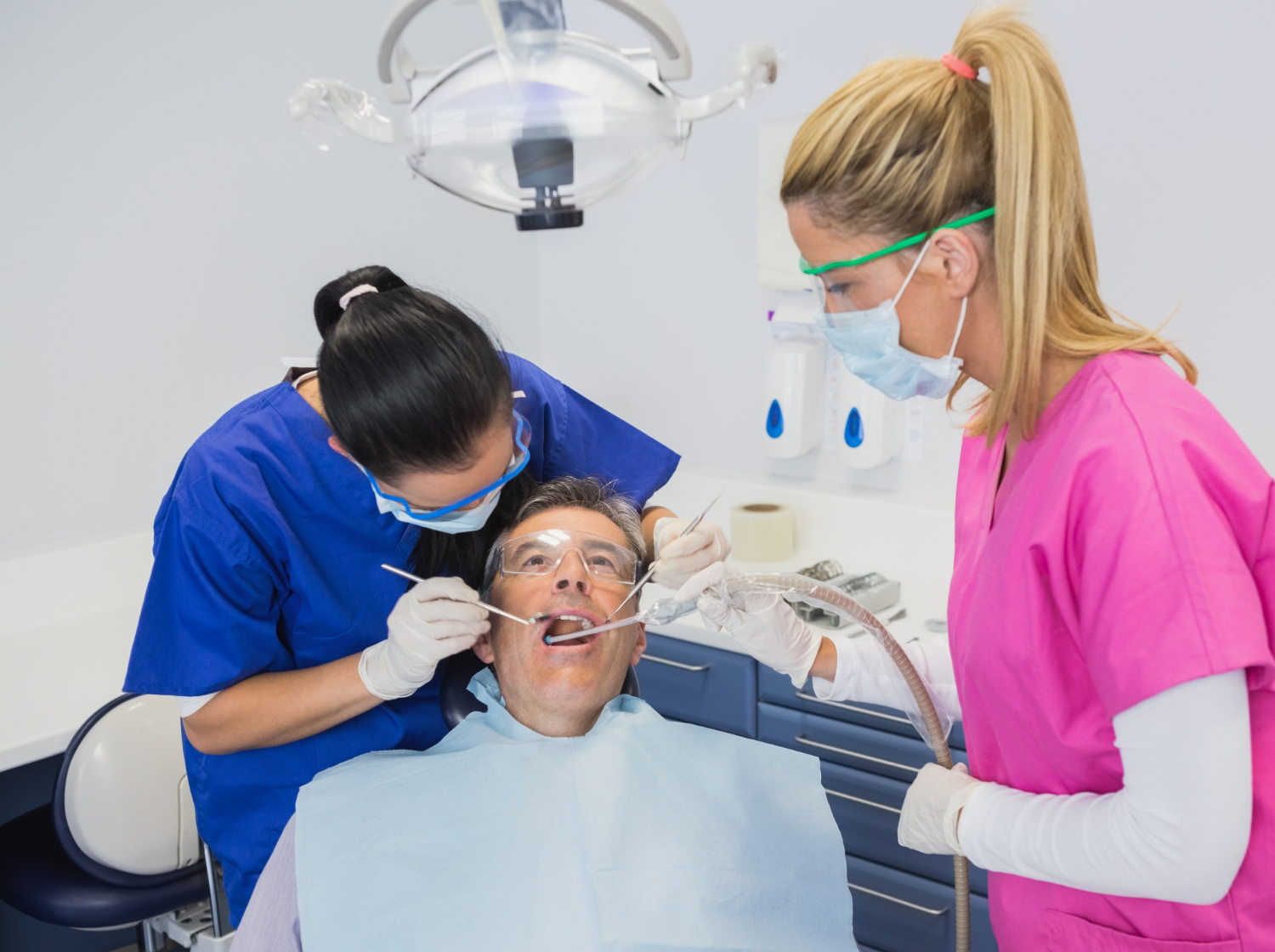
A dentist in Encino using modern dental technology doesn't just deliver better diagnoses they deliver better explanations. Intraoral cameras show patients exactly what the dentist sees in real time. Digital X-rays can be viewed instantly, and can be annotated to show the important points. CBCTs are 3D cone beam CT scans that can be rotated and sliced to provide images of anatomy that cannot be conveyed by a flat X-ray.
Key Takeaways
- Modern dental technology at a dentist in Encino makes patients active participants in their own care not passive recipients of clinical conclusions.
- Intraoral cameras, digital X-rays, and 3D imaging all produce visual outputs that patients can see and understand in real time during the appointment.
- When patients see their own findings rather than hearing descriptions of them, treatment acceptance and follow-through improve measurably.
- Technology changes informed consent from a signature on a form to an actual conversation grounded in shared visual information.
Dentistry has always involved a knowledge gap. The dentist sees what's in the mouth through clinical training and specialized instruments. The patient experiences the results, the diagnosis, the treatment recommendation, the bill without access to the information behind it. That gap has historically been one of the main reasons patients agree to treatment without fully understanding it or decline treatment without fully understanding what they're declining.
Modern dental technology at Clove Dental doesn't just help a dentist in Encino find problems more accurately it brings patients into the clinical picture in ways that weren't possible a generation ago. When you can see what the dentist sees, the conversation changes.

Better Technology Doesn't Replace Experience It Gives Dentists Better Information
The right framing for dental technology isn't "better machines make better dentists." Clinical judgment, diagnostic accuracy and treatment skill still come from training, experience and the kind of pattern recognition that accumulates over years of practice.
What technology does is expand what's available to apply that judgment to. A digital X-ray that can be enlarged and adjusted shows detail that film couldn't reveal. An intraoral camera that captures high-resolution images of the tooth surface makes a crack visible that clinical examination alone might have missed. A cone beam CT scan shows the three-dimensional relationship between an impacted tooth and an adjacent nerve in a way that a flat X-ray simply cannot represent.
Technology Changes Every Stage of a Dental Visit Not Just the Treatment
Most patients think of dental technology in terms of treatment: the drill, the laser, the impression material. But the technology that most changes the patient experience operates earlier: during assessment and explanation.
- Before the cleaning begins: An intraoral scan produces a three-dimensional digital model of the teeth that can be rotated and examined from any angle.
- During the exam: When an intraoral camera captures an image of a cracked cusp and displays it on a screen in front of the patient, the clinical finding goes from an abstract statement ("there's a crack in that tooth") to something concrete and visible.
- When reviewing X-rays: Digital X-rays displayed on a monitor can be annotated the dentist can point directly to the area of concern, draw attention to the bone level or zoom in on a developing lesion.
At a dentist in Encino equipped with these tools, the appointment is a shared viewing experience rather than a one-way clinical pronouncement.
How Technology Can Make Dental Visits Feel More Comfortable
Comfort improvements from technology tend to be the ones patients remember most because they change the appointment experience rather than the clinical outcome.
Digital impressions eliminate the trays and setting material that produce the gag reflex in patients with high sensitivity. The intraoral scanner captures the same information in minutes with a wand moved gently around the teeth, no material, no tray, no discomfort.
Same-day crown fabrication means the tooth is prepared and restored in a single appointment. The temporary crown phase which involves a less well-fitting restoration, dietary restrictions and sensitivity is eliminated. Patients leave the same day with a permanent restoration.
The Best Technology Is the Kind That Helps You Keep Your Natural Teeth Longer
The most meaningful application of dental technology isn't the most dramatic one, it's the early detection that catches a problem when it's still small.
Laser caries detection identifies decay in the deep grooves of molars at a stage when remineralization may still be possible before drilling is necessary. Intraoral cameras catch crack lines before they propagate under chewing stress. Digital X-rays compared across visits reveal bone level changes that indicate gum disease progression before pockets have deepened significantly.
When a dentist in Encino uses technology to preserve natural tooth structure rather than replace it, the technology is serving its most important function not demonstrating capability but protecting what the patient already has.
Conclusion
The dental technology at Clove Dental in Encino serves one primary purpose: giving both the dentist and the patient better information to work with. When patients can see their own findings, understand the clinical reasoning behind a recommendation and visualize proposed treatment outcomes, they make better decisions and so does the clinical team advising them.
Schedule an appointment at Clove Dental with a dentist in Encino who believes you should be able to see what we see.
FAQs
What is an intraoral camera and will it be used at my appointment?
An intraoral camera is a small handheld device that captures real-time, high-resolution images of the inside of the mouth. It's used during examinations to document and display findings on a screen. It's non-invasive and takes only a few minutes.
Can I get copies of my dental X-rays and images?
Yes, digital records are transferable. If you're moving, changing providers or want copies for your own records, your dental office can provide digital copies of your X-rays and clinical images.
Does the technology at a dentist in Encino cost more than a standard appointment?
For routine appointments, the tools used for digital X-rays, intraoral cameras and standard examinations are part of the standard visit and don't add cost. Specialized imaging like cone beam CT is an additional service with a separate cost, ordered when clinically indicated.
Is dental technology the same at every dental office?
No, technology investment varies significantly between practices. Digital X-rays are now standard in most modern offices. Intraoral cameras, cone beam CT and same-day crown fabrication are less universal.