.png?width=80&height=80&name=Clove%20Dental%20White%20Small%20(28).png "Clove Dental White Small (28)")
.jpg?width=626&height=417&name=image(1405).jpg)
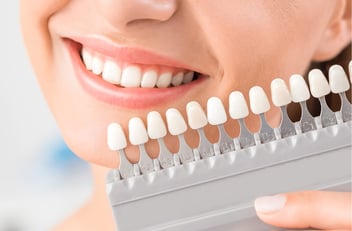
Teeth whitening in Beverly Hills produces visible results for most patients but the outcome depends on the type of staining, the natural shade of the enamel and whether existing restorations will need to be addressed after whitening. Professional whitening removes extrinsic stains from food, beverages and aging. Intrinsic staining from tetracycline, fluorosis or trauma responds poorly to bleaching alone. Results vary from patient to patient because enamel porosity, baseline shade and dentin color all differ.
Key Takeaways
- Teeth whitening in Beverly Hills works most effectively on extrinsic staining from food, beverages, tobacco and aging, intrinsic discoloration from medications or trauma may not respond.
- The outcome of whitening varies by individual because enamel porosity, natural dentin shade and baseline tooth color all differ between patients.
- Whitening is one component of a brighter smile, gum health, restoration condition and overall tooth shape affect the visual result alongside shade.
- Maintaining whitening results requires ongoing habits, dietary awareness, good hygiene and periodic touch-ups, not a single session.
Beverly Hills has high standards for cosmetic results, and dental whitening is no exception. Patients who invest in professional teeth whitening in Beverly Hills expect to leave with a noticeably brighter smile. Most do. But the patients who are most satisfied are the ones who understood what to expect before the appointment, not the ones who compared their result to the brightest possible photos and felt disappointed.
At Clove Dental, we approach whitening as the first step in an honest conversation about what's achievable for each patient's specific teeth, not as a product to be applied uniformly. Here's what that conversation usually covers.

"Why Didn't My Teeth Get as White as I Expected?"
This is the most common whitening disappointment, and it almost always traces to one of three explanations.
The discoloration wasn't primarily extrinsic
Whitening agents work by penetrating enamel and oxidizing stain compounds within the tooth structure. This is highly effective for staining from coffee, tea, wine, tobacco and natural aging. It's far less effective for staining that's built into the tooth's structure, tetracycline staining that occurred during tooth development, fluorosis-related discoloration or darkening from internal bleeding after trauma.
The enamel's natural shade has a limit
Teeth don't bleach to paper white. They bleach to a lighter version of whatever their natural underlying shade is. A patient with naturally warm-toned dentin (yellowish) will achieve a lighter yellow, not a neutral white.
Existing restorations didn't change
Crowns, veneers, and composite fillings don't respond to bleaching agents. If whitening lightens the natural teeth around them, the restorations now appear darker by comparison. This isn't a whitening failure, it's a predictable outcome that should be discussed before treatment, not discovered after.
Not Every Stain Responds the Same Way to Whitening
Understanding what's causing the discoloration changes what treatment will be most effective.
Extrinsic staining- the accumulated layer of stain compounds from food, beverages and tobacco that sits on or near the enamel surface, responds quickly and dramatically to professional whitening.
Age-related yellowing- a combination of surface staining and the gradual transparency of enamel that makes the underlying dentin more visible, responds well to whitening, with results that can be striking for patients whose teeth have yellowed significantly over decades.
Tetracycline staining- grey or brown banding built into the dentin from antibiotic use during tooth development, is the most challenging category for whitening. Extended treatment can produce some improvement but the banding persists.
Single dark tooth- a tooth that's darker than its neighbors reflects internal changes after trauma or a failed root canal. Whitening the surrounding teeth makes the contrast more noticeable, not less.
The assessment of which category applies to a patient's discoloration is what makes the recommendation for teeth whitening in Beverly Hills accurate rather than generic.
Whitening Is Only One Part of a Brighter Smile
The shade of teeth is one visual element of a smile, and not always the most dominant one.
Gum health contributes enormously to how bright a smile appears. Inflamed, puffy gum tissue with an uneven gum line detracts from the appearance of even very white teeth. A clean, healthy, symmetrically framed gum line makes moderately white teeth look polished. This is why a whitening consultation at Clove Dental includes a gum health assessment, because addressing gum inflammation before whitening produces a more complete result.
Surface cleanliness matters as much as shade. Teeth with heavy tartar, rough surfaces from enamel erosion, or recent staining appear duller than clean, polished surfaces even at the same underlying shade. A professional cleaning before or alongside whitening treatment clears the visual baseline that whitening is improving.
The Brightest Smiles Usually Come From Good Maintenance, Not Just One Whitening Session
Professional teeth whitening in Beverly Hills lifts years of accumulated staining in a single or short series of appointments. Maintaining that result requires ongoing habits, not another round of whitening every few months.
What reintroduces staining fastest: coffee, tea, red wine, dark sauces and tobacco are the primary culprits. Consuming them immediately after whitening, when enamel pores are temporarily more open, accelerates restaining. The "white diet" recommendation for the first 48 hours after whitening isn't aesthetics advice, it's chemistry.
What maintains results best: consistent brushing and flossing that prevents new staining from accumulating; avoiding staining beverages or using a straw to minimize tooth contact and periodic touch-up with custom take-home trays that most patients receive after in-office whitening.
Conclusion
Teeth whitening in Beverly Hills delivers visible, satisfying results for most patients, when the type of staining is appropriate for bleaching, expectations are calibrated to the individual's teeth rather than generic before-and-afters, and maintenance habits are in place from the start.
Schedule a whitening consultation at Clove Dental in Beverly Hills, and find out what your specific teeth can achieve.
FAQs
How long does professional teeth whitening last in Beverly Hills?
Most patients see results that hold meaningfully for six months to two years, depending on diet, oral hygiene, and whether they use custom take-home trays for maintenance. Heavy consumers of staining beverages or tobacco will see faster retention.
Is professional whitening safe for sensitive teeth?
With appropriate preparation, yes. A desensitizing protocol, applied before treatment and sometimes included in the whitening system, significantly reduces sensitivity during and after treatment.
What's the difference between in-office whitening and take-home trays from a dentist?
In-office whitening uses higher-concentration gel for faster, more dramatic results in one to two sessions. Custom take-home trays use a lower concentration worn over one to two weeks for a more gradual result.
Will whitening work if I have crowns or veneers on my front teeth?
Restorations don't respond to bleaching agents, they won't lighten with whitening. If you have crowns or veneers on front teeth, whitening the natural teeth may create a mismatch that requires replacing the restorations to match the new shade.
.jpg?width=352&name=image(853).jpg)