.png?width=80&height=80&name=Clove%20Dental%20White%20Small%20(28).png "Clove Dental White Small (28)")
.jpg?width=5040&height=3360&name=old-man-sitting-dentist-s-office(1).jpg)
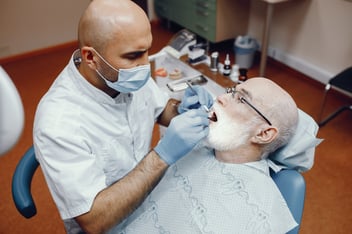
Dental care for seniors focuses on dry mouth, root decay, gum recession and the physical challenges of daily brushing and flossing. While treating older adults, a dentist who is experienced with them takes these factors into consideration and adapts his or her treatment program to those factors, rather than treating them as one-size-fits-all.
Key Takeaways
- Aging changes the mouth in specific ways, including dry mouth, gum recession and higher risk of root decay.
- Medications commonly prescribed to seniors are a major contributor to reduced saliva flow and cavity risk.
- Even though the process may not be as consistent, it can still be more difficult to brush and floss teeth on a regular basis due to physical limitations, such as arthritis.
- Caregivers need practical guidance on helping someone else maintain oral hygiene safely and respectfully.
- A dentist in Camarillo familiar with senior care adjusts appointment pacing, treatment planning, and communication accordingly.
Does your parent's dentist still treat them the same way they did twenty years ago? They probably shouldn't because the mouth changes a lot with age, and dental care needs to change along with it. Dry mouth, root decay, gum recession and physical challenges with brushing all become more common as people get older. Understanding what shifts and what a good dentist in Camarillo does differently for senior patients, makes it a lot easier to keep an aging parent or yourself, ahead of problems instead of reacting to them.
Why Do Dental Needs Change as We Get Older?
Teeth themselves don't age the way skin or joints do but everything around them does. Gums recede over time, exposing root surfaces that are softer and more vulnerable to decay than enamel. Saliva production tends to decrease, partly from aging itself and partly from medications that become more common later in life. Years of wear also mean more fillings, crowns and other dental work that eventually need monitoring or replacement.
On top of the physical changes, health conditions like diabetes, osteoporosis or heart disease can directly affect gum health and healing. A dentist in Camarillo working with older patients isn't just treating teeth in isolation, they are factoring in a broader health picture that younger patients do not bring into the chair.

Why Are Seniors More Prone to Dry Mouth and Root Decay?
Dry mouth, medically called xerostomia, is one of the most common issues affecting older adults and it's largely driven by medication. Common prescriptions for blood pressure, allergies, depression and dozens of other conditions list dry mouth as a side effect. Saliva does more than keep your mouth comfortable, it neutralizes acid and washes away food particles, so reduced flow directly raises cavity risk.
Root decay specifically becomes a bigger concern because gum recession exposes root surfaces that were never meant to be exposed to the same wear as enamel. Combine that exposed, vulnerable surface with reduced saliva and you get a much higher risk of new cavities forming in places that never had problems before. This is a pattern a dentist in Camarillo sees regularly in senior patients and adjusts prevention strategies around.
What Happens When Brushing and Flossing Become Difficult?
Arthritis, reduced hand strength and general mobility changes can make the physical act of brushing and flossing genuinely harder, not just something people get lazier about. Gripping a standard toothbrush handle or manipulating floss between fingers takes fine motor control that doesn't come as easily later in life for a lot of people.
Practical adjustments help more than most people expect. Electric toothbrushes with wider grips reduce the fine motor demand significantly. Floss picks or water flossers can replace traditional floss for people who struggle with the string itself. A dentist in Camarillo working with senior patients can recommend specific tools suited to whatever physical limitation is in play, rather than just repeating generic advice that assumes full dexterity.
What Should Caregivers Know About Managing Someone Else's Dental Care?
Helping an aging parent or family member with dental care requires a different approach than managing your own. First, know their particular challenges, from memory problems that make them hard on their own, to physical issues that make brushing hard, or communication problems that make it hard to tell if they have pain or discomfort.
When making appointments, caregivers can attend together, which helps to avoid having to explain recommendations to them. You can also seek specific advice from your dental expert in Camarillo, such as how to help a loved one brush if they aren't inclined to help themselves or how to identify when someone is having dental pain but can't articulate it well.
How Can Clove Dental Accommodate the Dental Needs of Older Adults?
Accommodating senior patients well means more than just being polite about slower movements. Appointment pacing matters, since rushing an older patient through an exam or procedure increases anxiety and reduces the quality of care. Clear, patient communication about what's happening and why also goes a long way, especially for patients managing multiple health conditions who need to understand how their dental care fits into the bigger picture.
At Clove Dental, our approach as a dentist in Camarillo for senior patients focuses on exactly these adjustments, realistic treatment planning around health conditions and medications, prevention strategies tailored to dry mouth and root decay risk and a genuinely patient pace that respects what older patients are dealing with, physically and otherwise.
Conclusion
Dental care for older adults isn't just the same routine slowed down, it is a genuinely different set of priorities built around dry mouth, root decay, gum recession and physical challenges with daily hygiene. Recognizing these shifts, whether for yourself or someone you're caring for, makes it a lot easier to stay ahead of problems. If you are looking for a dentist in Camarillo who understands what changes with age and adjusts care accordingly, that's exactly the kind of practice worth seeking out.
FAQs
Why does dry mouth get worse with age?
It's largely tied to medications commonly prescribed for conditions like high blood pressure, depression and allergies which reduce saliva production as a side effect.
Can root decay be prevented once gums have receded?
Yes, a dentist in Camarillo can lessen the risk even with exposed root surfaces by using prescription strength fluoride, proper diet and regular checkups.
What tools help seniors with arthritis maintain good oral hygiene?
Electric toothbrushes with wider grips, floss picks and water flossers all reduce the fine motor demand compared to traditional brushing and flossing.
How often should elderly patients see the dentist?
Most senior citizens will find it helpful to get an examination every three to six months, depending on their personal risk factors such as the severity of their dry mouth and dental treatment needs.