.png?width=80&height=80&name=Clove%20Dental%20White%20Small%20(28).png "Clove Dental White Small (28)")
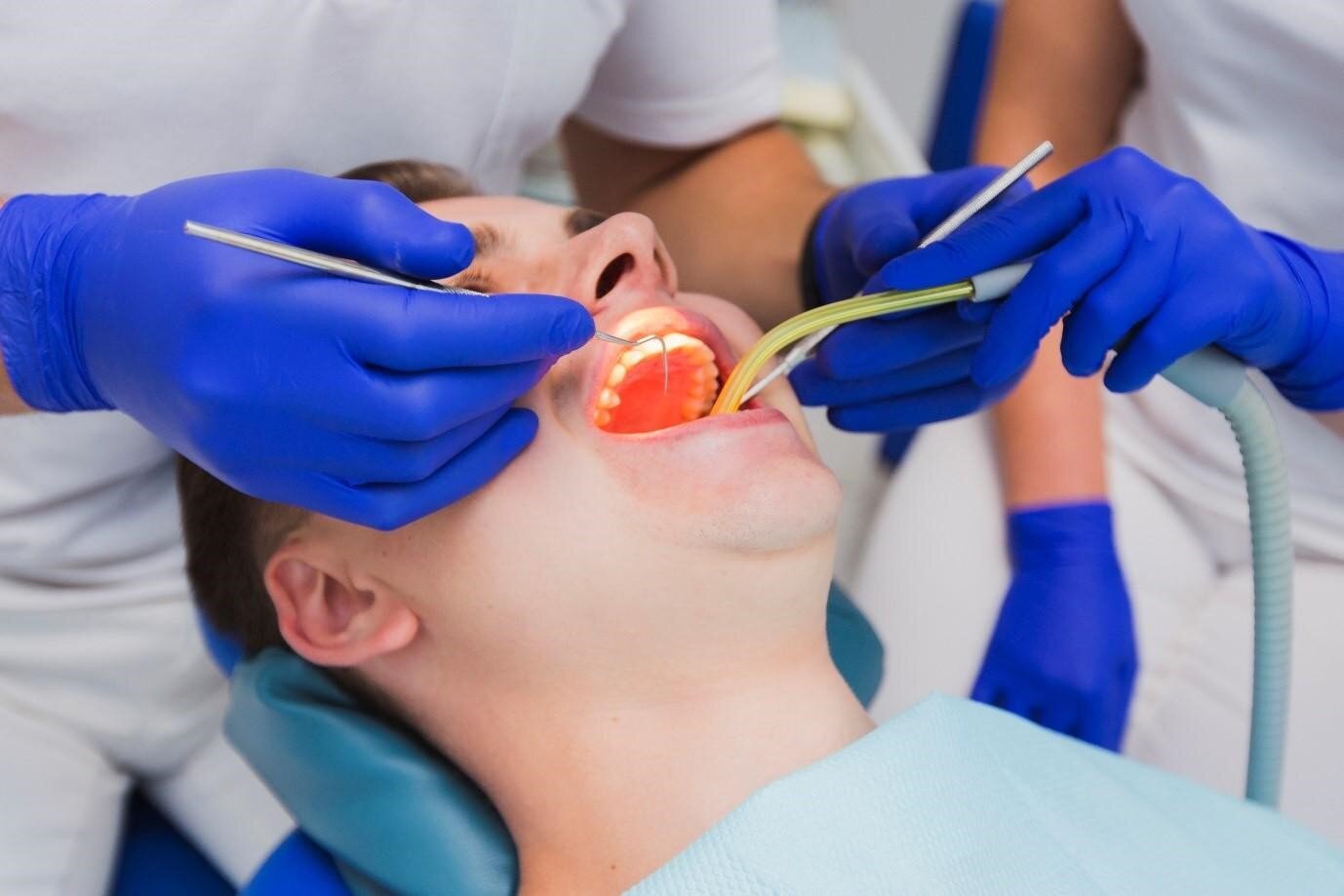
Routine dental checkups at a dentist in Oxnard do more than confirm that nothing is obviously wrong, they detect changes that patients can't see or feel on their own. Dental disease progresses silently in its early stages: enamel loses minerals before a cavity forms, bone recedes before gum disease causes pain, cracks develop before teeth fracture.
Key Takeaways
- Routine dental checkups at a dentist in Oxnard detect changes that develop silently, before pain or visible symptoms give patients any indication that something is developing.
- The clinical value of a checkup comes from comparison, today's findings compared against prior records reveal trends that a single appointment can't show.
- The three things dentists detect most reliably before patients notice them: early cavity formation, early bone loss from gum disease and crack propagation in existing tooth structure.
- A checkup that ends with no significant findings is a success, it confirms the current care approach is working and that nothing has progressed past the manageable stage.
"My teeth feel fine" is the most common reason people give for skipping a dental checkup. It's also, clinically speaking, the least reliable reason to do so.
Dental problems don't produce symptoms in their earliest, most treatable stages. The tooth that will need a root canal next year may feel entirely normal today. The bone loss that has been progressing quietly for two years becomes apparent only when enough has been lost to affect gum tissue. The crack that will fracture a molar next spring is already present, bearing chewing forces, propagating silently, waiting for the moment when it extends far enough.
A routine checkup at a dentist in Oxnard isn't a check on whether your teeth hurt. It's a clinical survey of what's changing, conducted by someone with the tools, training and prior records to see what you can't.

"My Teeth Feel Fine." Why Do Dentists Still Recommend Regular Checkups?
The short answer: because dental disease is painless until it isn't and by the time it isn't, it's significantly more advanced than it would have been when it was.
Enamel has no nerve endings. A cavity can grow through the full enamel layer, a process that may take a year or more, without causing any sensation. Sensitivity begins when decay reaches the dentin beneath. Pain begins when the pulp is involved. By the time a patient feels something, the cavity has progressed through multiple stages of what would have been simpler, less expensive treatment at any earlier point.
Gum disease follows the same pattern. Bone loss from periodontitis is entirely asymptomatic until it has progressed to a degree where pockets are deep enough to trap food, teeth become mobile, or an acute infection develops. Patients first learn they have significant bone loss when a dentist shows them an X-ray comparison of where the bone was and where it is now.
Feeling fine is not the same as being fine. Routine checkups at a dentist in Oxnard are what bridge that gap.
A Dental Checkup Is Really a "What's Changed Since Last Time?" Appointment
The diagnostic value of a dental checkup is proportional to the quality of the comparison it can make. A dentist seeing a patient for the first time has a cross-section, one moment's snapshot. A dentist seeing a patient at their sixth consecutive annual visit has a longitudinal record that transforms the meaning of every finding.
A 4mm pocket that has been stable for three years is a different clinical situation from a 4mm pocket that was 2mm eighteen months ago. A hairline crack noted at last year's visit and present but unchanged today is being monitored appropriately.
The Tiny Changes Patients Rarely Notice but Dentists Do
Three categories of finding are most reliably caught at routine checkups before the patient has any indication they're developing:
Early cavity formation at the white-spot stage- Before a physical hole has formed in the enamel, an area of mineral loss appears as a chalky white or opaque patch on the tooth surface.
Subgingival calculus and early pocket changes- Calculus that has accumulated below the gumline isn't visible without probing. Pocket depths measured and documented at each checkup show whether any sites are deepening, the earliest clinical indicator of progressing gum disease before tissue changes become visible.
Crack lines under existing restorations- Old fillings are common sites for crack propagation that isn't visible without magnification and transillumination.
Each of these findings, addressed at the stage where they're detected in a routine checkup, requires significantly less intervention than the same finding discovered after symptoms develop.
The Best Dental Checkups End With No Surprises
There are two ways a dental checkup can end well.
The first: nothing significant is found. The patient leaves confirmed that their oral health is stable, their home care is working, and the next six-month appointment will continue that monitoring. This is a good outcome, not a wasted appointment.
The second: something is caught early. A small cavity that will be a 15-minute filling. An early crack that will be a crown placed before the tooth fractures. A pocket that's deepening at one site that can be addressed with improved home care and a closer recall before it becomes periodontitis. These findings are good outcomes too, because catching them here, at this size, is what makes the treatment simple.
Conclusion
Routine dental checkups at Clove Dental in Oxnard are about maintaining the clinical vigilance that makes everything between appointments, your brushing, your flossing, your dietary habits, more effective. They're about having someone in your corner with the tools and the records to see what's changing before it demands attention.
Schedule your next checkup at Clove Dental with a dentist in Oxnard.
FAQs
How often should I see a dentist in Oxnard for routine checkups?
Most adults benefit from checkups every six months. Patients with elevated risk factors, active gum disease, a history of frequent cavities, dry mouth from medications or other systemic health conditions that affect oral health benefit from visits every three to four months.
What happens at a routine dental checkup?
A routine checkup includes a clinical examination of all teeth, gum tissue and soft tissue; periodontal probing to measure pocket depths; X-rays at appropriate intervals to detect changes below the visible surface; oral cancer screening and a professional cleaning to remove calculus.
What X-rays are taken at a routine checkup and how often?
Bitewing X-rays are taken once a year for most patients to detect interproximal cavities and monitor bone levels. Full-mouth X-rays are taken less frequently, every three to five years for most adults, or when a patient establishes care at a new practice.
What should I tell my dentist at a routine checkup?
Any changes since your last visit: new medications, health diagnoses, symptoms you've noticed or habits that have changed. The more context your dental team has about what's been happening in your life and in your mouth, the more informative the visit becomes.
-1.jpg?width=352&name=image%20(27)-1.jpg)
.jpg?width=352&name=image(1153).jpg)