.png?width=80&height=80&name=Clove%20Dental%20White%20Small%20(28).png "Clove Dental White Small (28)")
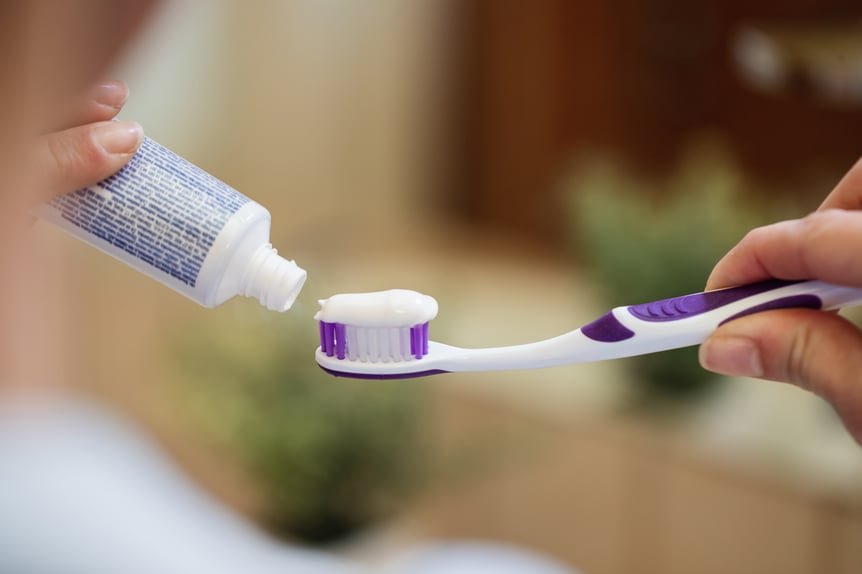
Fluoride and hydroxyapatite toothpastes both help protect teeth, but they work differently. Fluoride strengthens enamel and prevents cavities, while hydroxyapatite supports remineralization and may reduce sensitivity. A dentist in Camarillo can help you choose the right option based on your needs.
Key Takeaways
- Both fluoride and hydroxyapatite assist in protecting the enamel though in different manners.
- Fluoride is also proven to be used in cavity prevention and long term protection.
- Hydroxyapatite assists in repair of the enamel and it can be used to assist in the case of sensitivity.
- The correct option has to do with what is necessary in your oral health, rather than personal desire.
- At Clove Dental, we help patients choose products based on what actually benefits their teeth, with guidance from a dentist in Camarillo.
If you’ve ever stood in front of a toothpaste shelf wondering what to pick, you’re not alone.
Fluoride has long been the norm but hydroxyapatite is increasingly receiving some consideration as an option. That is what makes us clearly ask, Is one really better than the other?
The answer isn’t about trends. It’s about understanding how each one works and what your teeth actually need.
In our practice Clove Dental, we tend to make patients go through this decision-making process using their oral health, rather than what is trendy or advertised as such.
Why This Comparison Matters for Your Oral Health
Toothpaste is not only on cleaning, it's on protection of your enamel on a daily basis.
The ingredients you use consistently can influence how well your teeth resist decay, recover from early damage, and handle sensitivity.
That is why there is no small difference between fluoride and hydroxyapatite, it influences the way your teeth are supported in the long run.
What Is Fluoride Toothpaste?
Fluoride toothpaste contains fluoride, a mineral that helps strengthen enamel and prevent cavities.
It functions by enhancing the resistance of your teeth to the attacks of bacteria and food which are acidic. It is also useful in repairing the enamel damage that occurs on the initial stages before it develops into a cavity.
This is why fluoride has been the standard recommendation from most dental professionals, including a dentist in Camarillo.
What Is Hydroxyapatite Toothpaste?
Hydroxyapatite is a mineral found in nature and which forms a huge portion of your teeth structure.
When utilized as toothpaste, it acts by providing minerals that are capable of sealing small, but weak spots in the enamel. This may be used to make the surface smoother and less sensitive.
It is commonly sold as a more natural substitute, however, its performance is subject to the type of the formulation and the regularity of the usage.
How Each One Works to Protect Your Teeth
Fluoride works by strengthening enamel and making it more resistant to decay. It also helps remineralize early damage by attracting minerals back into weakened areas.
Hydroxyapatite works in a different manner. Rather than making the enamel stronger by means of developing chemical resistance, it physically bonds with the tooth surface assisting in the reformation of small flaws and polishing them.
Both approaches support enamel but in different ways.
Fluoride vs. Hydroxyapatite: Key Differences
|
Factor |
Fluoride Toothpaste |
Hydroxyapatite Toothpaste |
|
Mechanism of Action |
Strengthens enamel by making it more resistant to acid attacks. |
Rebuilds and fills weak spots in enamel structure. |
|
Effectiveness in Cavity Prevention |
Strong clinical evidence for preventing cavities. |
Promising results but less long-term research. |
|
Suitability for Age Groups |
Recommended for both children and adults (when used correctly). |
Suitable for most users, chosen as an alternative option. |
|
Safety Considerations |
Safe when used as directed; excess ingestion should be avoided. |
Generally safe and well-tolerated. |
Which One Is More Effective?
Fluoride is the more proven and generally recommended choice of cavity prevention.
Hydroxyapatite may not be entirely useless, particularly in enriching surface enamel and achieving sensitivity reduction. It however, might not give similar protection against decay in high risk situations.
At Clove Dental, we don’t treat this as a one-size-fits-all decision. The better option depends on your risk level, habits, and existing dental condition.
Common Myths About Fluoride and Hydroxyapatite
The myths that people use include that hydroxyapatite wholly replaces fluoride- this is not necessarily so.
The other one is that fluoride is not safe when it is used in an appropriate manner. As a matter of fact, it has been well researched and safe to within acceptable limits.
Misinformation is usually characterized by simplifying the comparison, instead of knowing the situation of each choice.
What Dentists Typically Recommend
Fluoride toothpaste is still the first choice of most dentists, particularly in the prevention of cavities.
Nevertheless, one can treat the use of alternatives, such as hydroxyapatite, in certain circumstances, such as in case of sensitivity or personal preference.
At Clove Dental, we focus on practical recommendations based on your condition, not just general advice, so patients leave knowing what actually works for them.
Conclusion
Both sources, fluoride and hydroxyapatite, are beneficial to oral health but they are not the same.
Fluoride offers stronger protection against cavities, while hydroxyapatite focuses more on surface repair and sensitivity.
The correct option is one that is based on needs rather than trends.
At Clove Dental, we help patients make that decision clearly, so their daily routine supports long-term results, guided by a dentist in Camarillo.
FAQs
Is hydroxyapatite toothpaste as effective as fluoride?
Hydroxyapatite is potentially useful as a strengthening agent of enamel and as an agent to diminish sensitivity, whereas fluoride shows greater support in the prevention of cavities, particularly in those at higher risk.
Is fluoride toothpaste safe for daily use?
Yes, fluoride toothpaste is safe if taken as instructed. It is highly researched and is prescribed by dentists to be used daily.
Which toothpaste is better for sensitive teeth?
Hydroxyapatite can also be used to suppress sensitivity, although toothpastes that are formulated to treat sensitivity can also be useful.
When should I consult a dentist in Camarillo about toothpaste choice?
You should consult a dentist in Camarillo if you have frequent cavities, sensitivity, or are unsure which toothpaste best suits your oral health needs