.png?width=80&height=80&name=Clove%20Dental%20White%20Small%20(28).png "Clove Dental White Small (28)")
.jpg?width=626&height=417&name=image(1).jpg)
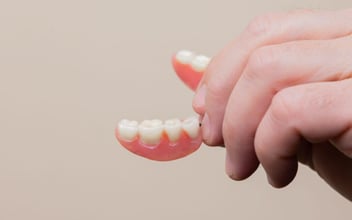
The main denture types are partial dentures, full dentures, immediate dentures and implant-supported dentures. Partial dentures replace some of the teeth and attach to the other natural teeth. When there are no natural teeth in a complete arch, complete dentures are used to replace it. Extractions accompanied by immediate dentures will not have an empty period. Anchored dentures are held in place by implants providing great stability and stability.
Key Takeaways
- The four main denture types are- partial, full, immediate and implant-supported each suit different clinical situations and patient needs.
- The number of teeth missing is only one factor; bone density, remaining tooth health, lifestyle and budget all shape which option is appropriate.
- Dentures may be designed differently for two patients with the same number of missing teeth, depending on their anatomy, goals, and requirements.
- The most stable dentures are implant supported dentures that will take longer to be treated and have a higher requirement of sufficient bone volume.
Are you researching denture options and finding that every article seems to point you toward a different solution? It's not a contradiction, it's a reflection of how genuinely varied the right answer can be depending on your specific situation. Dentures aren't one product. They're a category of solutions with meaningful differences in how they function, how they're maintained and what they cost.
At Clove Dental, we approach dentures in Ventura by starting with what a patient's life actually requires rather than defaulting to the most common or most convenient option. Here's a clear look at the available paths and how to think about which one fits your situation.

Replacing Missing Teeth Isn't the Hard Part Choosing the Right Denture Is
The mechanics of denture fabrication are well established. What's genuinely difficult, and where patients often feel overwhelmed, is understanding the meaningful differences between options well enough to make a confident decision. A partial denture and a full implant-supported overdenture both "replace missing teeth" but they're clinically, functionally and financially different enough that comparing them requires more than a side-by-side price chart.
The choice matters beyond budget. A denture that doesn't match a patient's bone condition or bite requirements won't function well, regardless of its category. A solution that creates too much daily maintenance for someone's routine won't be worn consistently, which defeats its purpose. Getting the right match upfront is worth the conversation.
The Questions Your Dentist Will Ask Before Recommending Any Denture
A good denture consultation covers more ground than most patients expect. The questions being answered aren't just "how many teeth are missing?" They include how long the teeth have been missing, since bone resorption progresses over time and affects what options are structurally viable.
Your remaining teeth, if any, matter as much as the missing ones. Their health and stability determine whether a partial denture is appropriate or whether full extraction followed by a complete solution makes more sense.
Lifestyle questions matter too. How much does a patient eat out? How important is it to them to eat without restriction? Are they comfortable with a removal-based maintenance routine, or would they prefer something more like caring for natural teeth? These questions shape a recommendation as much as any clinical finding.
Partial, Full, Implant-Supported or Immediate Dentures: Who Is Each One Really Designed For?
Partial Dentures
Partial dentures are the right fit when some natural teeth remain and are healthy enough to support a clasp-retained appliance. They replace a section of missing teeth without requiring extraction of what's still functional. They're not ideal for patients whose remaining teeth are compromised or who find removable appliances difficult to manage consistently.
Full Dentures
Full dentures are for patients who have lost all teeth in one or both arches or for whom extraction of remaining teeth is clinically indicated before starting fresh. A conventional full denture is placed after the gums have healed from extractions several months which means a period without teeth.
Immediate Dentures
Immediate dentures address the gap period problem by placing a denture on the same day extractions are performed. The fit requires adjustment as swelling resolves and the gum tissue heals and reshapes over the following months. Immediate dentures are a transitional solution rather than a permanent one, with a conventional denture or implant-supported option following once healing is complete.
Implant-supported Dentures
Implant-supported dentures, whether a removable overdenture snapping onto two to four implants or a fixed full-arch restoration anchored to four to six implants, provide a fundamentally different experience from conventional dentures.
Why Two People Missing the Same Number of Teeth May Leave With Completely Different Treatment Plans
Patient A has lost eight teeth over the past two years, has strong bone density, healthy remaining teeth and a lifestyle that involves eating a wide variety of foods and socializing regularly around meals. Patient B has lost the same eight teeth but over fifteen years, has significant bone loss from long-term resorption, compromised remaining teeth and a more limited budget.
These two patients share a tooth count. Their appropriate treatment paths may not share much else. Patient A is a strong candidate for a partial denture now, with a future conversation about implant-supported options if remaining teeth deteriorate. Patient B may need full extraction, immediate dentures to cover the transition period and a longer discussion about bone grafting before any implant option becomes viable.
Conclusion
Choosing the right denture solution isn't a matter of finding the most popular option or the least expensive one. It's a process of understanding your specific bone condition, remaining tooth health, lifestyle and long-term goals and finding the solution that genuinely fits all of those factors together.
At Clove Dental, every denture consultation for patients in Ventura starts with that process rather than a preset recommendation.
FAQs
How long do dentures typically last before needing replacement?
Traditional dentures will last for 7-10 years before they need to be replaced, but may need to be relined earlier if bone changes occur. Prosthetic parts may have to be replaced over time but implant supported restorations will last longer since the implants are intended to stay in place permanently.
Are there dentures that don't require adhesive?
Implant-supported dentures eliminate the need for adhesive by anchoring to implants in the jawbone. Well-fitted conventional dentures may function without adhesive for some patients, but many find adhesive necessary for reliable stability during eating and speaking.
What happens to the jawbone under a conventional denture over time?
Bone resorption continues beneath conventional dentures since the bone no longer receives stimulation from a tooth root. This causes the denture fit to change over time and the facial structure to gradually change as well.
What is the difference between a denture reline and a replacement?
A reline adjusts the fitting surface of an existing denture to fit the changes in gum and bone tissue under the denture, thus prolonging the useful life of the denture. If the denture structure has worn, broken, or if it is too different from the existing denture anatomy for relining to make sense, then it must be replaced.
.jpg?width=352&name=old-man-sitting-dentist-s-office(1).jpg)
.jpg?width=352&name=image(1).jpg)